
ARIZONA: GREAT AND 48
In Summer 2025, Banner Academy designed and implemented a project-based program focused on the study of Arizona that included — but was not limited to — its flora and fauna, national and state parks, colleges/universities, the Frank Lloyd Wright connection, steps to statehood, geography, and Indigenous tribes.

Students’ academic projects cut across math, science, social studies, and English, and their efforts are displayed in multiple hallways in the school.

To ensure that this cross-curricular, project-based learning opportunity is afforded to all students, teachers will use Fridays during the school year in the first quarter to provide our non-summer school attendees with the opportunity to learn about Arizona and to hone the skills taught during the summer months. It also ensures that they have the chance to contribute to the expansive and beautiful wall displays while still focusing on academic standards across the four core classes.
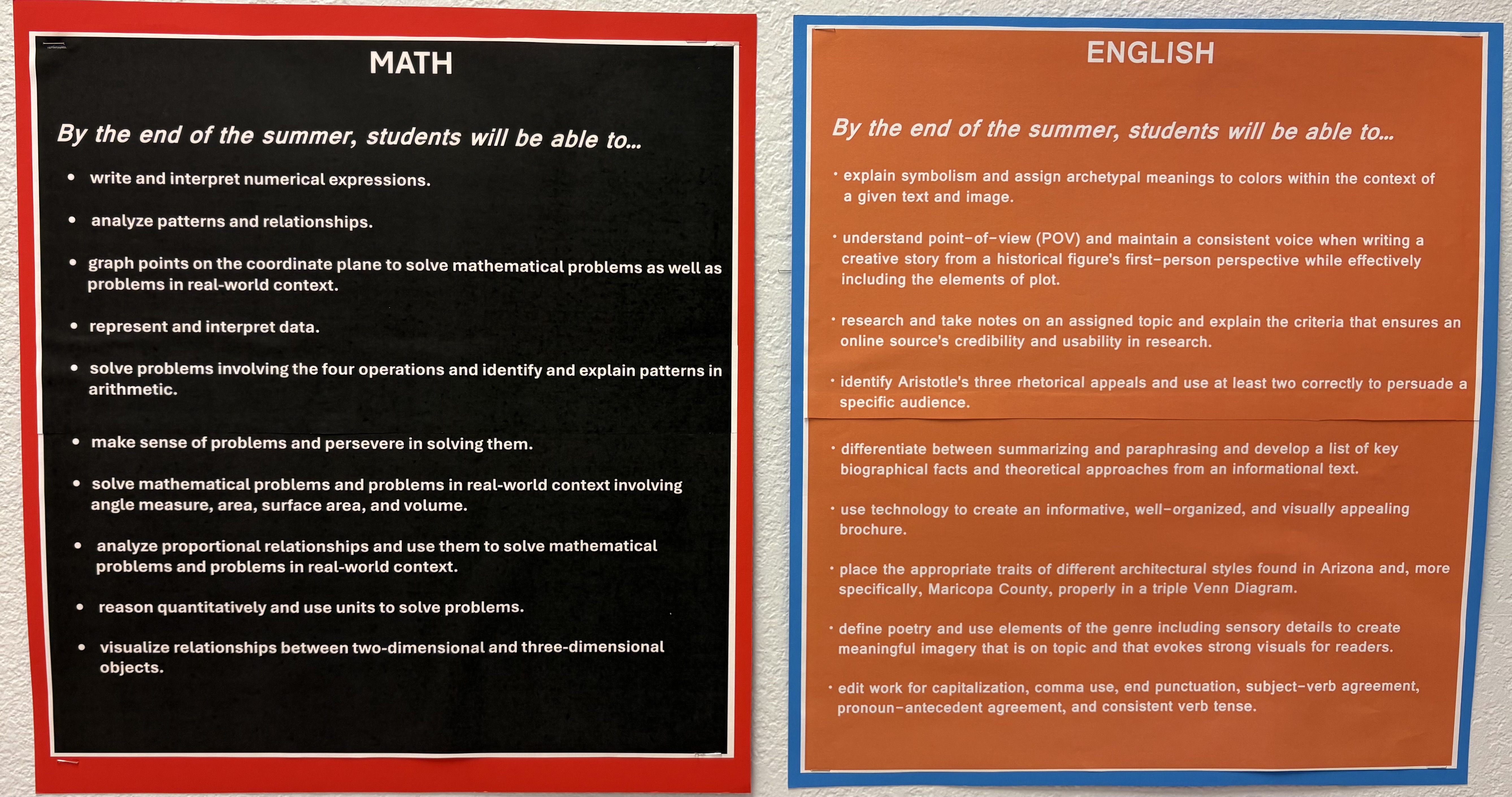
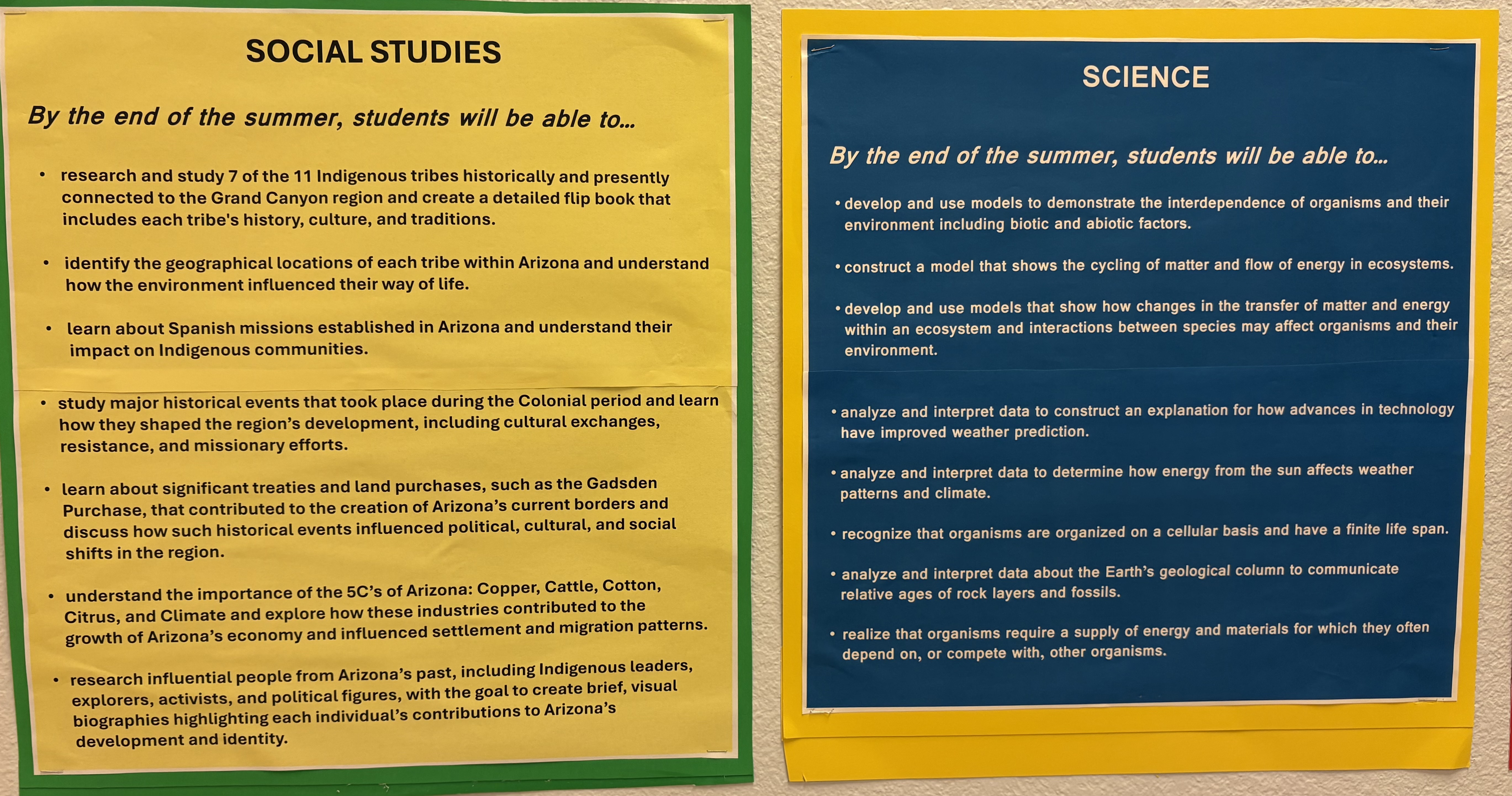
Below are the highlights from each class’s work. Teachers taught students the relevant skills for each project, then students had to demonstrate their mastery of that skill while building confidence and pride as they helped to create visually-appealing wall displays that showcase their efforts.
SCIENCE: A Creative and Artistic Approach to the Study of Science
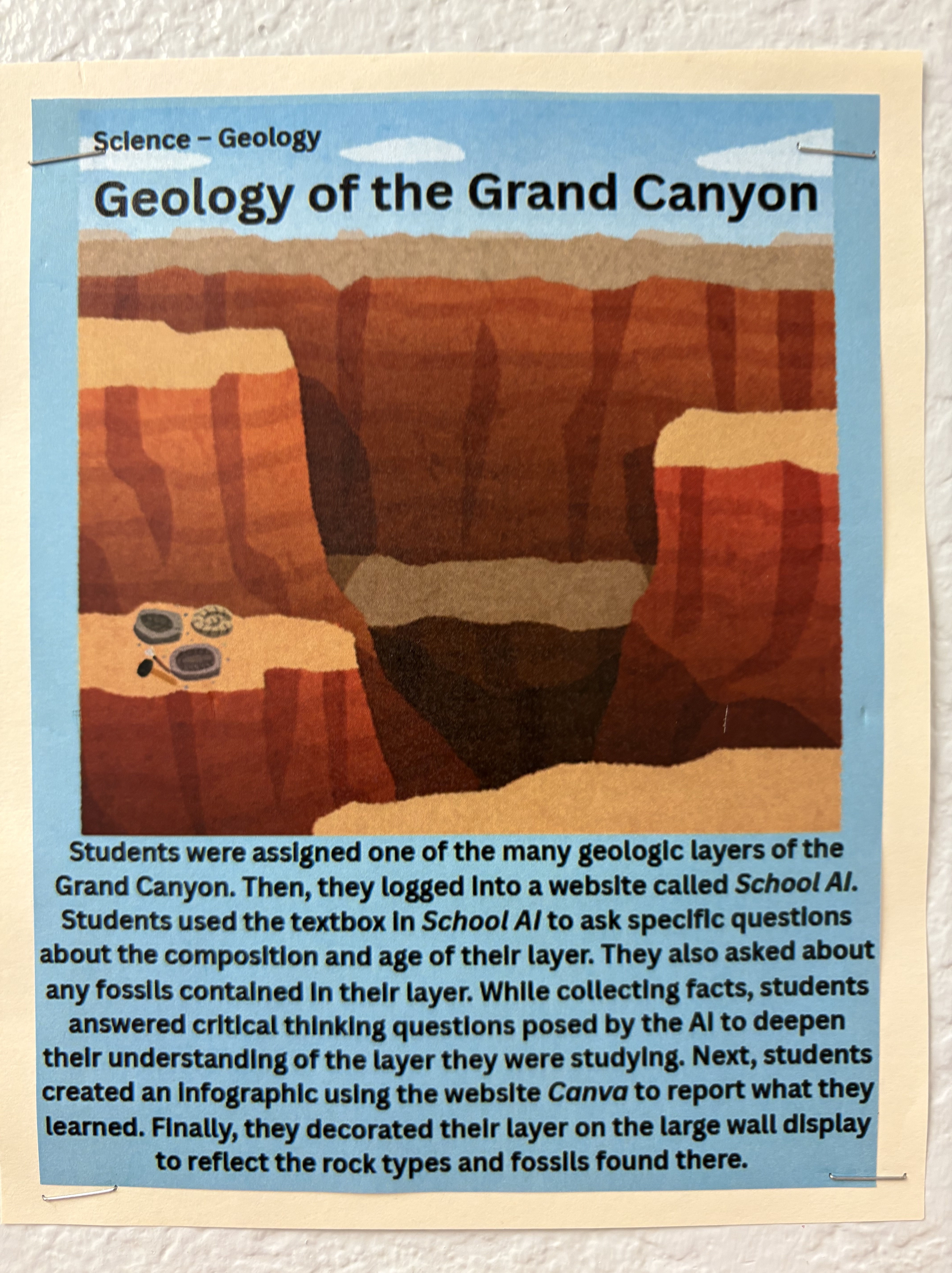
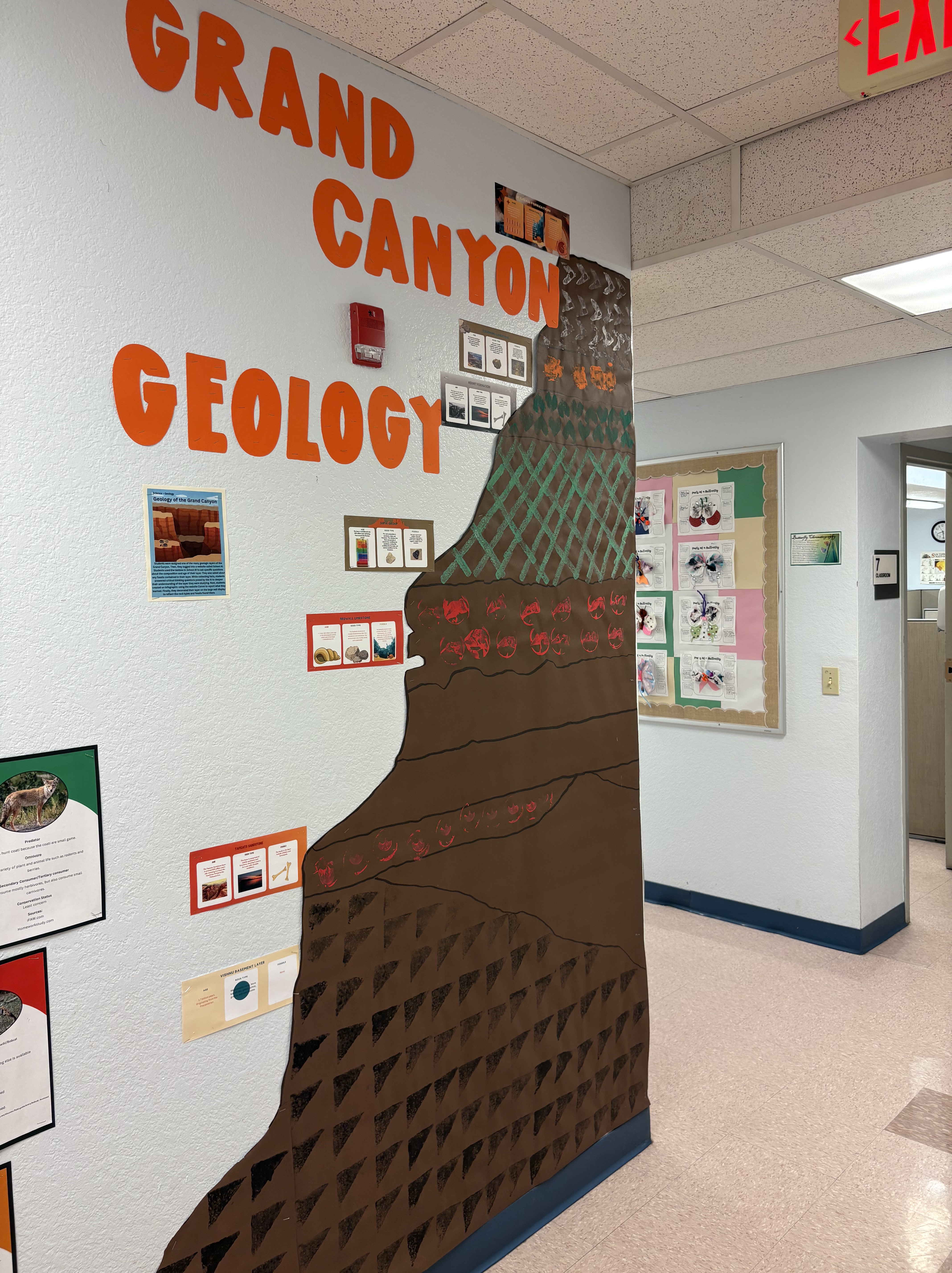
Geological Time Scale in the Grand Canyon


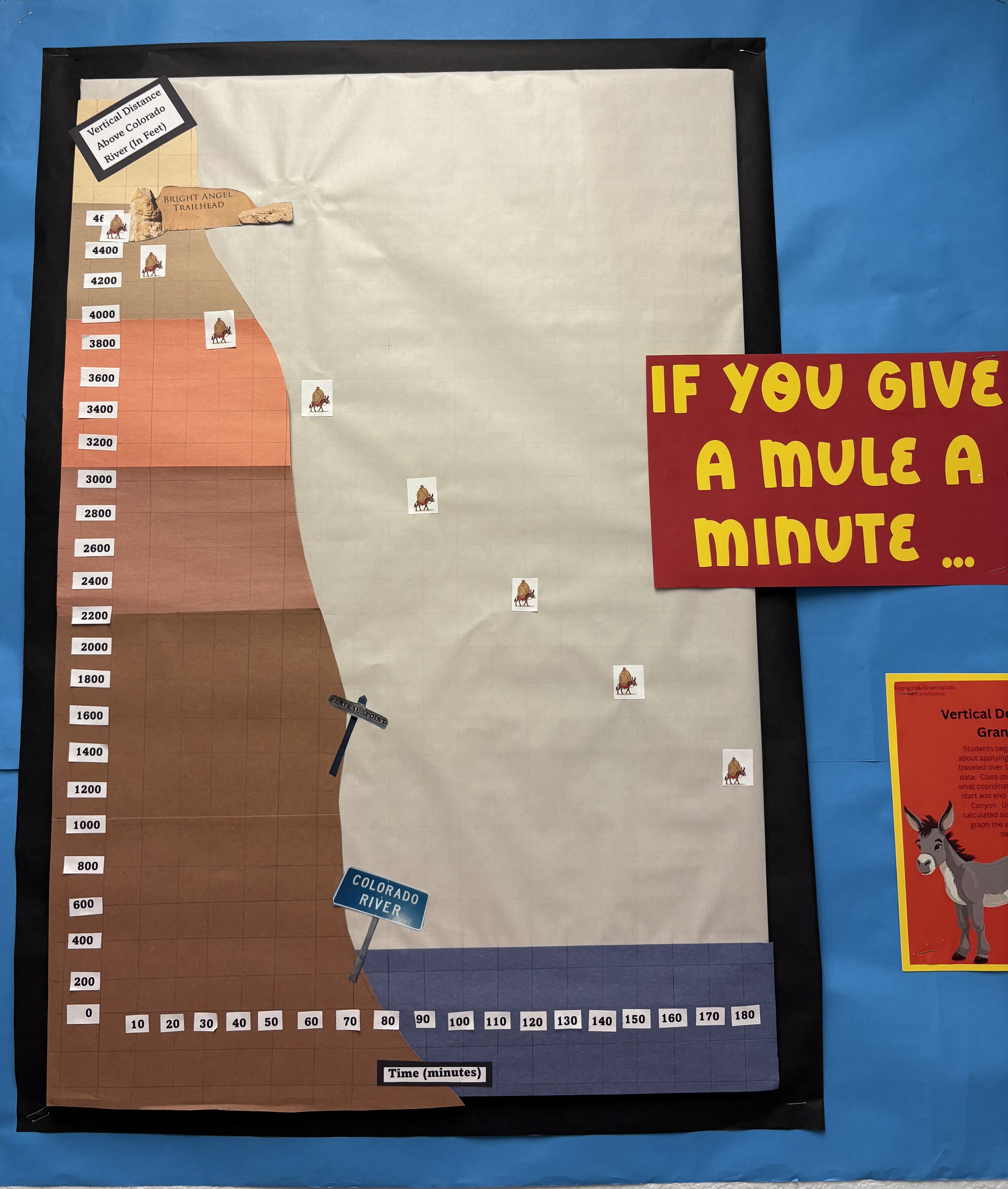
Calculating Slope through a Mule’s Journey

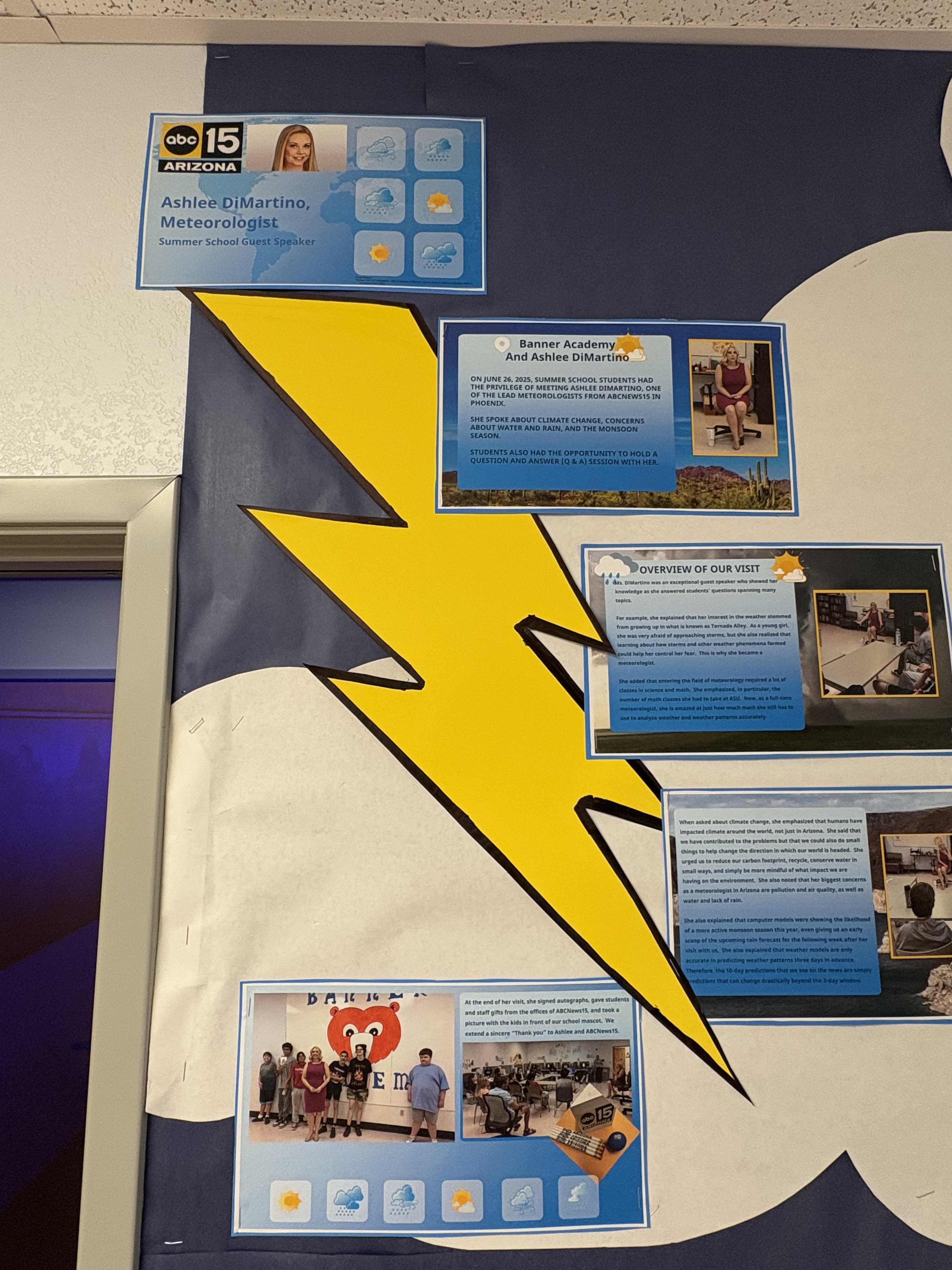
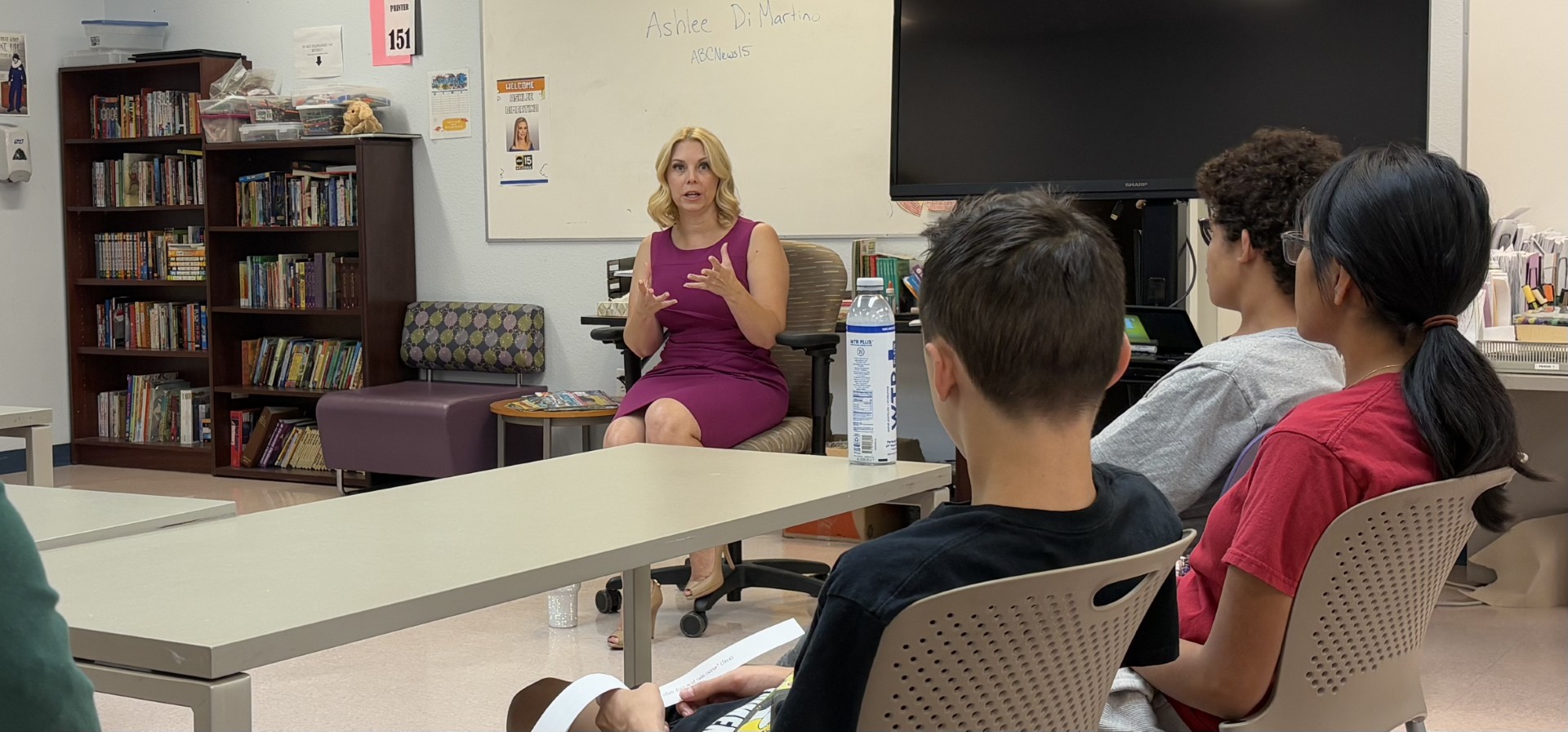
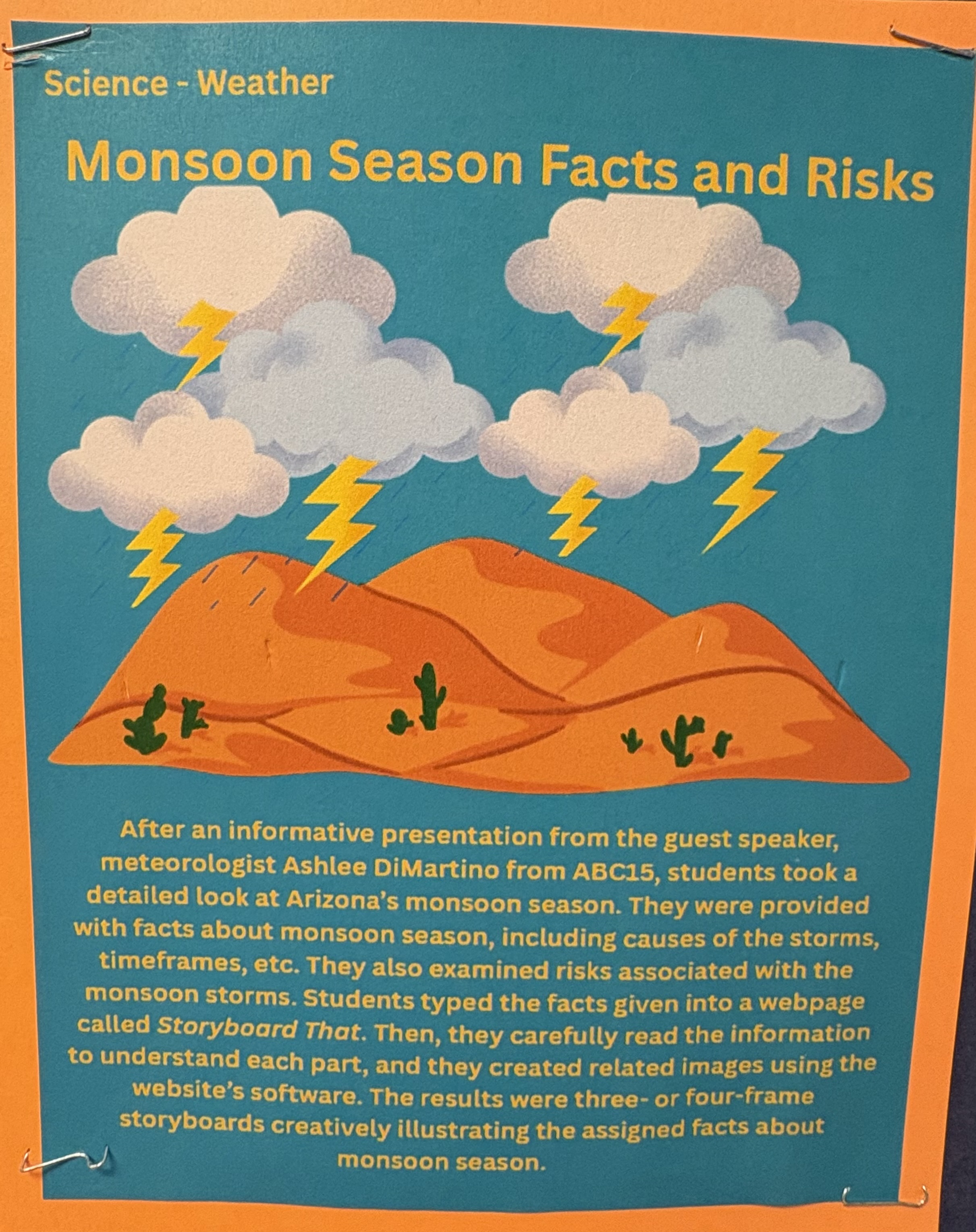
Meteorology and Monsoons – A Visit with Ashlee DiMartino from ABCNews15 and Follow-Up Research on Arizona’s Weather Dangers




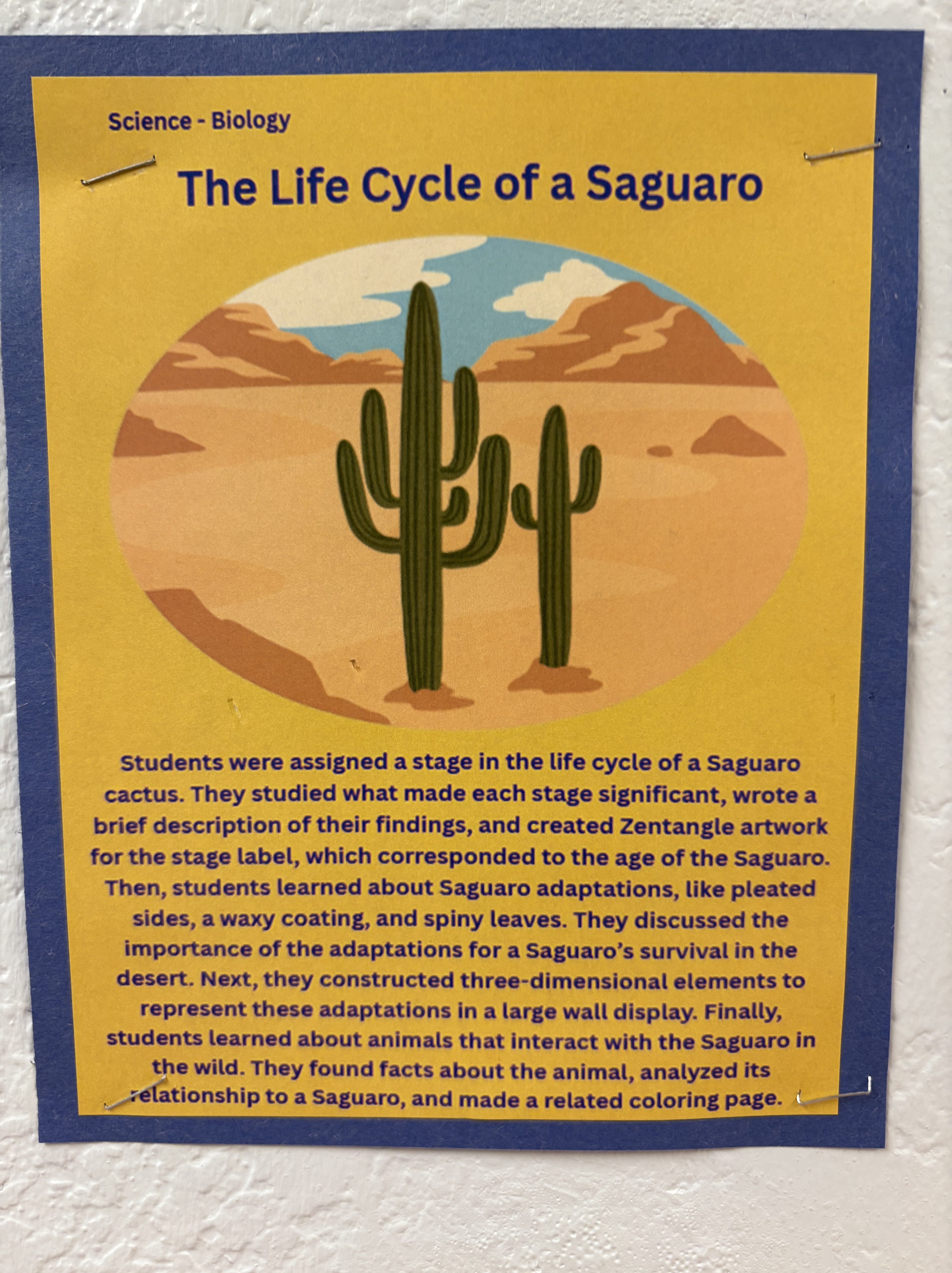
The Majestic Saguaro


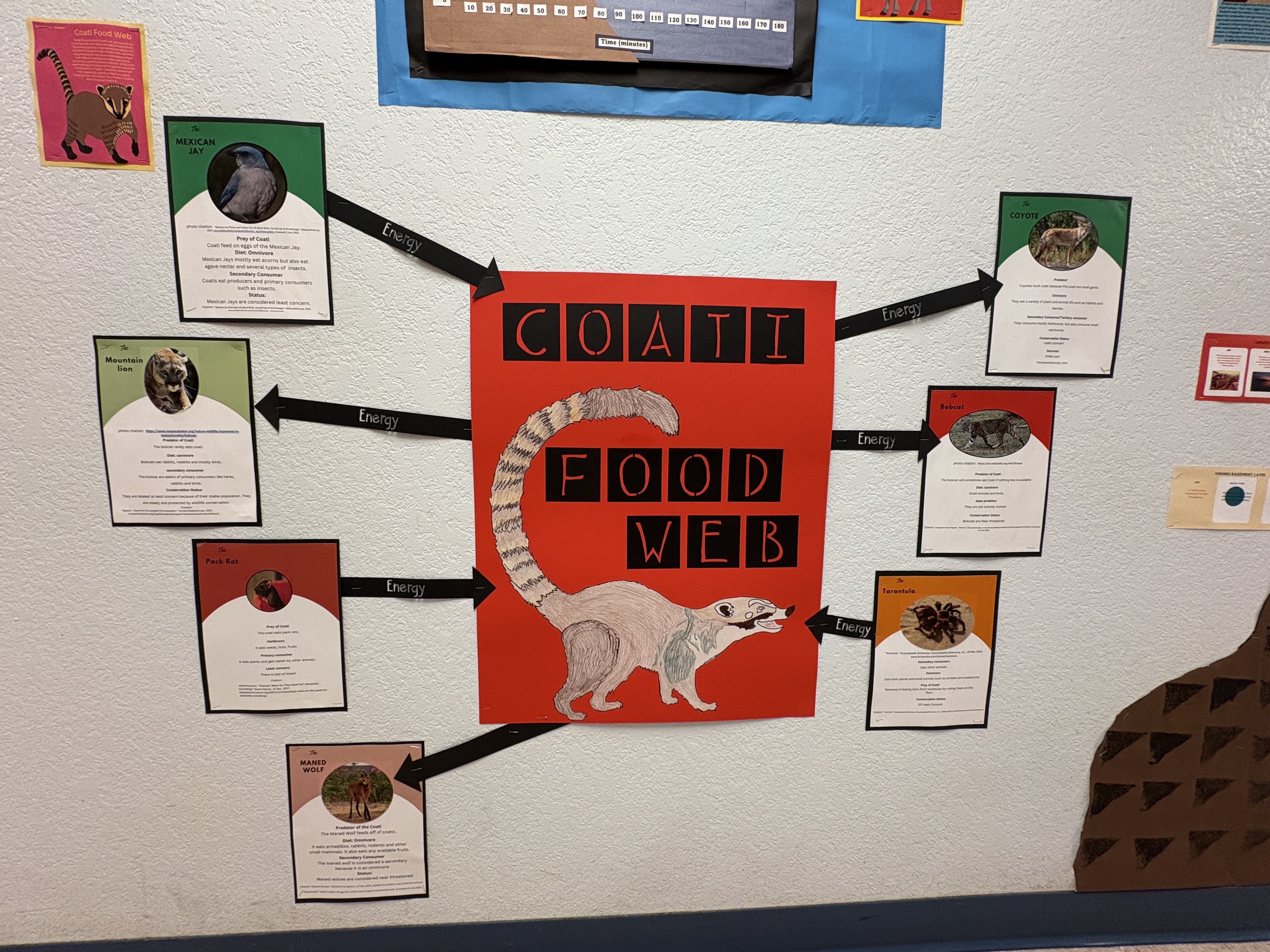
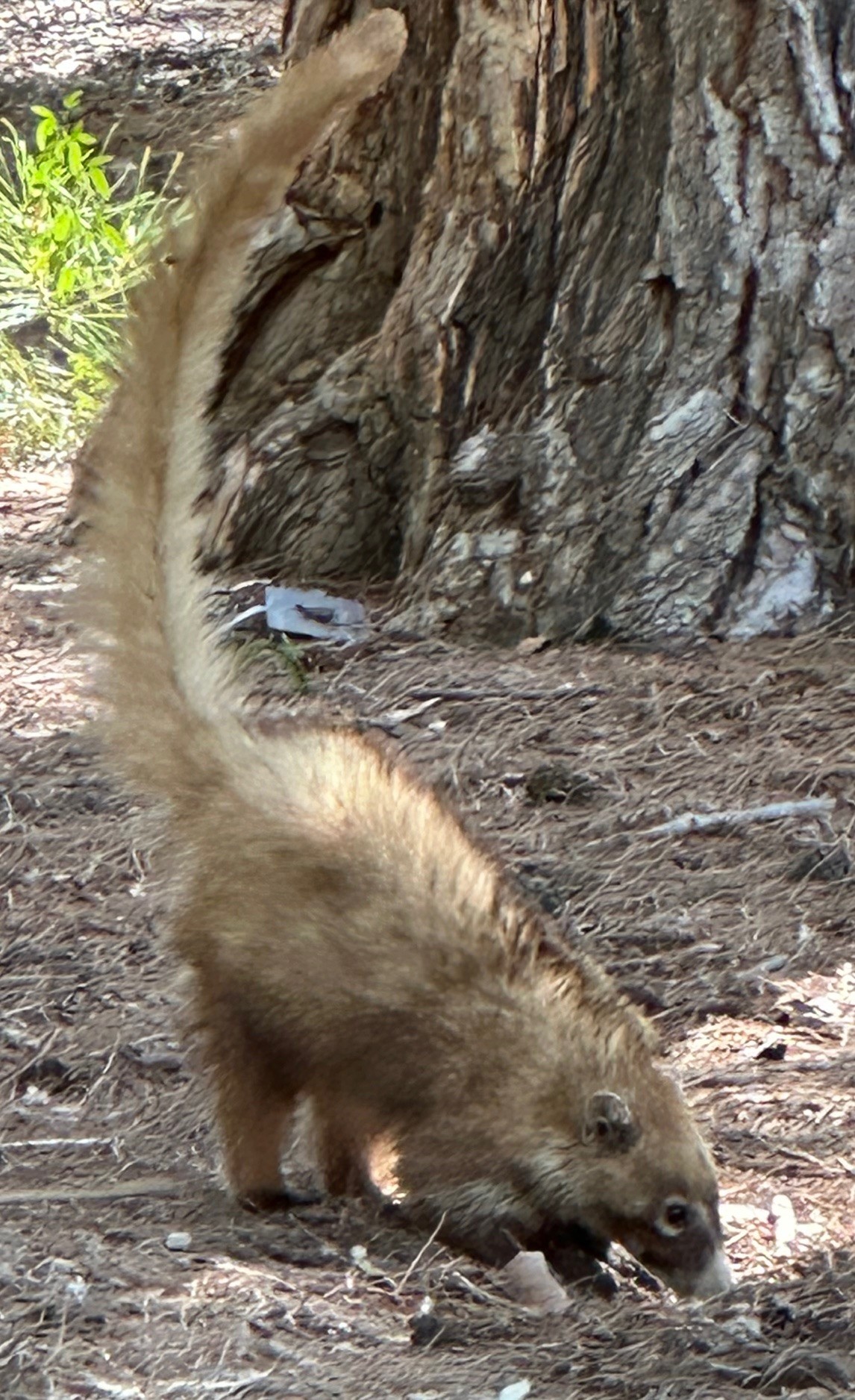
Energy Transfer within a Coati’s Food Web


ENGLISH: A Novel Way to Build Writing Skills for Research, Persuasion, and Perspective
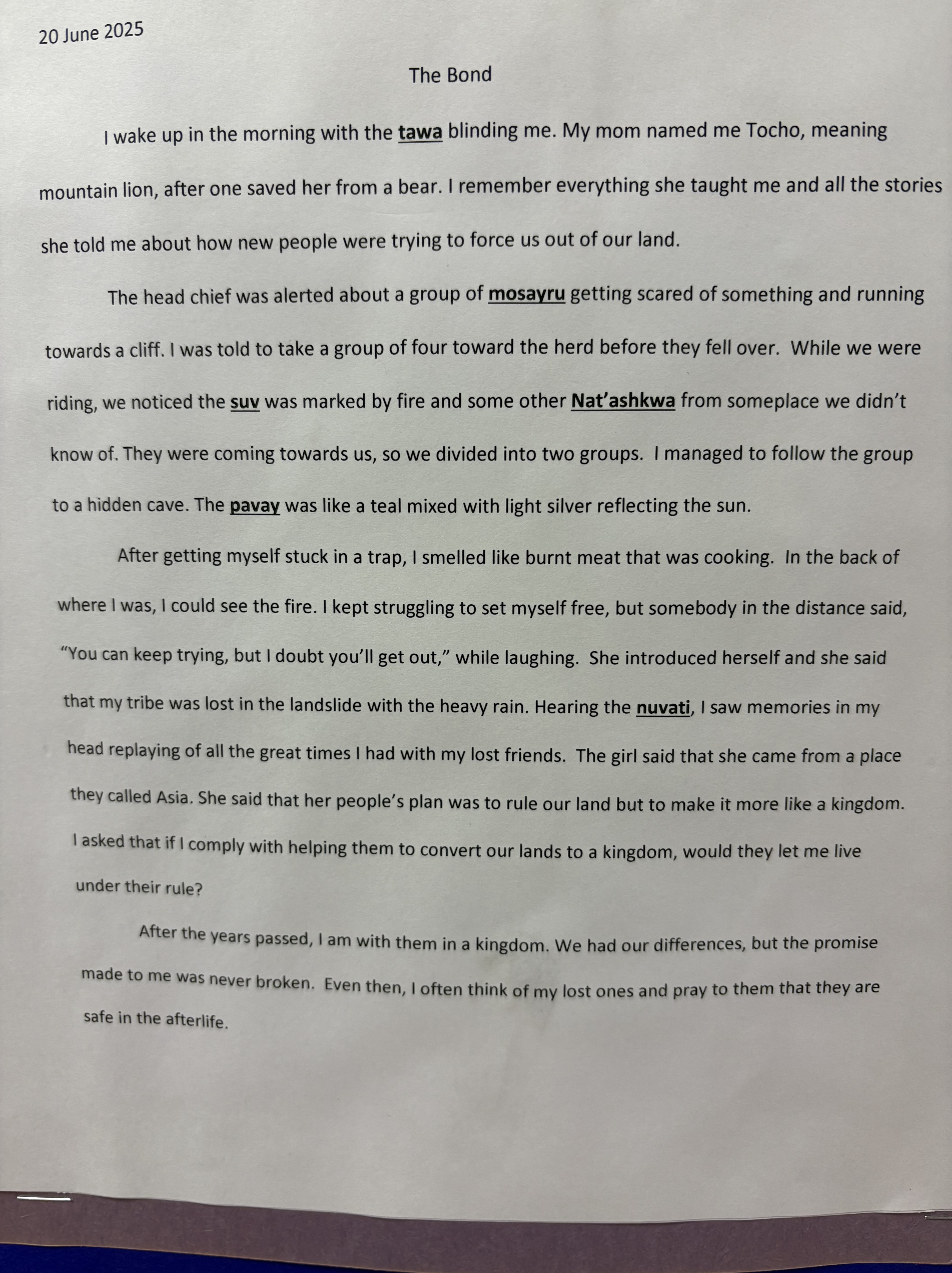
Understanding Point-of-View (POV) and the Power of Voice in Creative Writings


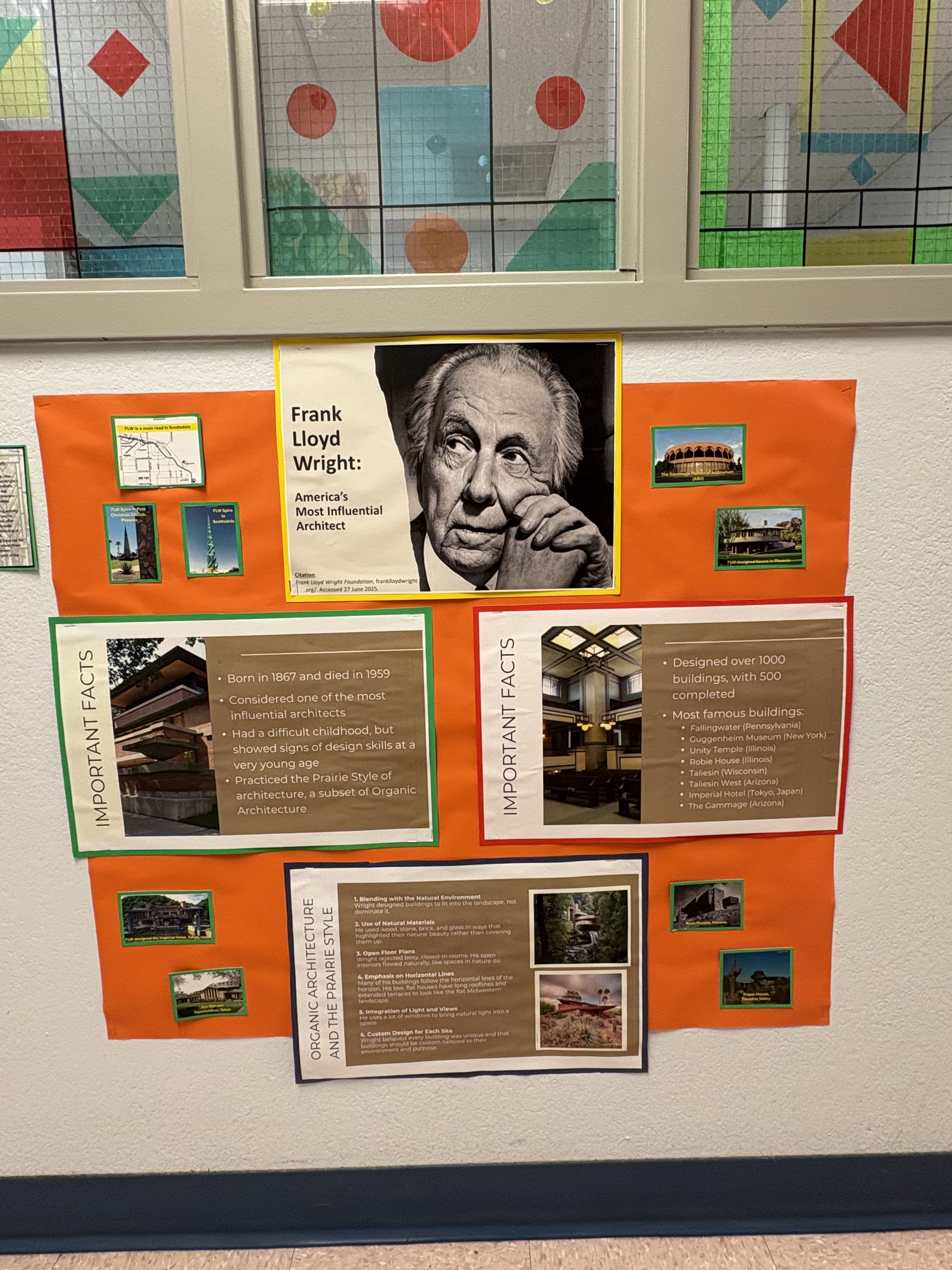
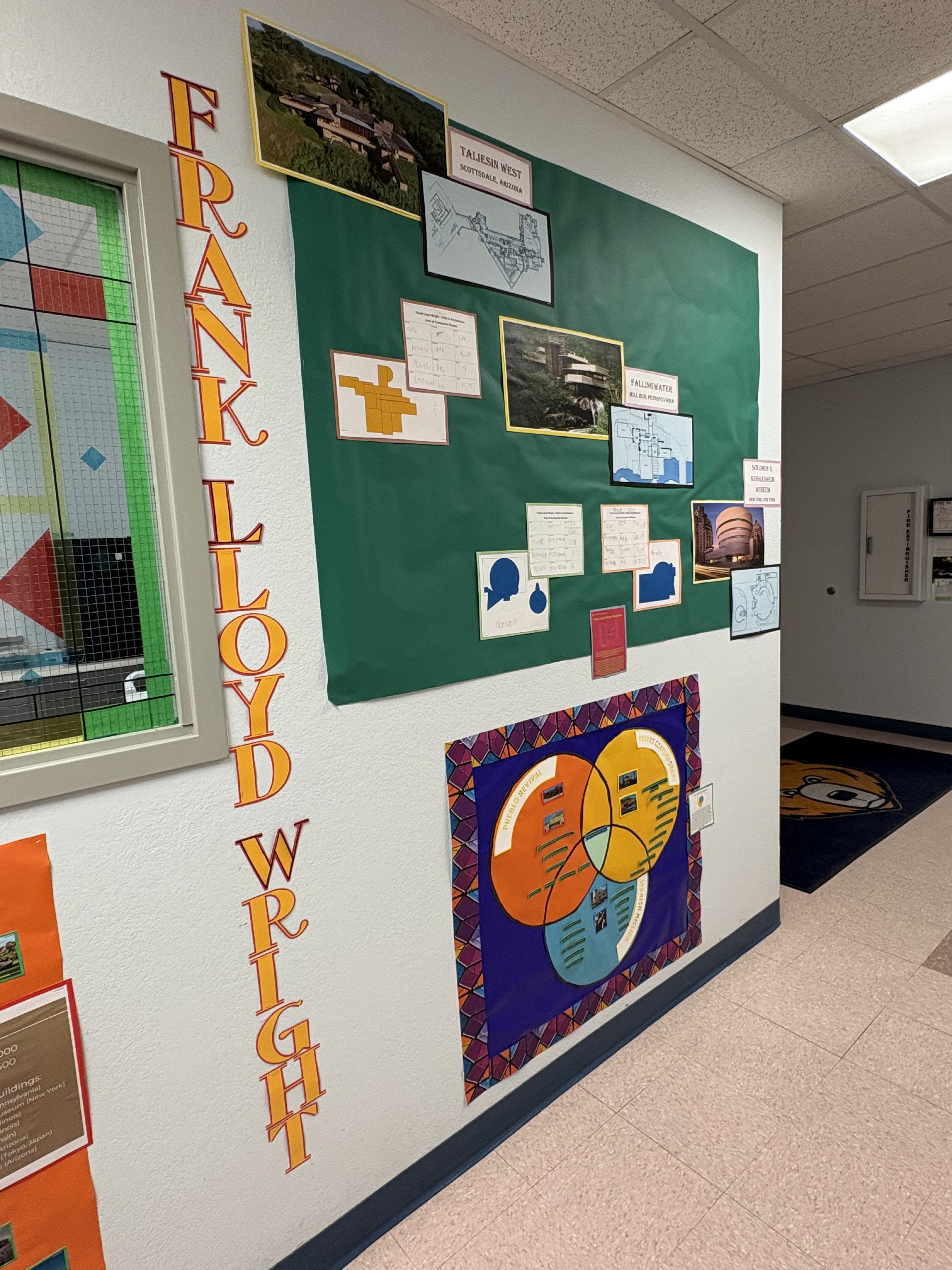
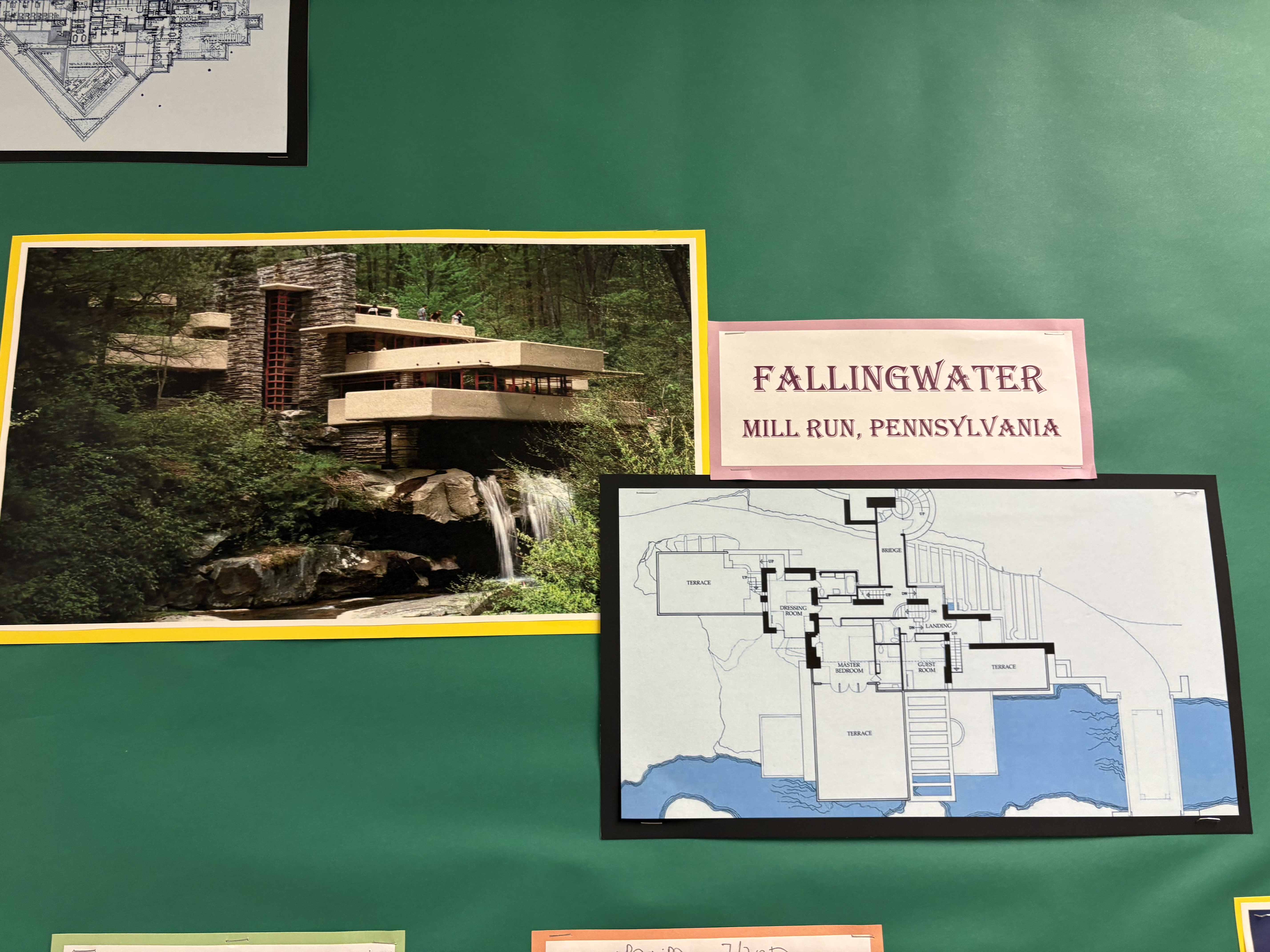
Arizona and Frank Lloyd Wright, an Artist and Architect in Residence


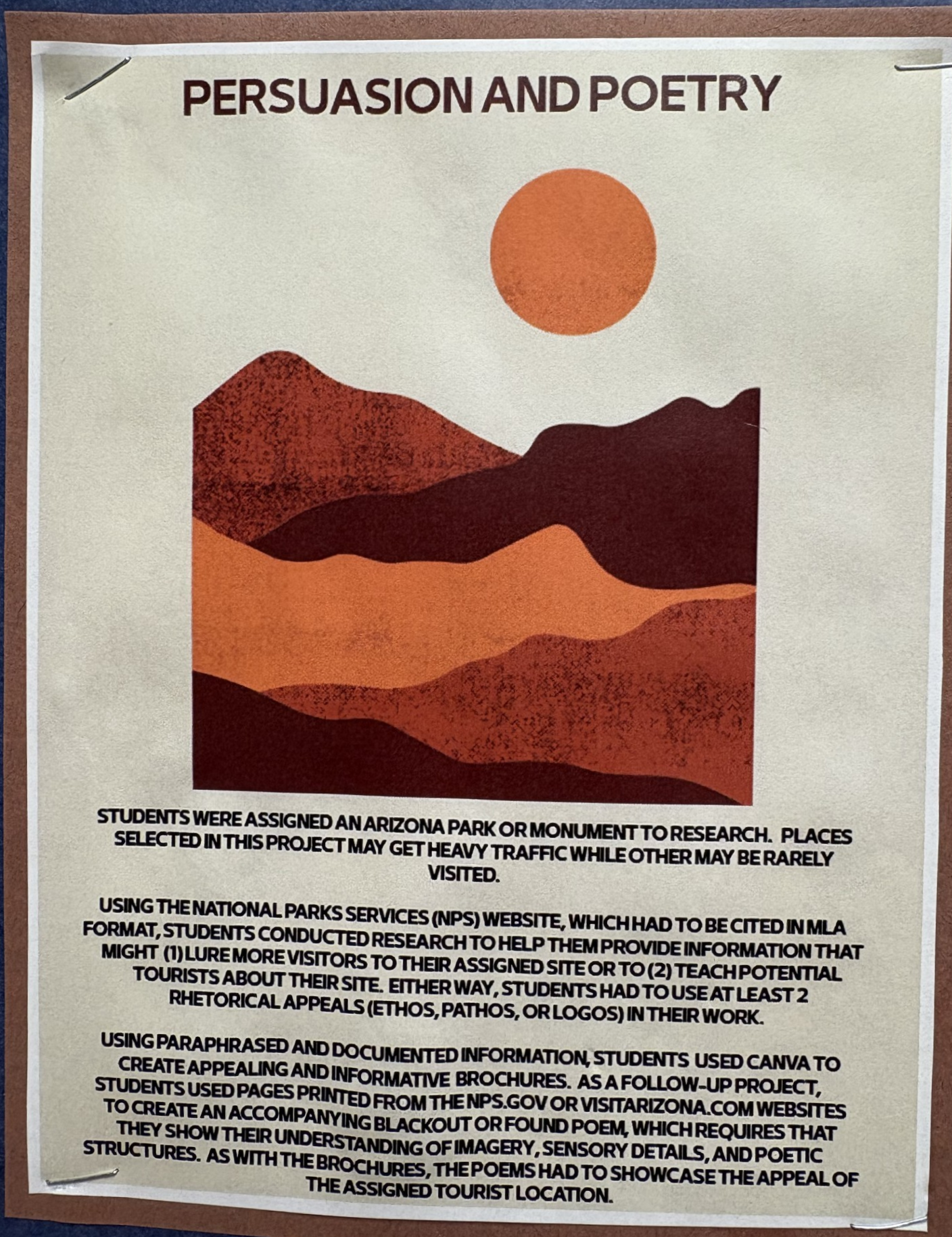
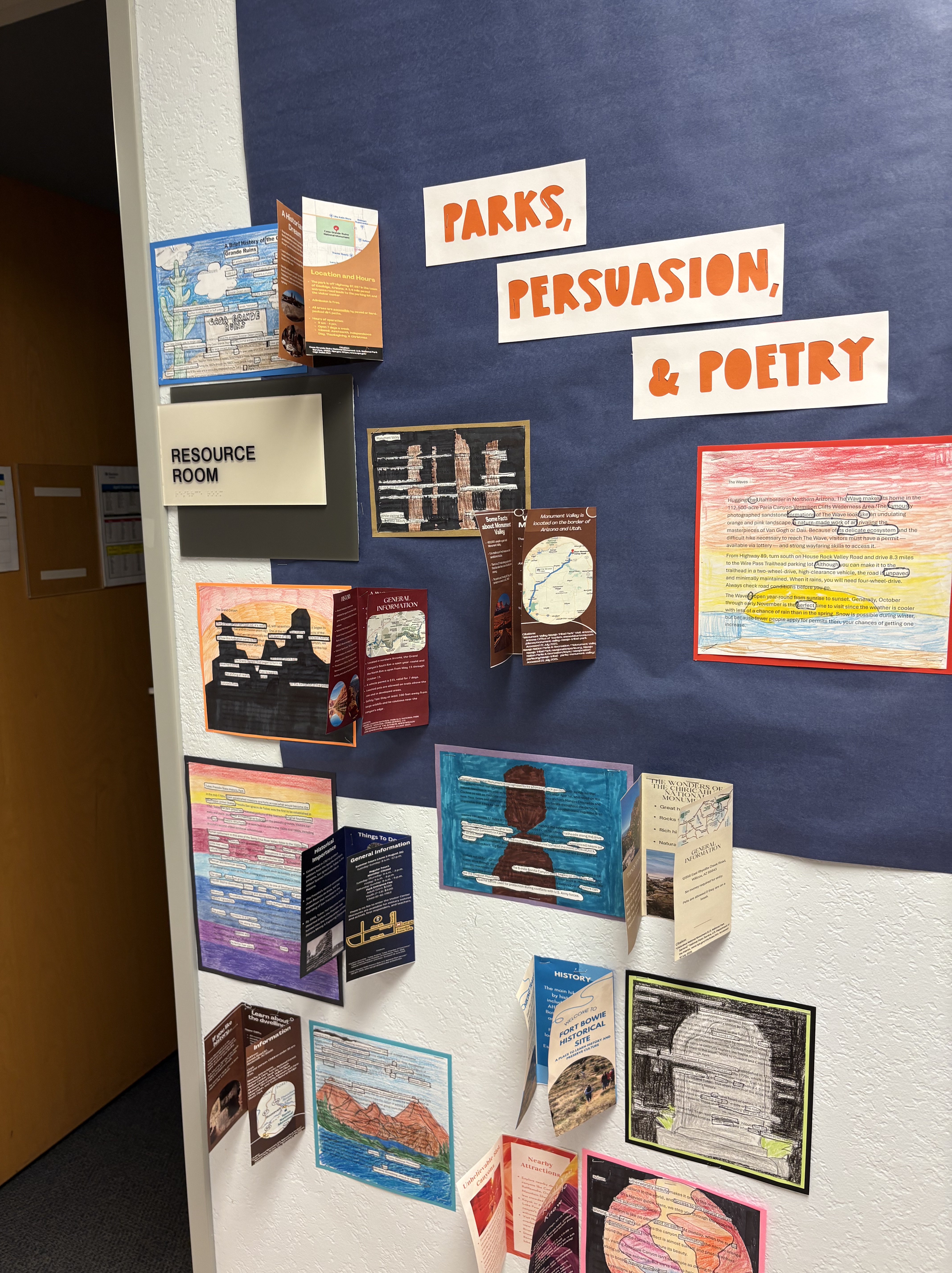
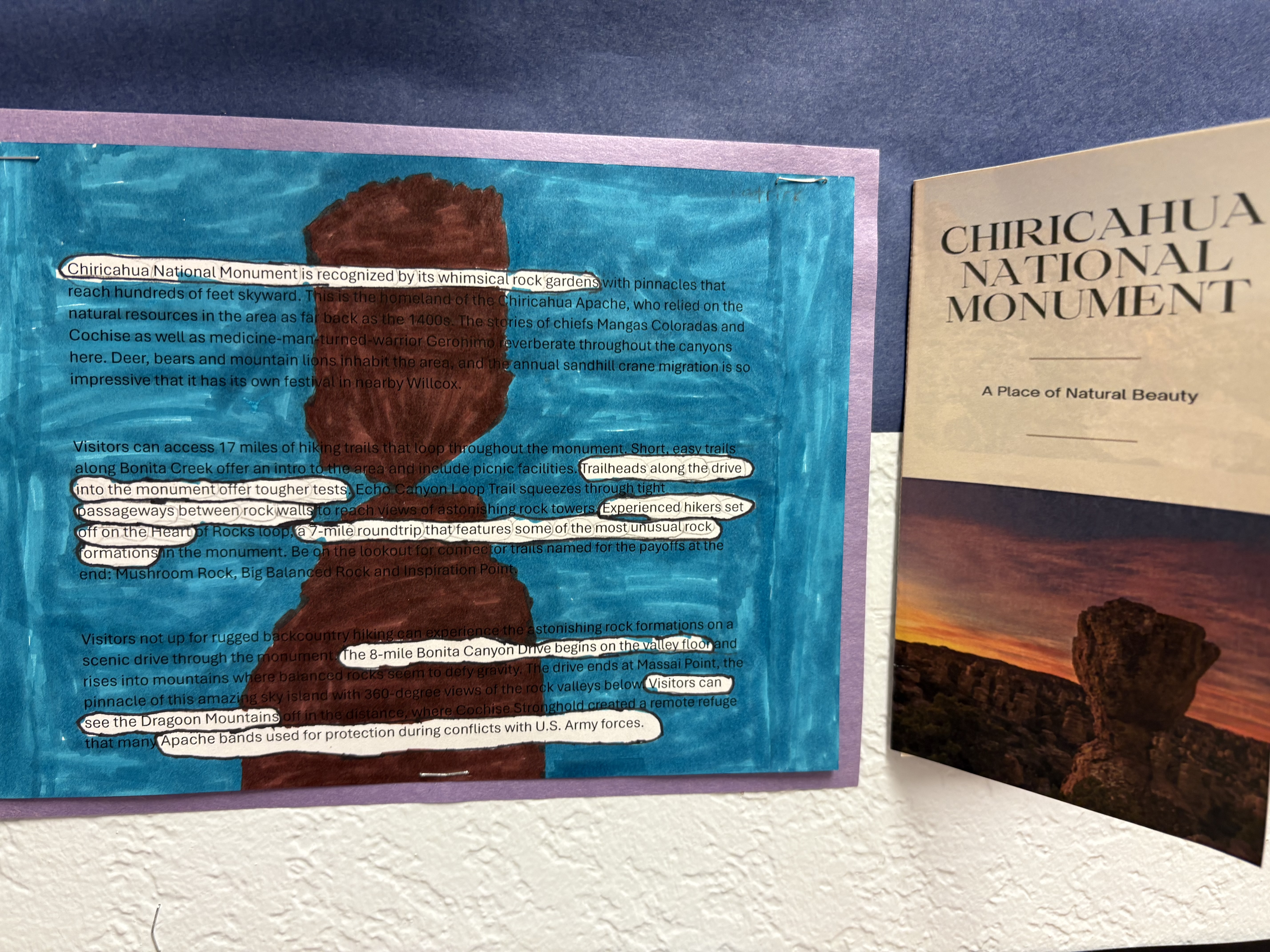
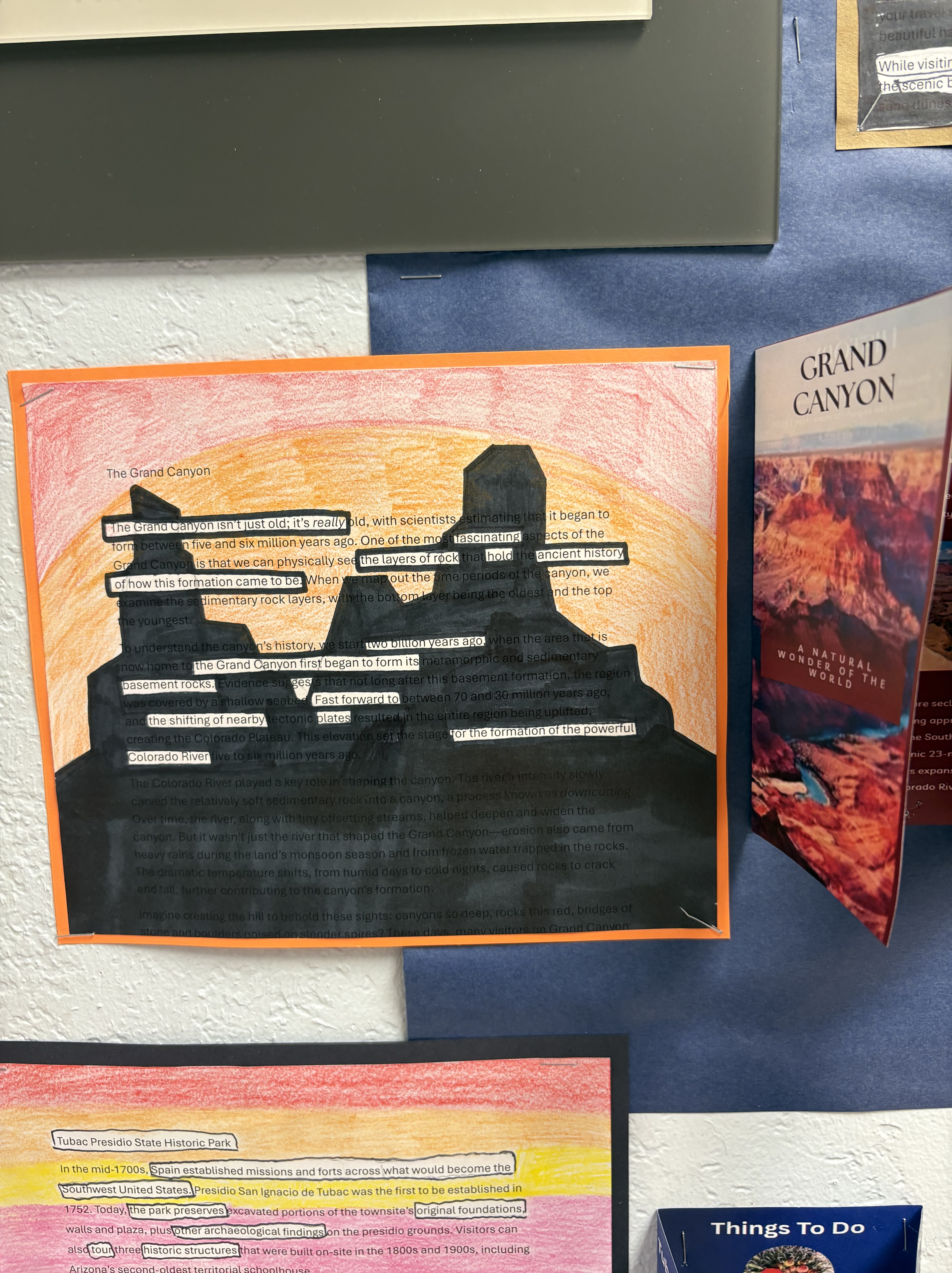
Using Rhetoric to Showcase Arizona’s Parks and Monuments
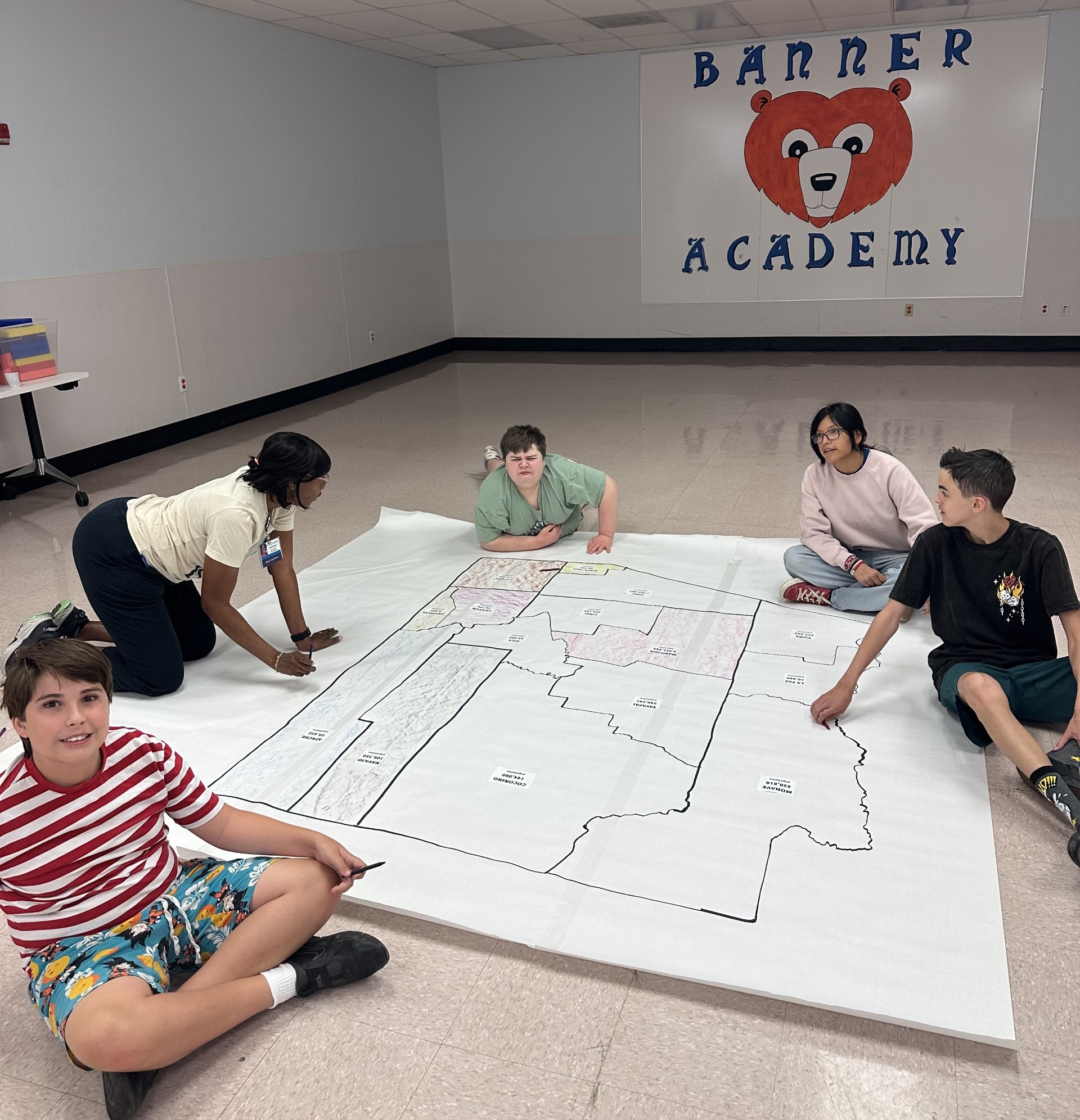
A Close Look at Arizona: Visual Literacy through Mapping


MATH: Arizona’s Arithmetic
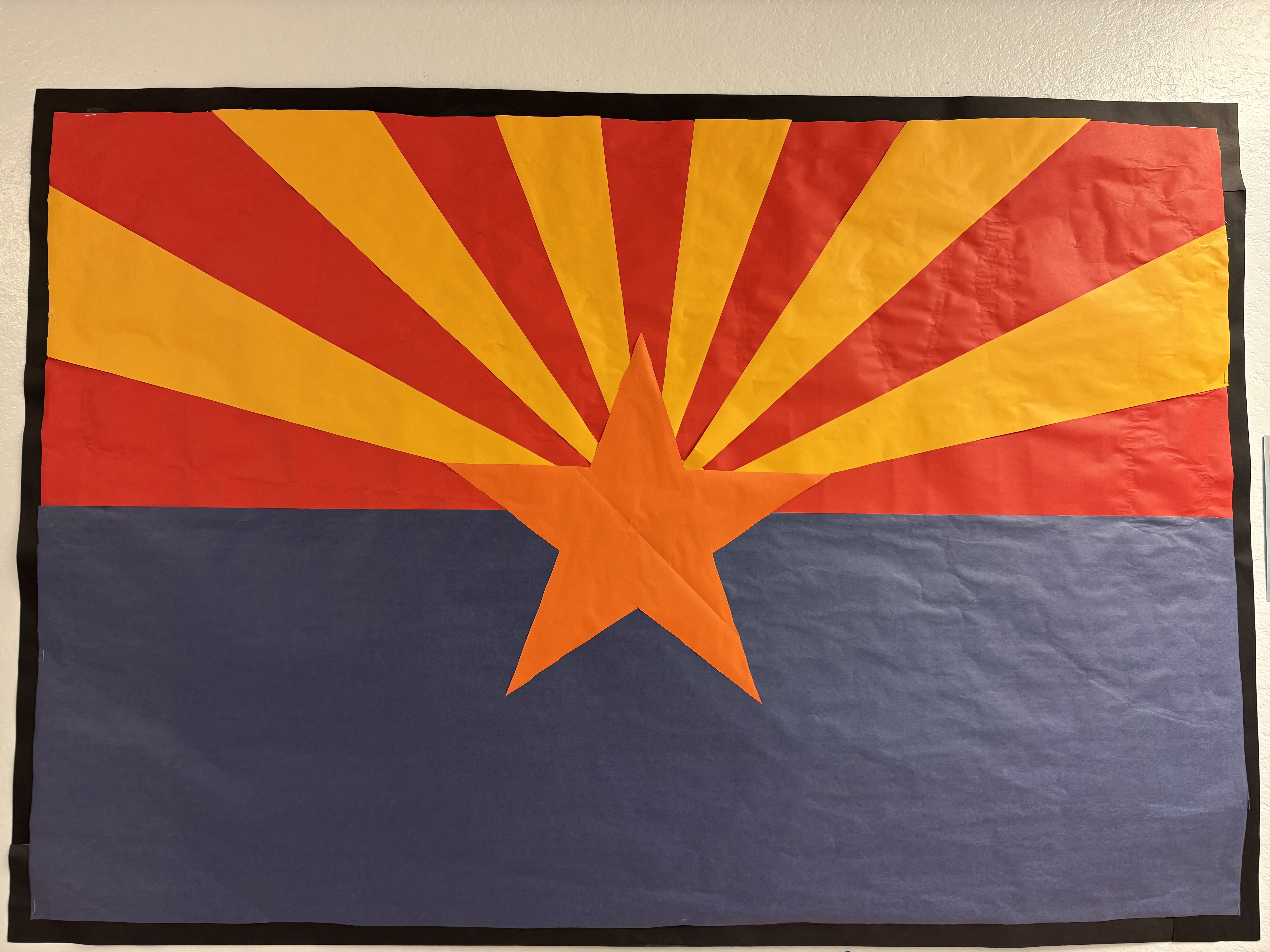
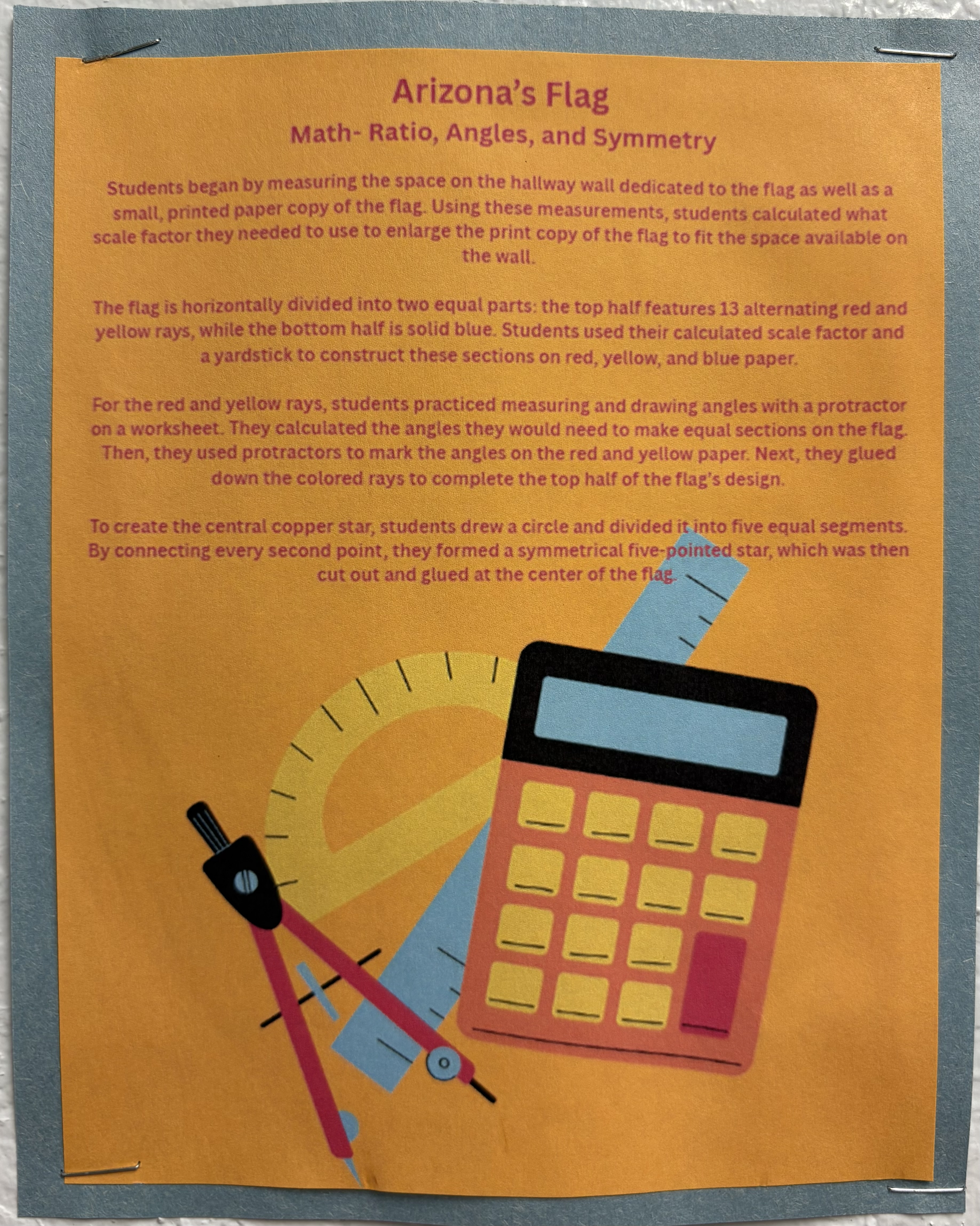
The Geometry of a Scaled State Flag
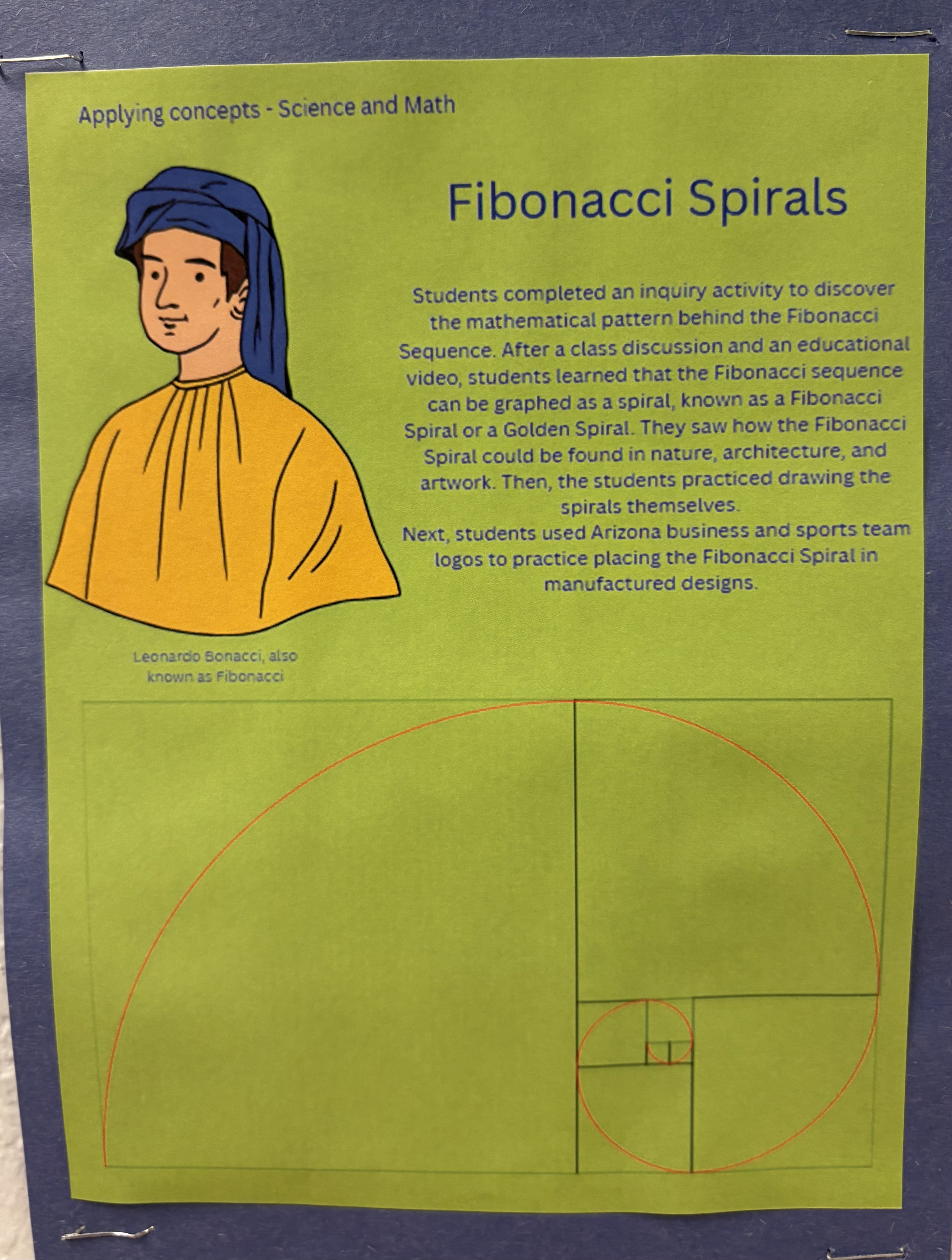
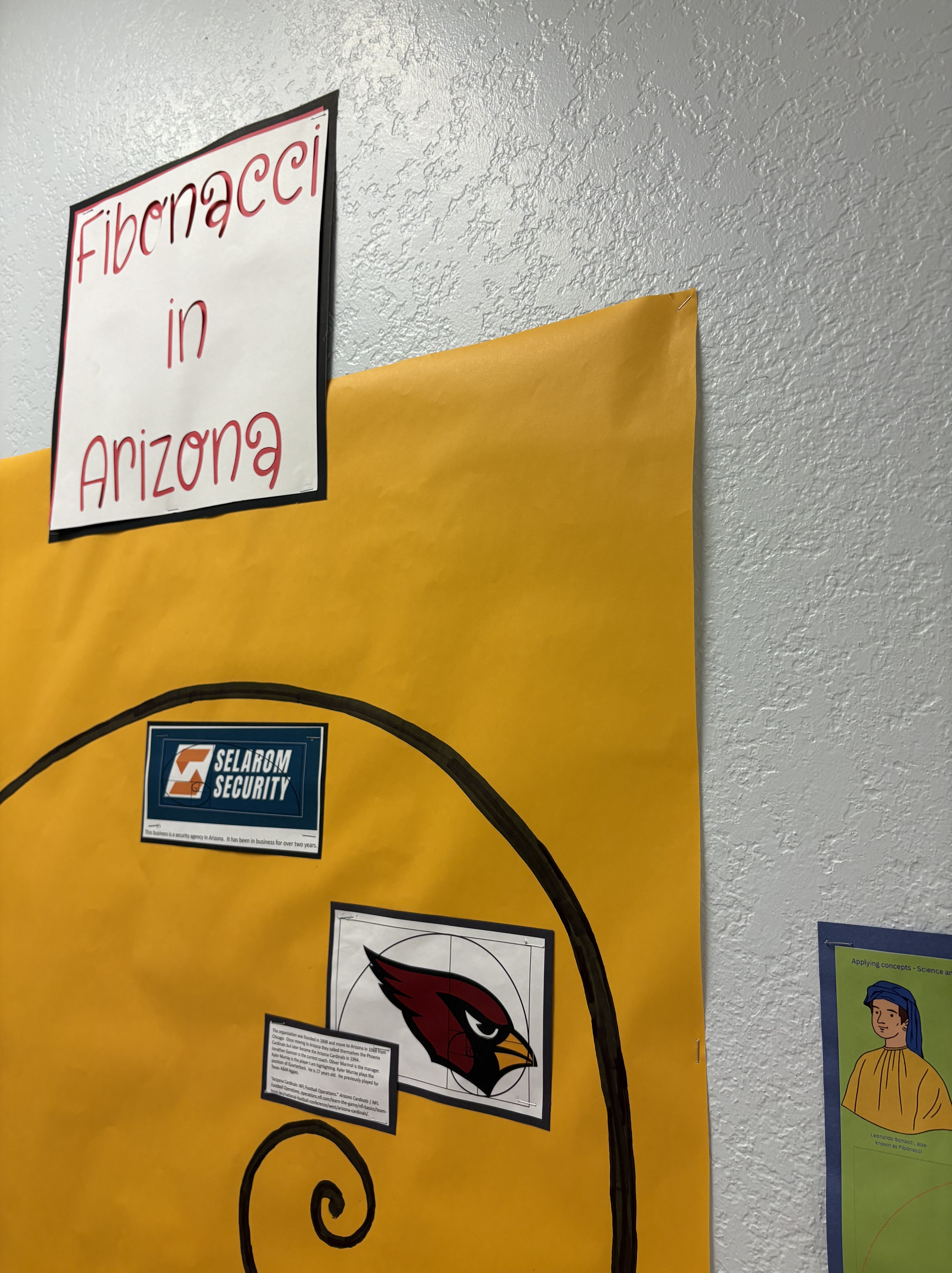
Fibonacci in Nature and in Manufactured Designs

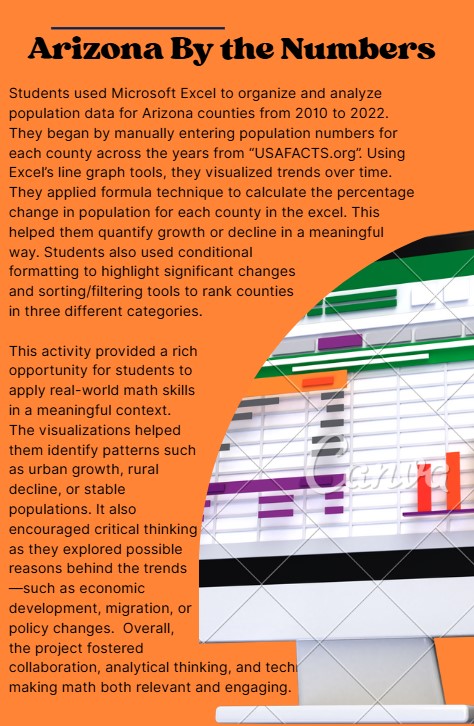
Two Math Projects Demonstrating the Power of Excel for Real-World Data Analysis



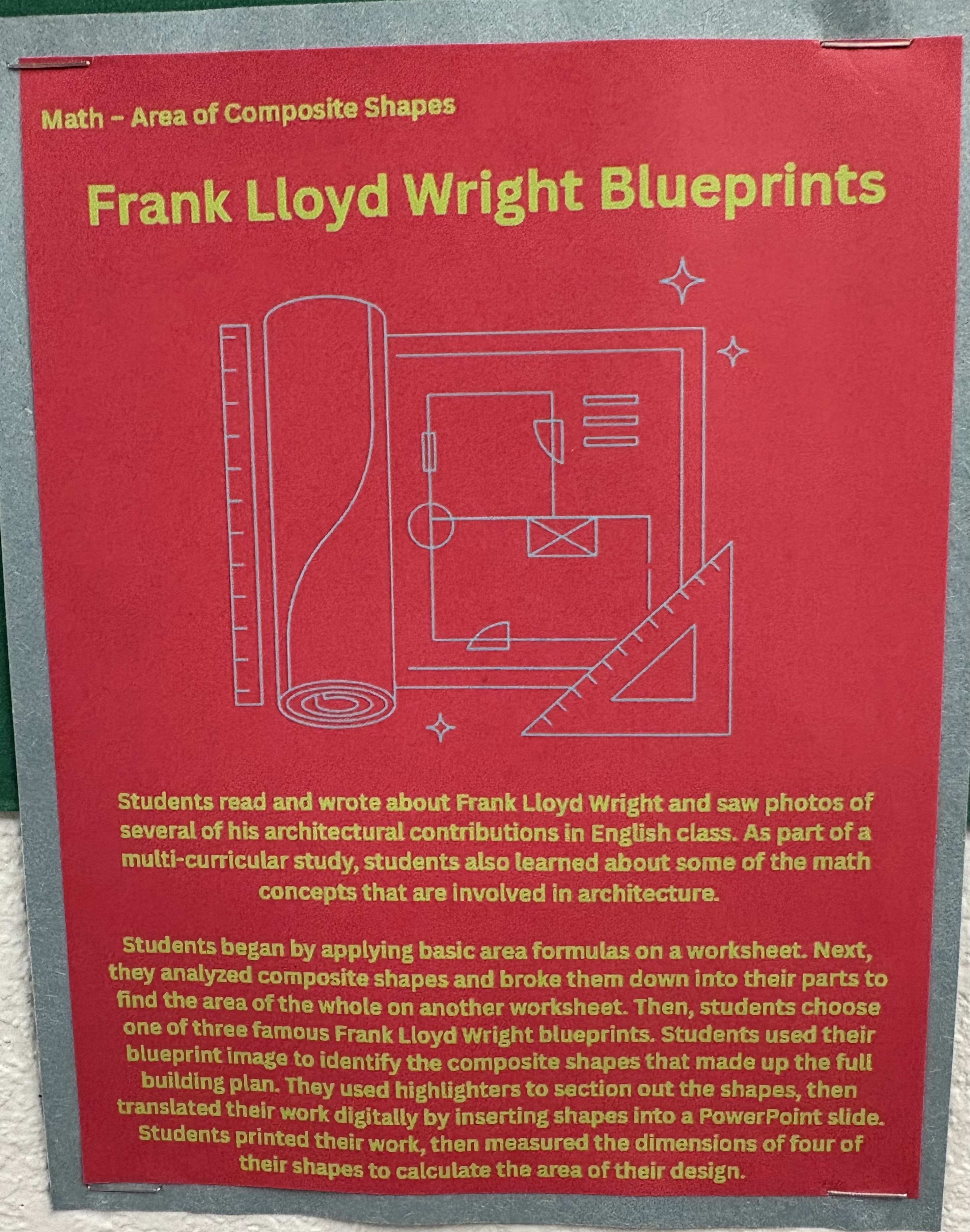
Calculating Areas Using Frank Lloyd Wright’s Architectural Blueprints


SOCIAL STUDIES: A Stroll through Arizona’s History
Recreating the State Seal and Understanding the 5 C’s

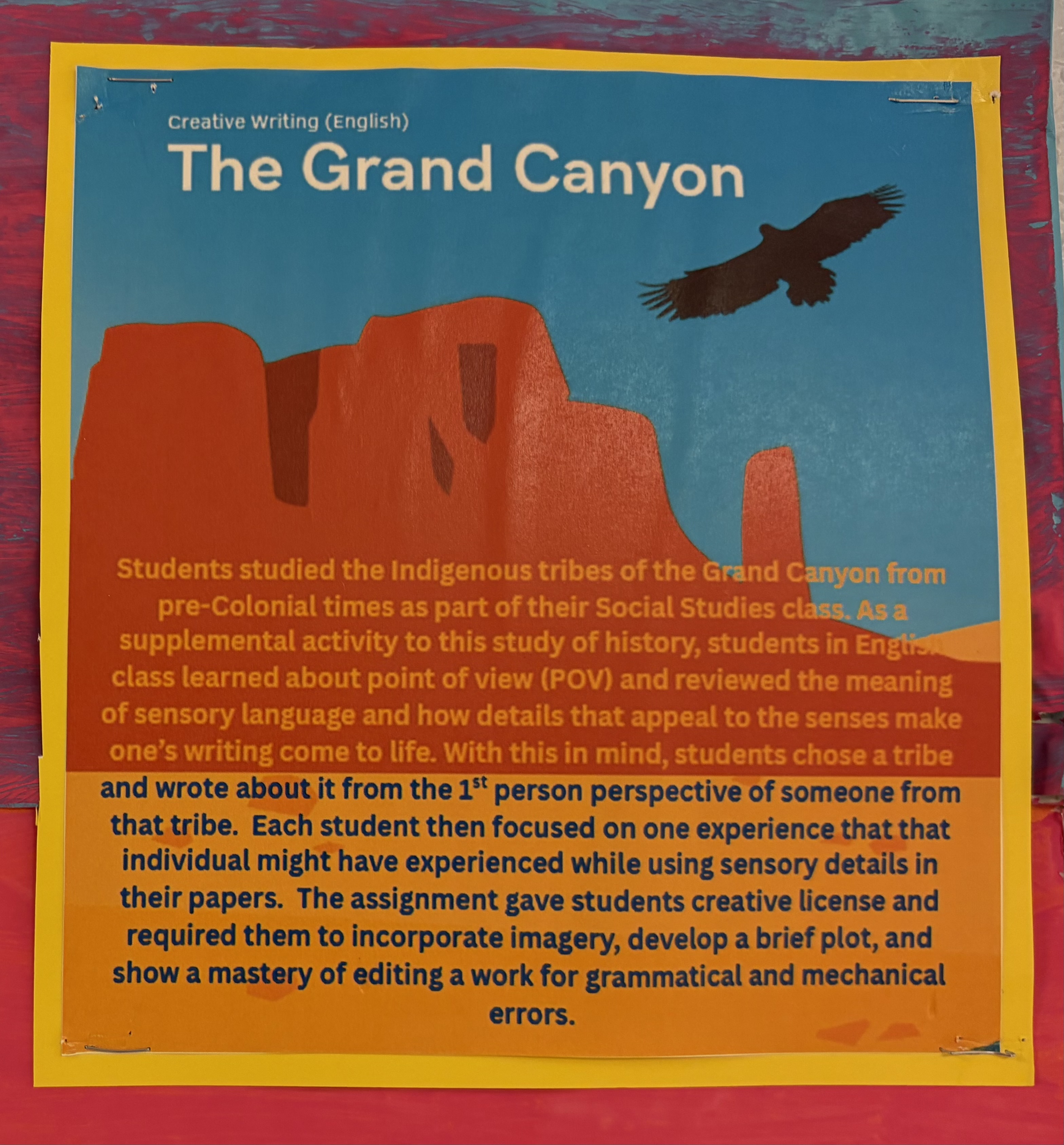
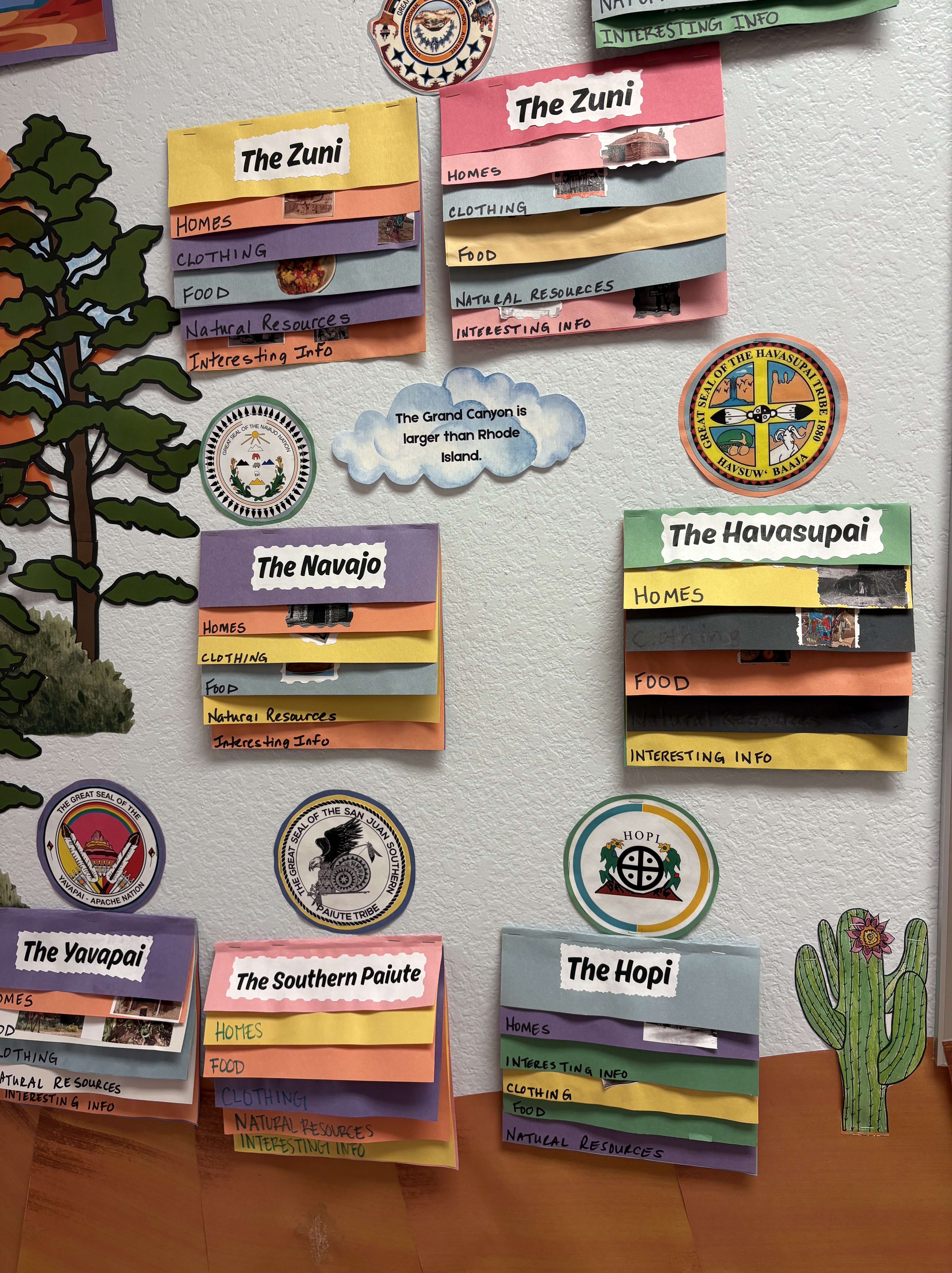
The First Americans: A Close Look at the Indigenous Tribes of the Grand Canyon


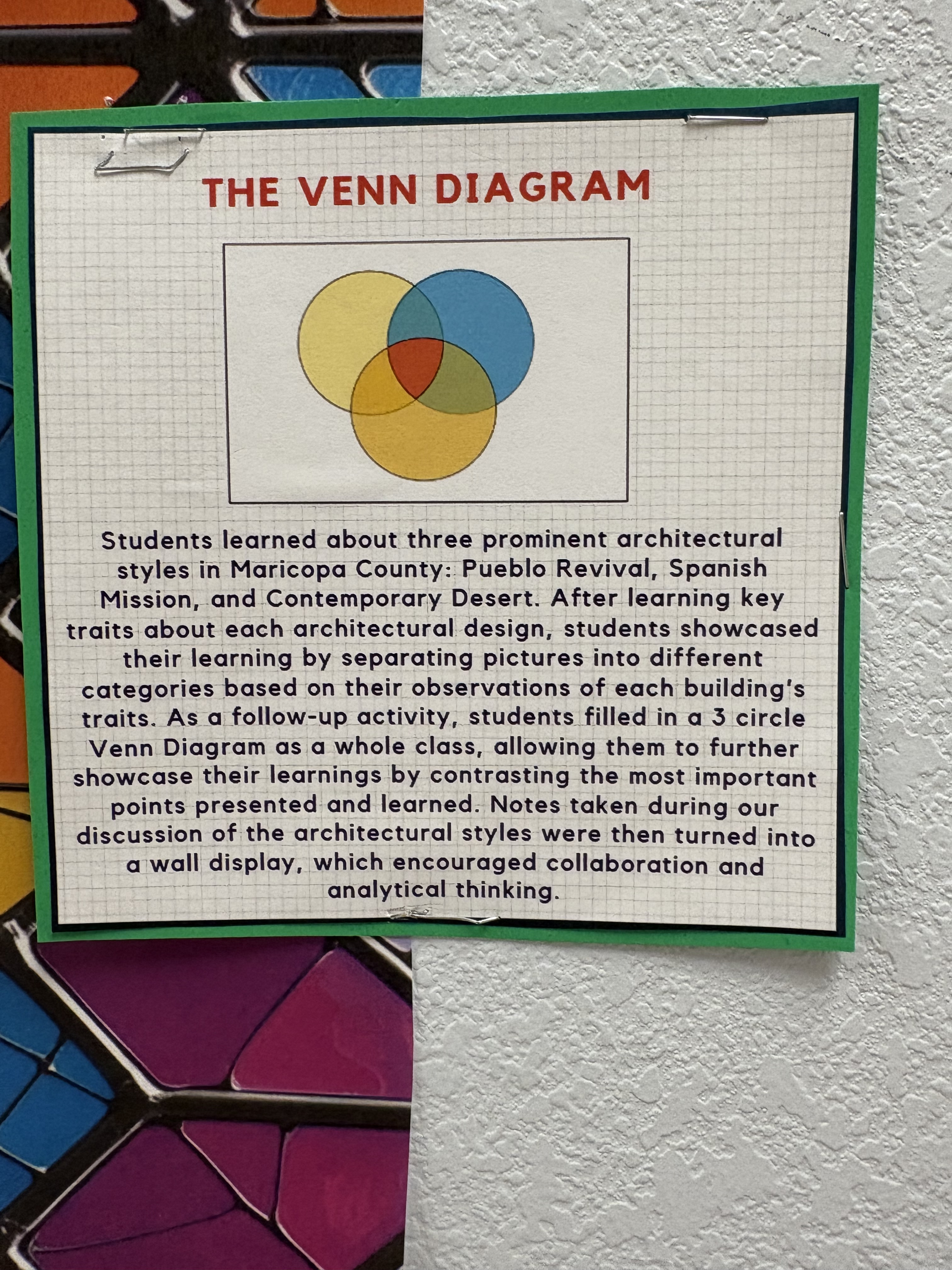
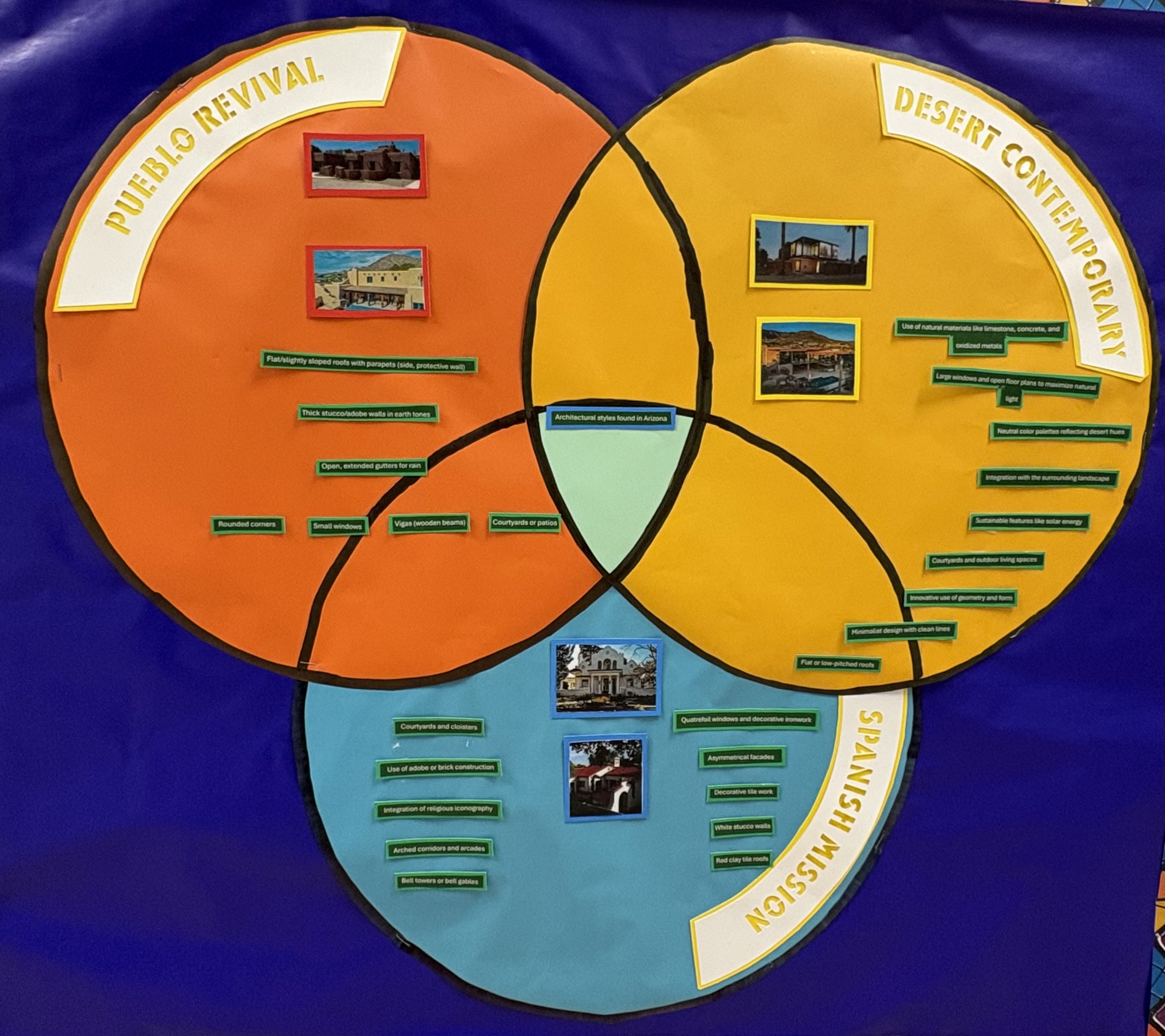
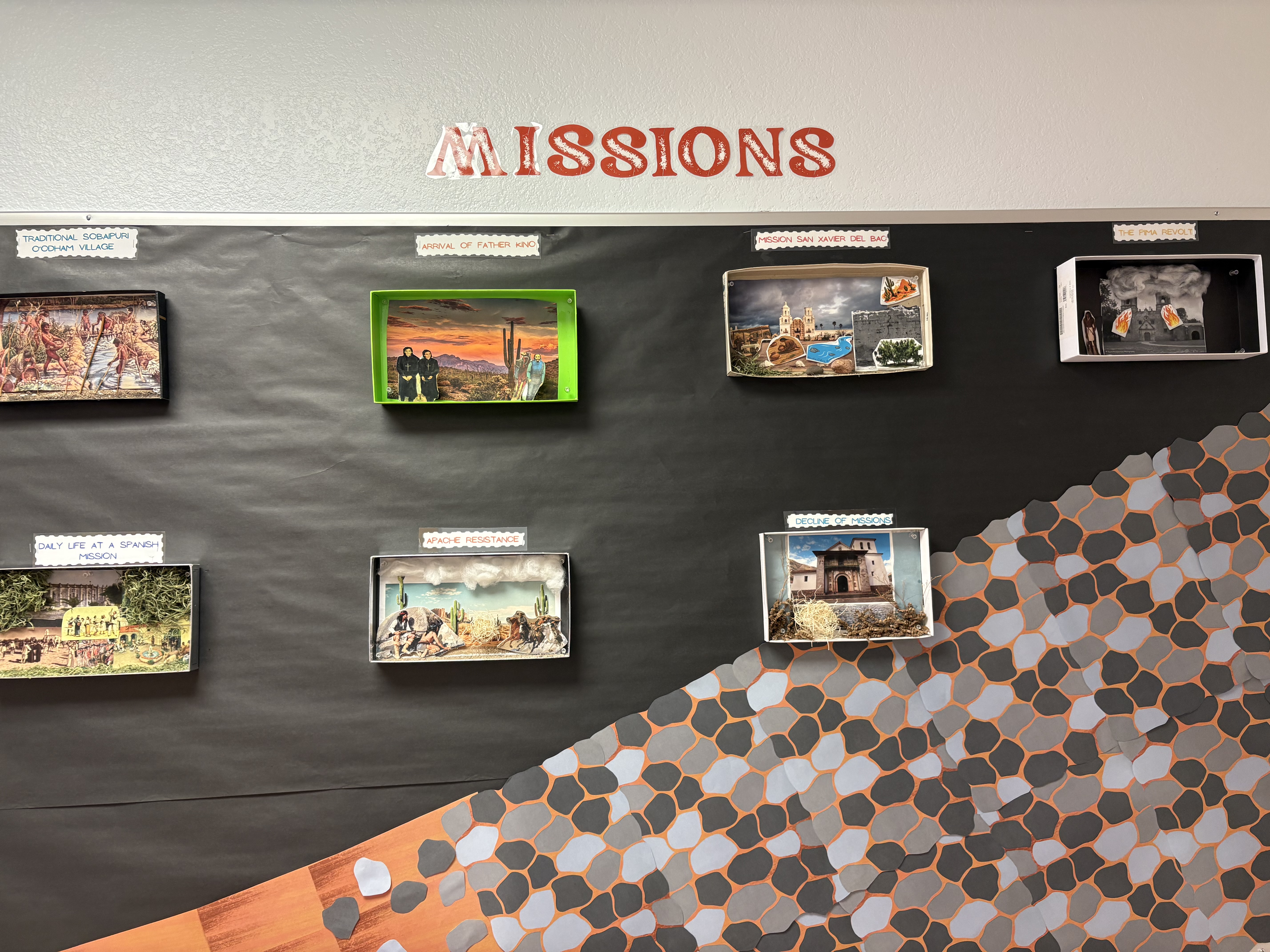
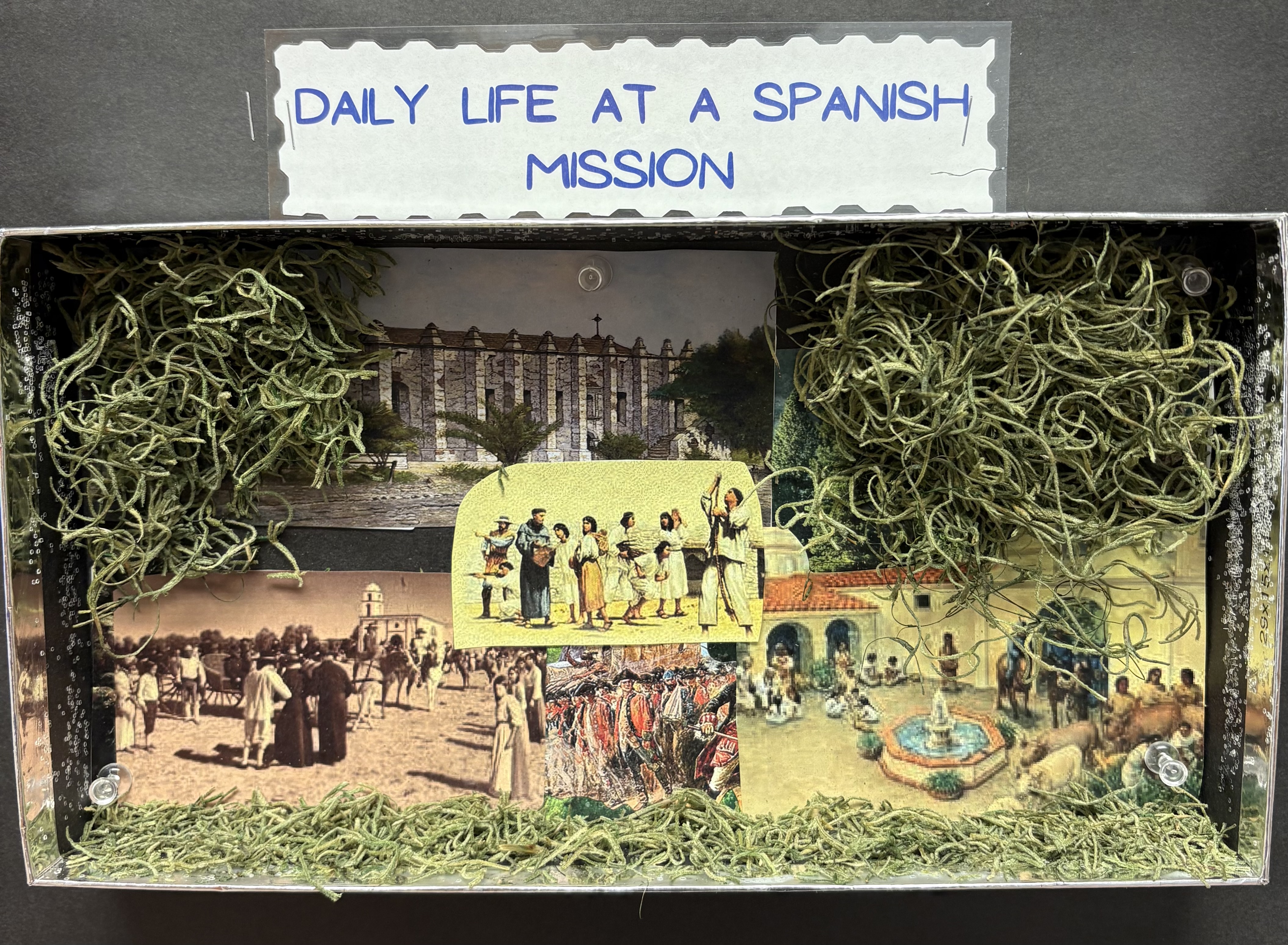
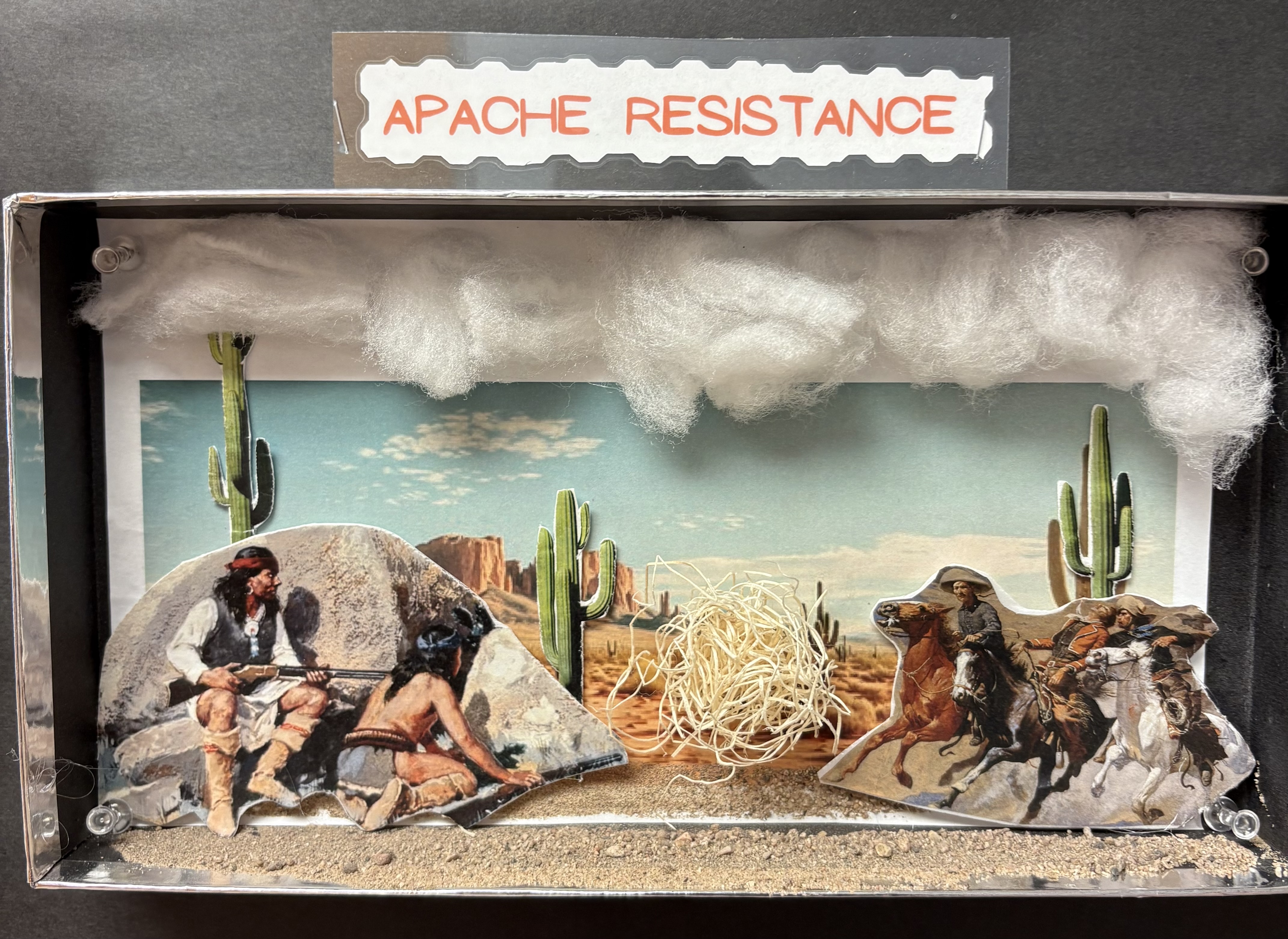
The Historical Diorama: Stories about Arizona’s Missions

MORE COMING SOON!
SUMMER SCHOOL 2025: MORE THAN ACADEMICS
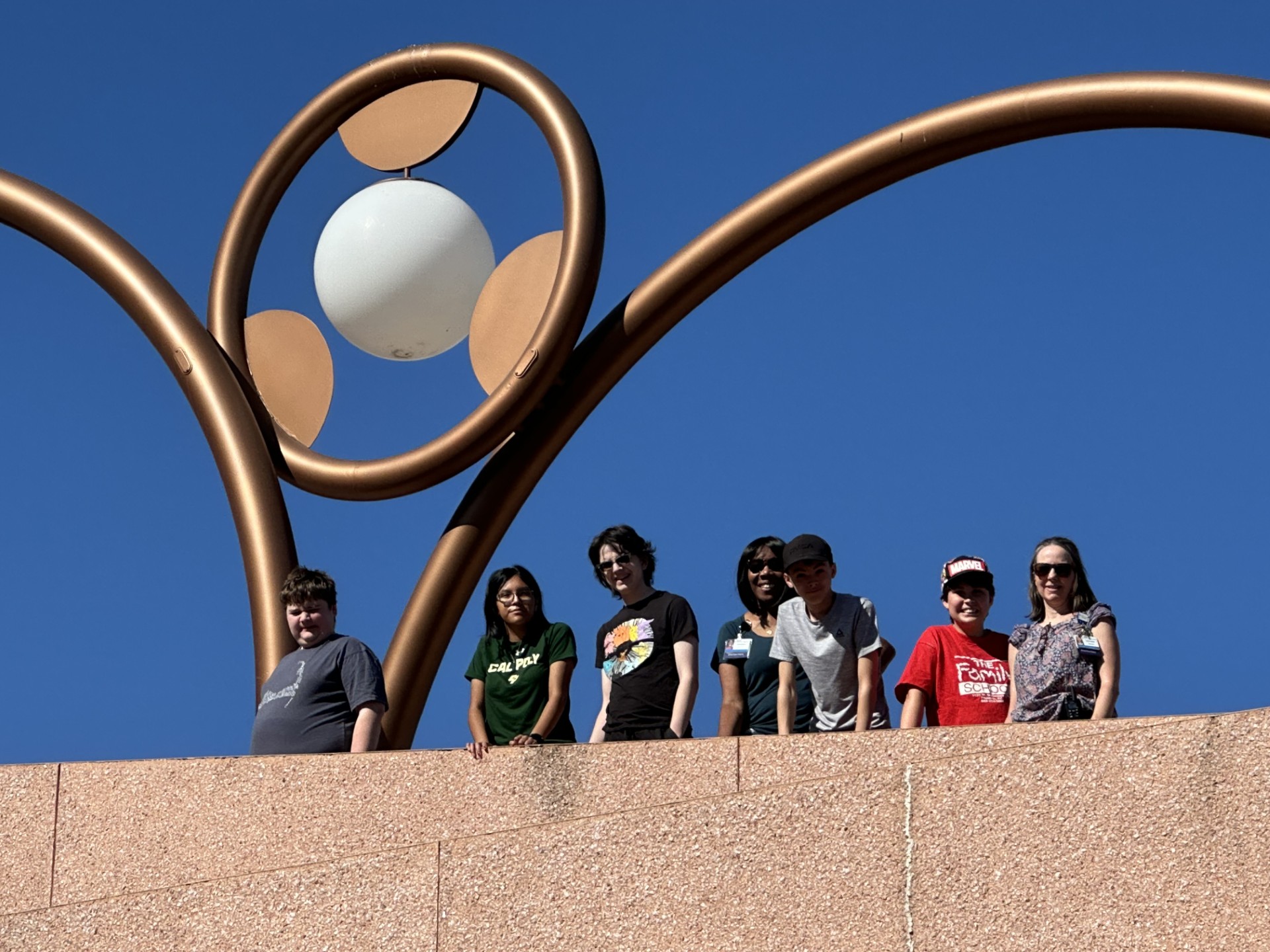
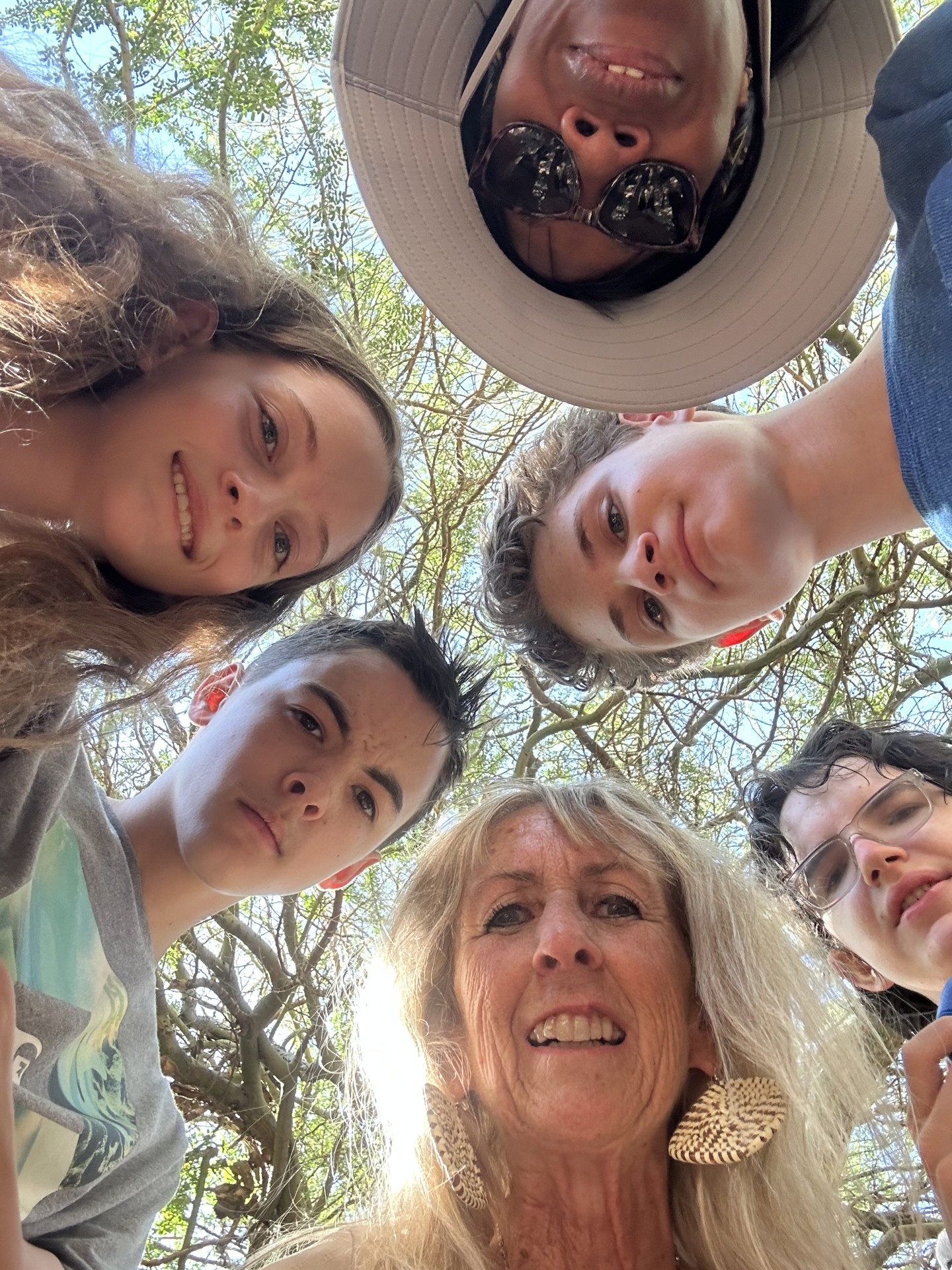
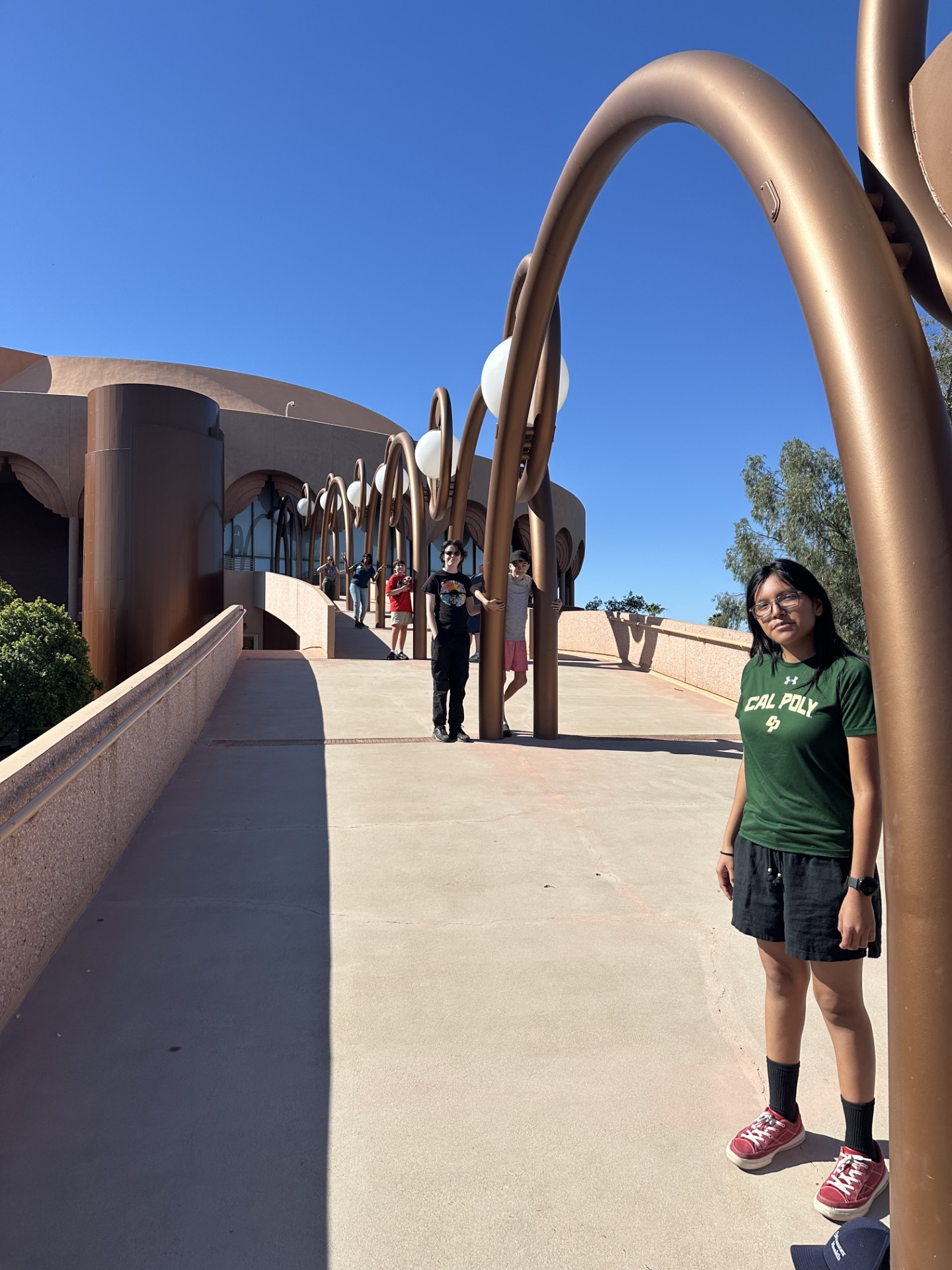
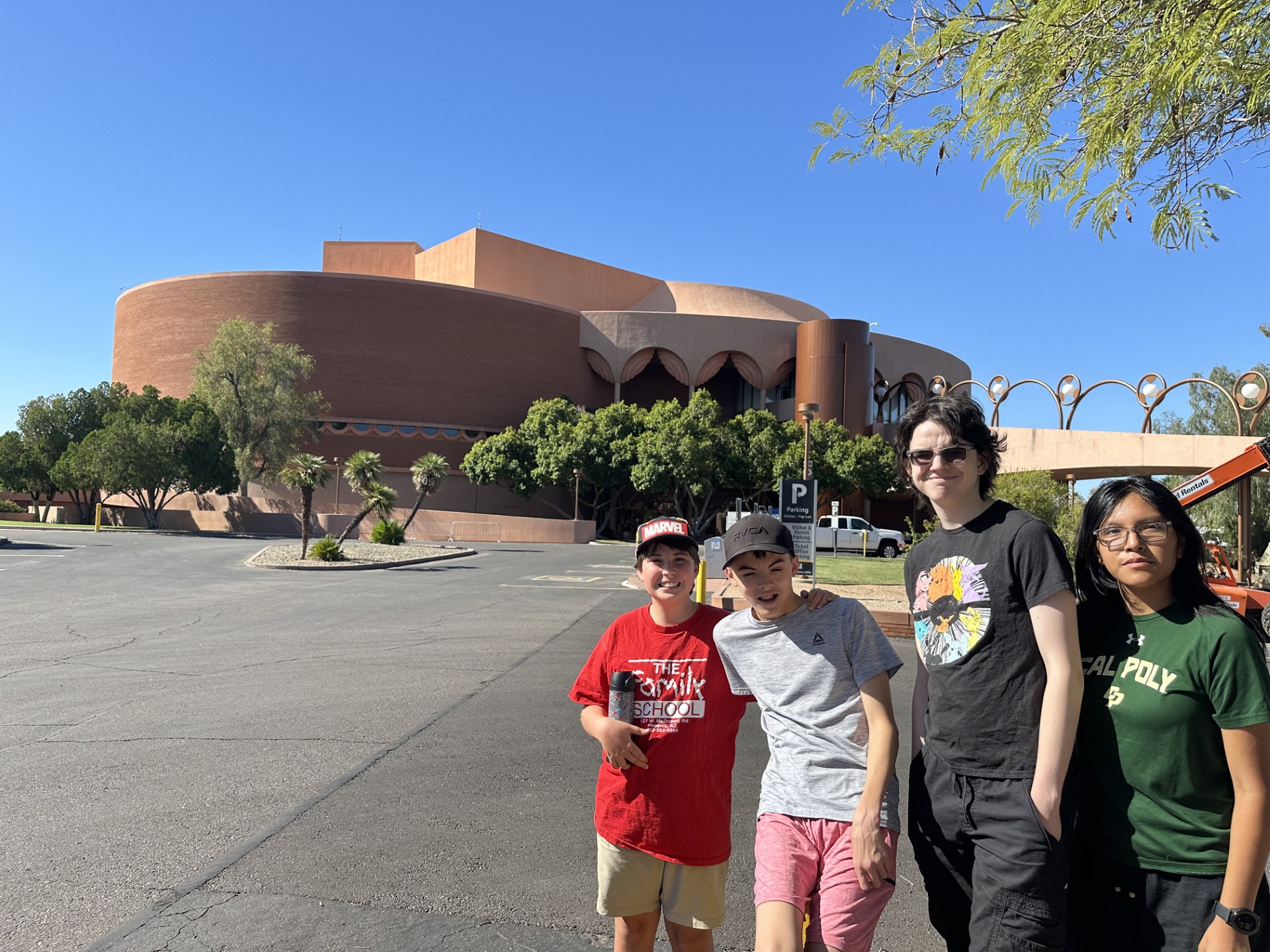
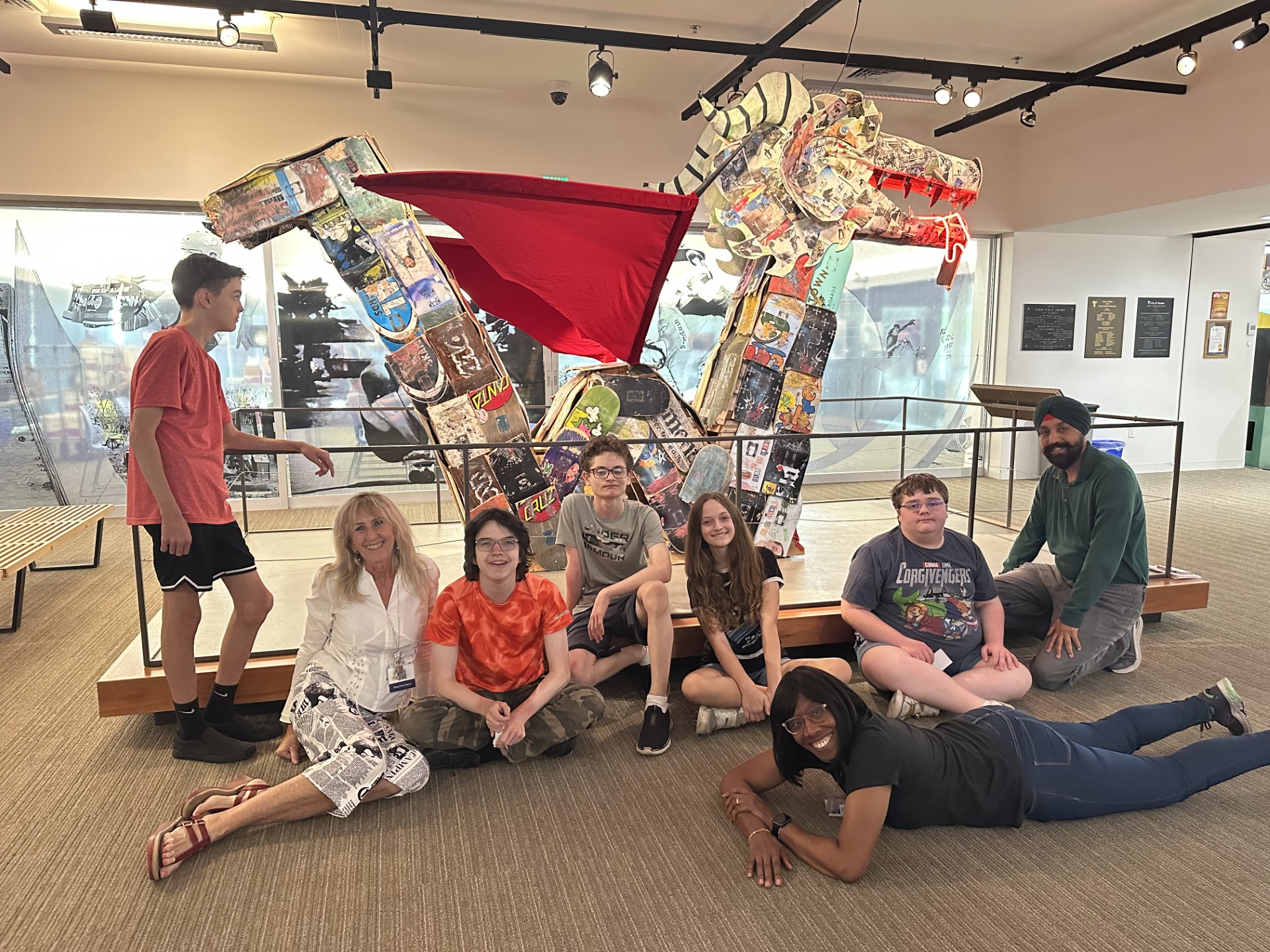
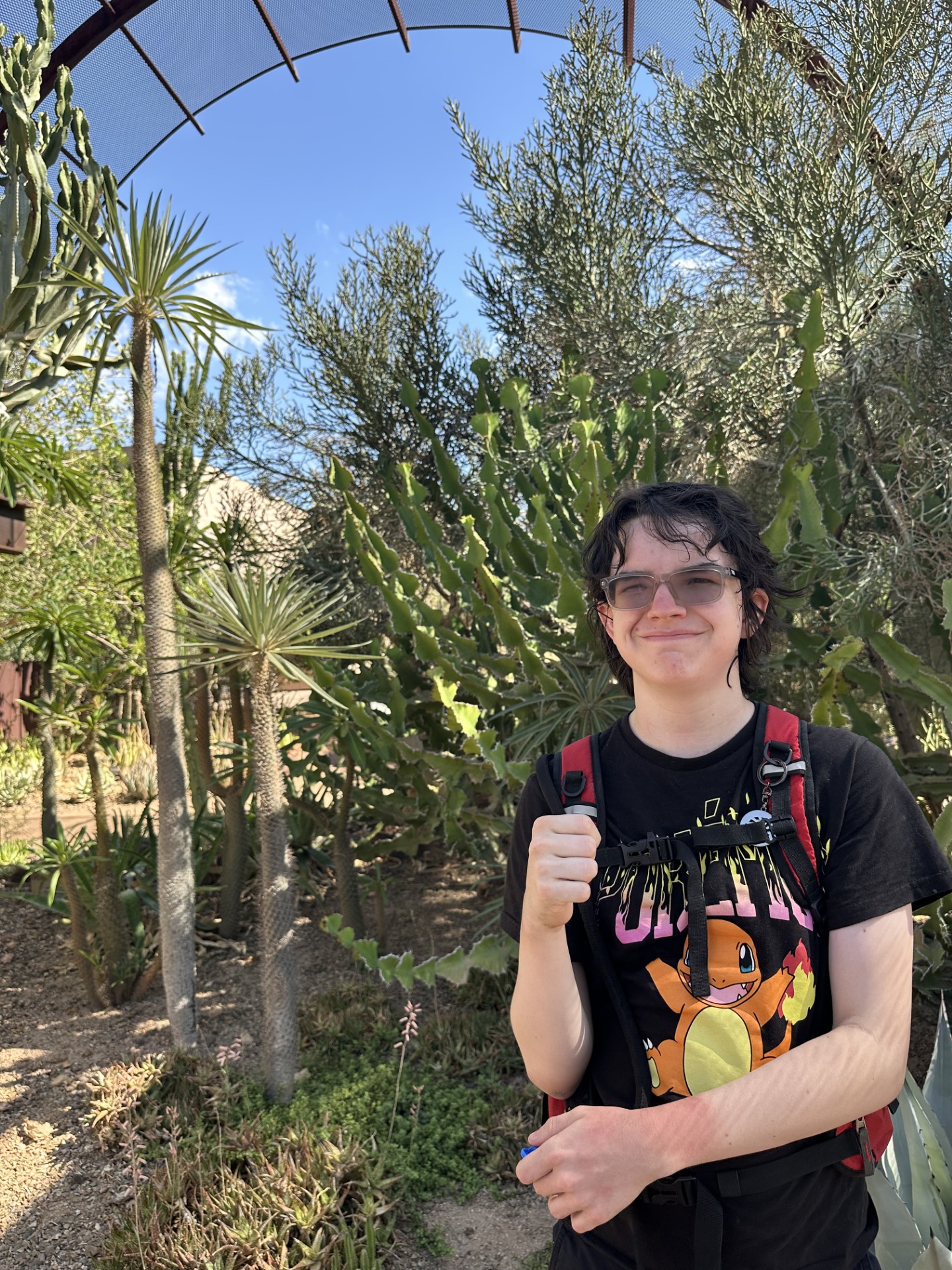
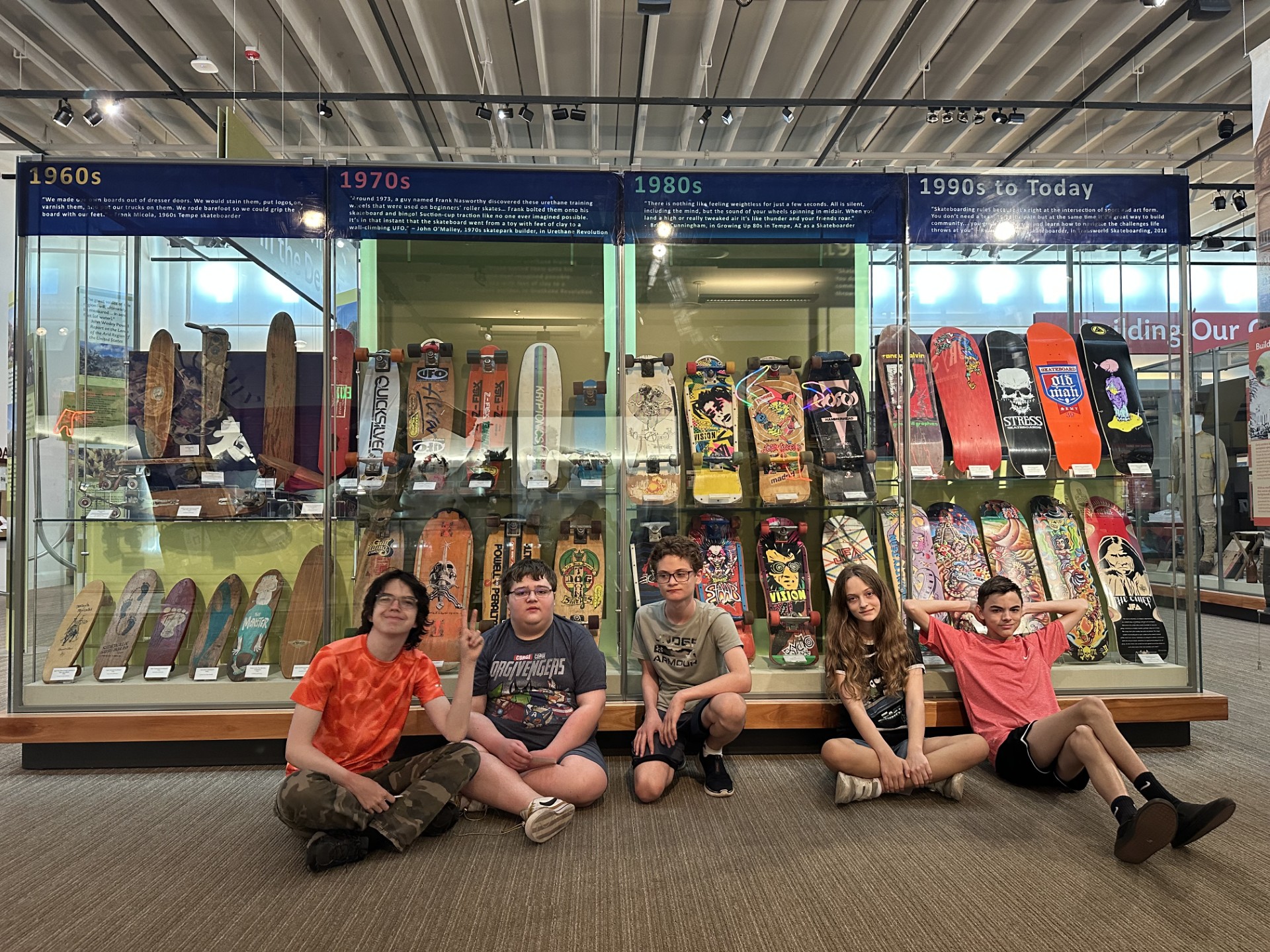
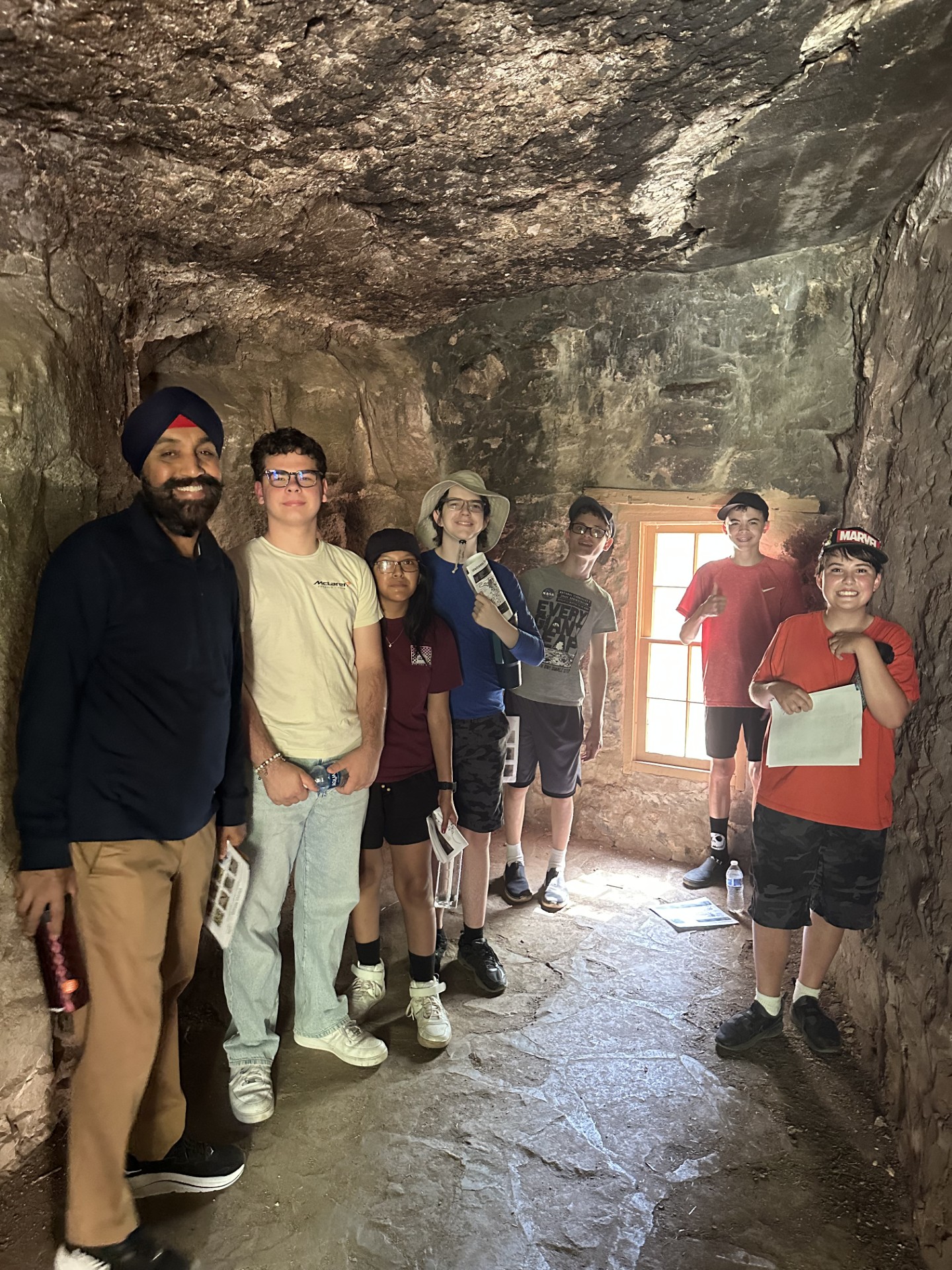
Academics were not our only focus during the 2025 summer school session. Students also participated in field trips and other group activities, like a visit to a splash pad, a walk around a local park, free time in the school’s recreational room, activities in music therapy, and trips to Boyce Thompson Arboretum, the Desert Botanical Gardens, and the Huhugem Museum.
These structured, yet highly engaging group activities, provided sensory experiences, stimulated curiosity and engagement, helped students adapt to new environments, promoted learning, cooperation, and communication, offered a sense of inclusion and trust, all while promoting group cohesion among students and between staff and students.
Here are some of our highlights.






Summer School 2024
Banner Academy’s 2024 Extended School Year (ESY) program has three main goals:
- Students will engage in a six-week, project-based, cross-curricular study centered on the 2024 Summer Olympics.
- Students will participate in recreational and academic outings, as well as enjoy social time with their peers.
- Students with credit deficits will attend summer school in core classes for credit recovery.

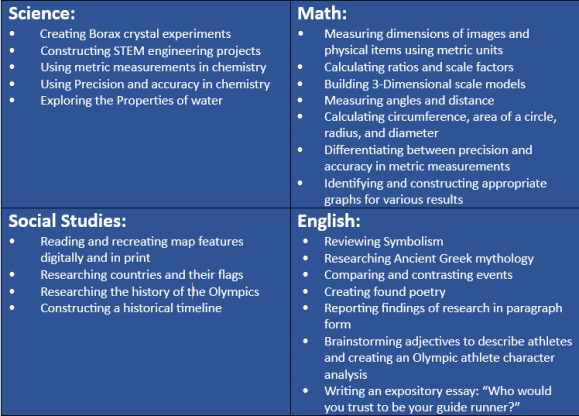
- For the Olympics Project-Based Learning (PBL) component of ESY, students will receive direct instruction from teachers in all four core classes — English, Math, Science, and Social Studies — to reinforce skills learned during the 2023-2024 school year. They will apply standards-based skills to the event, as outlined below:
2. The extracurricular and recreational portion of summer school, which will include group activities in school, as well as field trips to museum and parks, will build social skills, extend student learning beyond the classroom, allow for fun with classmates in a smaller group setting, and provide a structured, consistent routine for students that will allow them to build confidence and independence.
3. Finally, Banner Academy is offering students the opportunity to attend summer school for credit recovery, which is a pathway to complete courses not finished in previous semesters, usually because credits were not earned during enrollment at other schools. Credit recovery is not only a critical way to give students opportunities to catch-up on the credits needed to graduate near or on-time, but it also provides students who have significant credit deficits with a much-needed emotional boost and belief that graduation is possible and within reach.
WEEK 1
Olympics Project
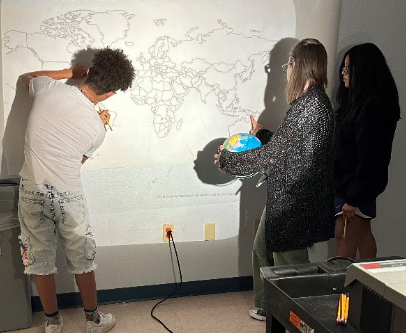
In the first week, students completed activities reinforcing geography skills, which are related to the Social Studies curriculum. The main activity involved using a projector so that students could trace a large world map for a wall display. Many features will be added to the map in the coming weeks to showcase participating countries, past and present host countries, and stages of the torch run.

Additionally, students chose a National Olympic Committee (NOC) from 206 participating in the 2024 Summer Olympics. According to the official Olympics website, no country participates in the Olympics, only NOCs. NOCs “promote and protect the Olympic movement in their respective countries.” Each student then drew the country’s flag, described the symbols present on the flag, and gave some facts about the country (population, primary language, etc.). Throughout summer school, students will research additional flags to add to the summer school collection.

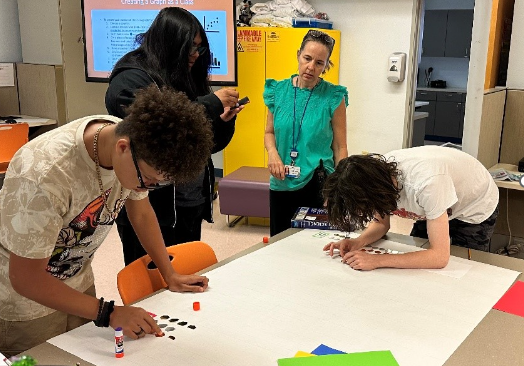
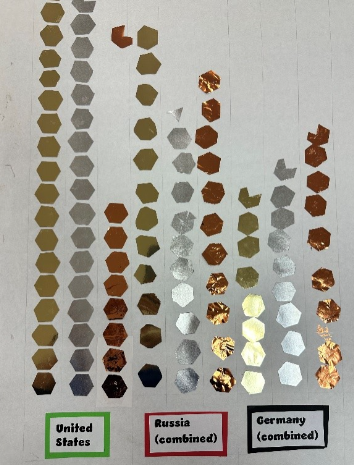
They followed this activity by making pictographs. Using data about some participating countries’ medal counts, students made calculations to construct a pictograph displaying the gold, silver, and bronze medals won by those countries during the modern Olympics. Not only does this touch upon the elements of Math, but it also builds very critical visual literacy skills.

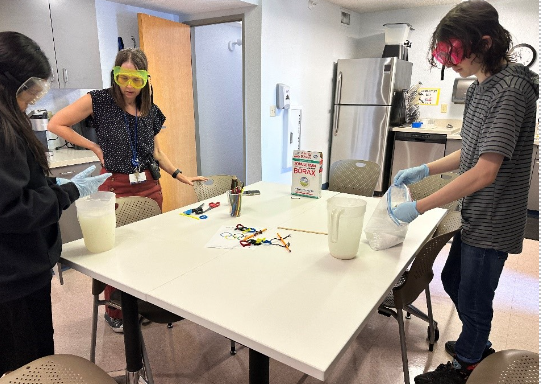
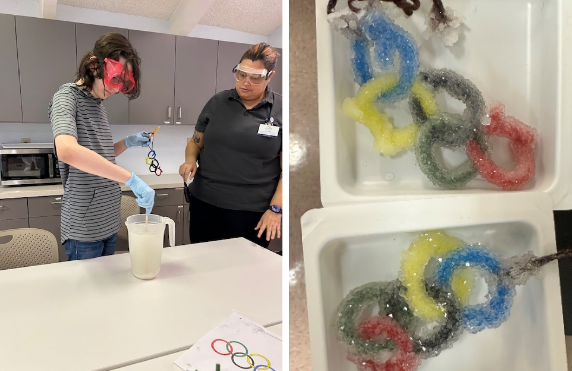
Finally, students honed their scientific skills by using Borax, hot water, and Olympic Rings crafted from colorful pipe cleaners to learn about the properties of supersaturated solutions. The experiment resulted in the formation of crystal Olympic Rings!
Extracurricular Activities
Gilbert Riparian Reserve Field Trip
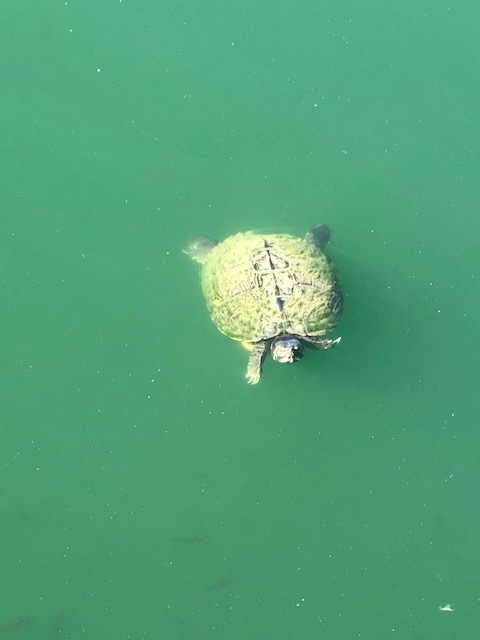
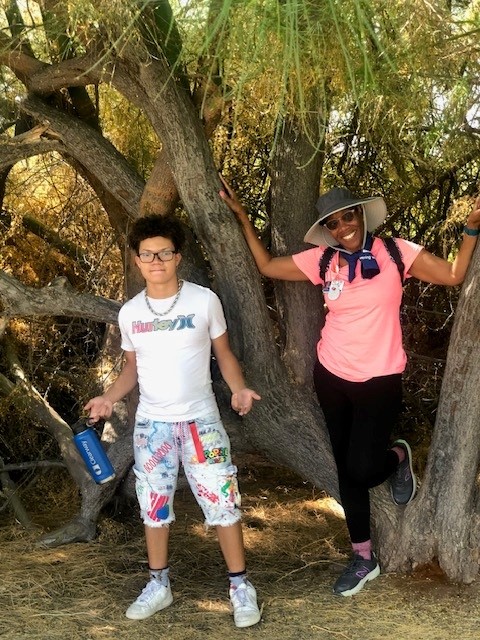
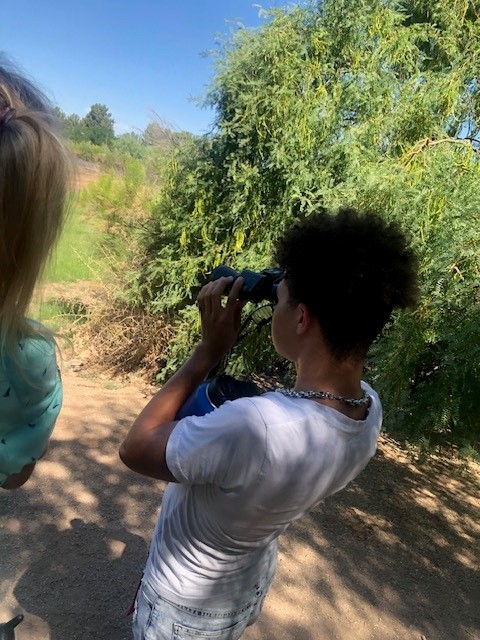
Students visited the Gilbert Riparian Reserve in this first week of school and were able to see a family of ducks in the lake, a moss-covered turtle, and jackrabbits in the fields. The trip provided an experiential learning experience where staff and students discussed the importance of preserving natural habitats and the diverse wildlife that abounds within, both locally and around the world. The visit to the Gilbert Riparian Reserve was a wonderful way to connect with nature and have fun in the process.



Arizona Museum of Natural History Field Trip
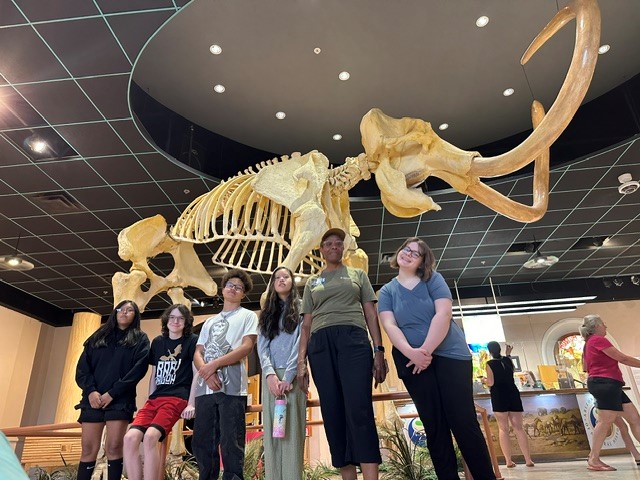

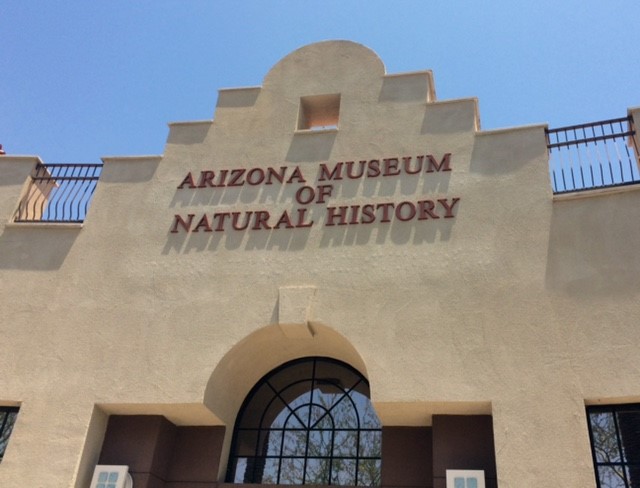
On Friday of Week 1, students explored the ancient history of the Arizona region at the Arizona Museum of Natural History. They saw where dinosaur fossils had been discovered, and they marveled at the size and age of the prehistoric creatures. They also learned about the indigenous peoples who once lived in the areas of the Southwest as they studied their artifacts and gained a deeper understanding of their culture and way of life.

Next, the students ventured to a replica of an old mining shaft where they could see the remnants of the gold rush era. They imagined what life must have been like for the miners who toiled in the dark depths of the earth in search of precious metals. Some students, hoping to strike it rich, even tried their hand at panning for gold in a nearby stream, like the prospectors of old.

The final stop on their journey was a visit to the old Mesa jail cells, where they learned about the harsh conditions that prisoners endured in the past.


As the students reflected on all they had seen and learned, they felt a deep appreciation for the rich history of the Arizona region and the people who had come before them.
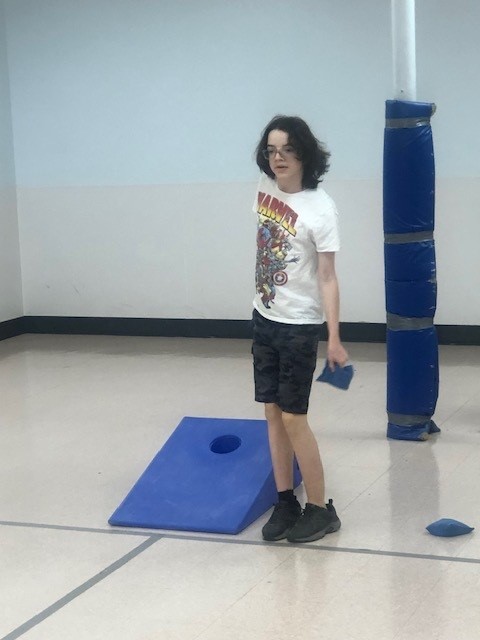
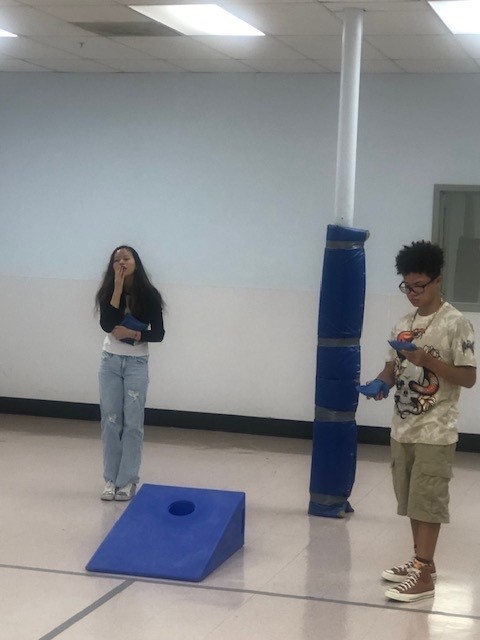
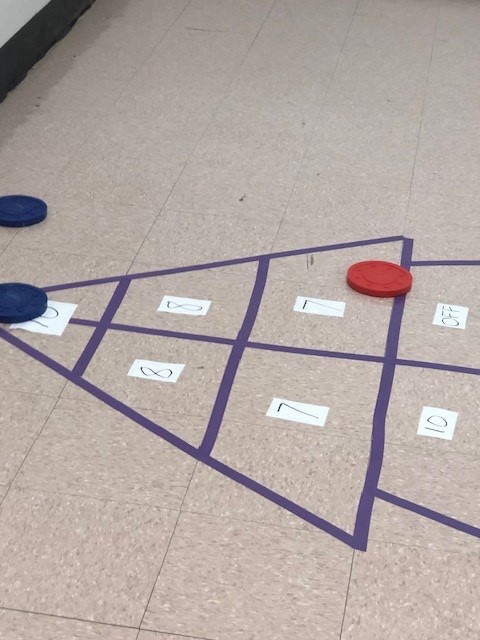
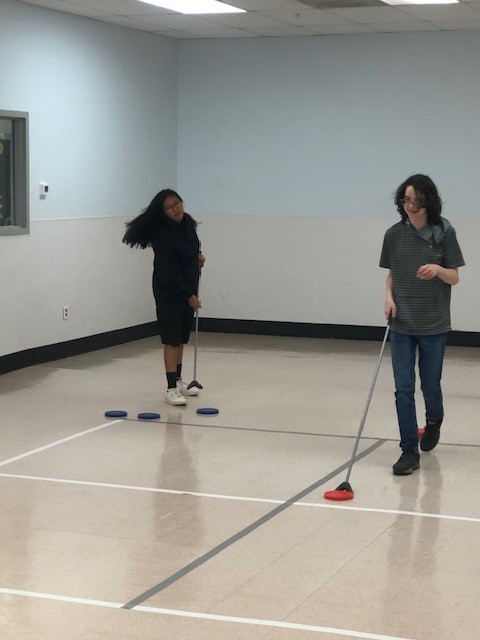
In-School Activities: Cornhole and Shuffleboard




WEEK 2
Olympics Project
Students completed another pictograph about medals won during the modern Olympics. The graph created in Week 1 shows total medals won by the top 10 overall medal winners. Alternatively, the graph from Week 2 shows medal counts of the top 10 countries per capita.
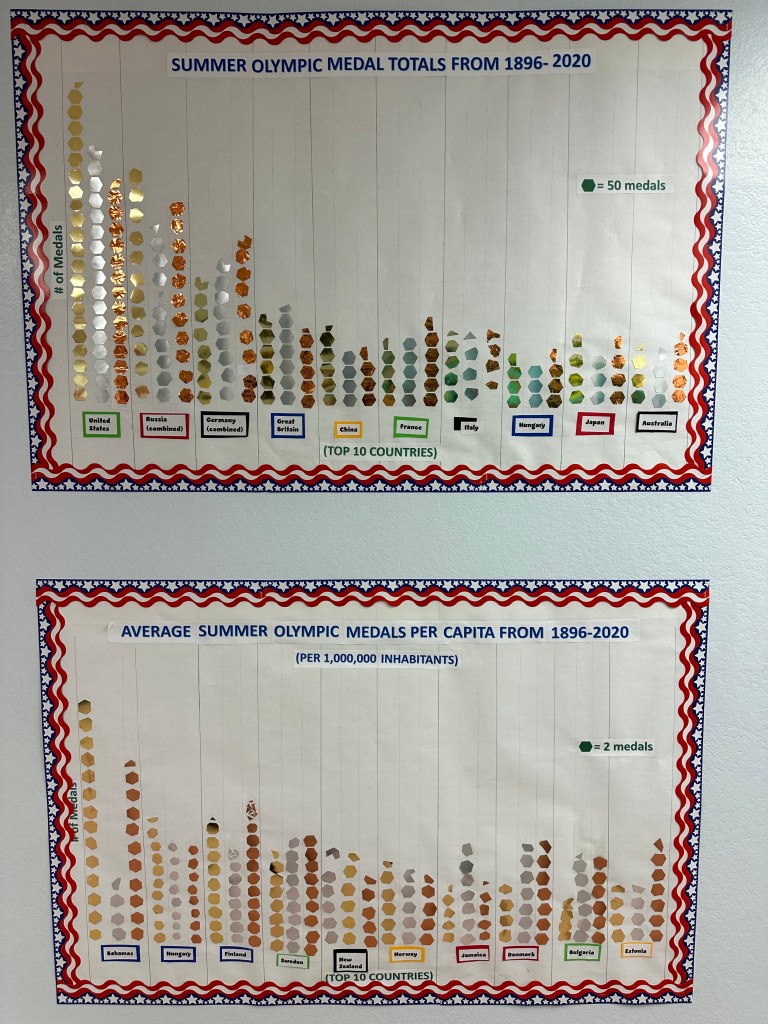
Students learned that the way data is presented can change how the information is perceived. In the Total Medals pictograph, the United States is the clear leader. But if considering medals won per capita, the Bahamas is the leader. Students hypothesized what caused the leading countries in either graph to be different, enabling an informative class discussion about different countries’ population, wealth, and current events.
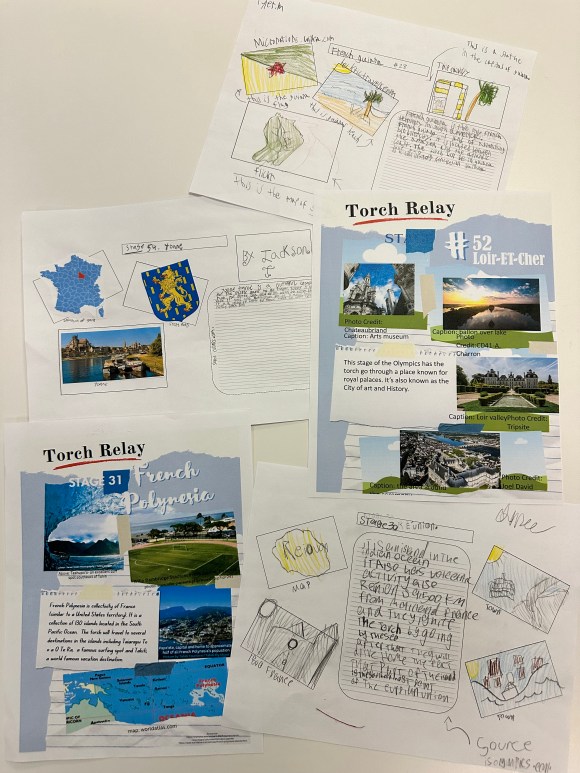
Before the opening ceremonies of the 2024 Summer Olympics, the symbolic torch run takes place across several locations, starting in Olympia, Greece, and later ending at the host site of Paris, France. Using a random number generator, students were assigned one of the over 60 stages of the torch run. They read about the location, choosing interesting facts and writing them on a scrapbook page (on the computer or by hand). They printed or drew maps and pictures of the location and included a unique caption for each.

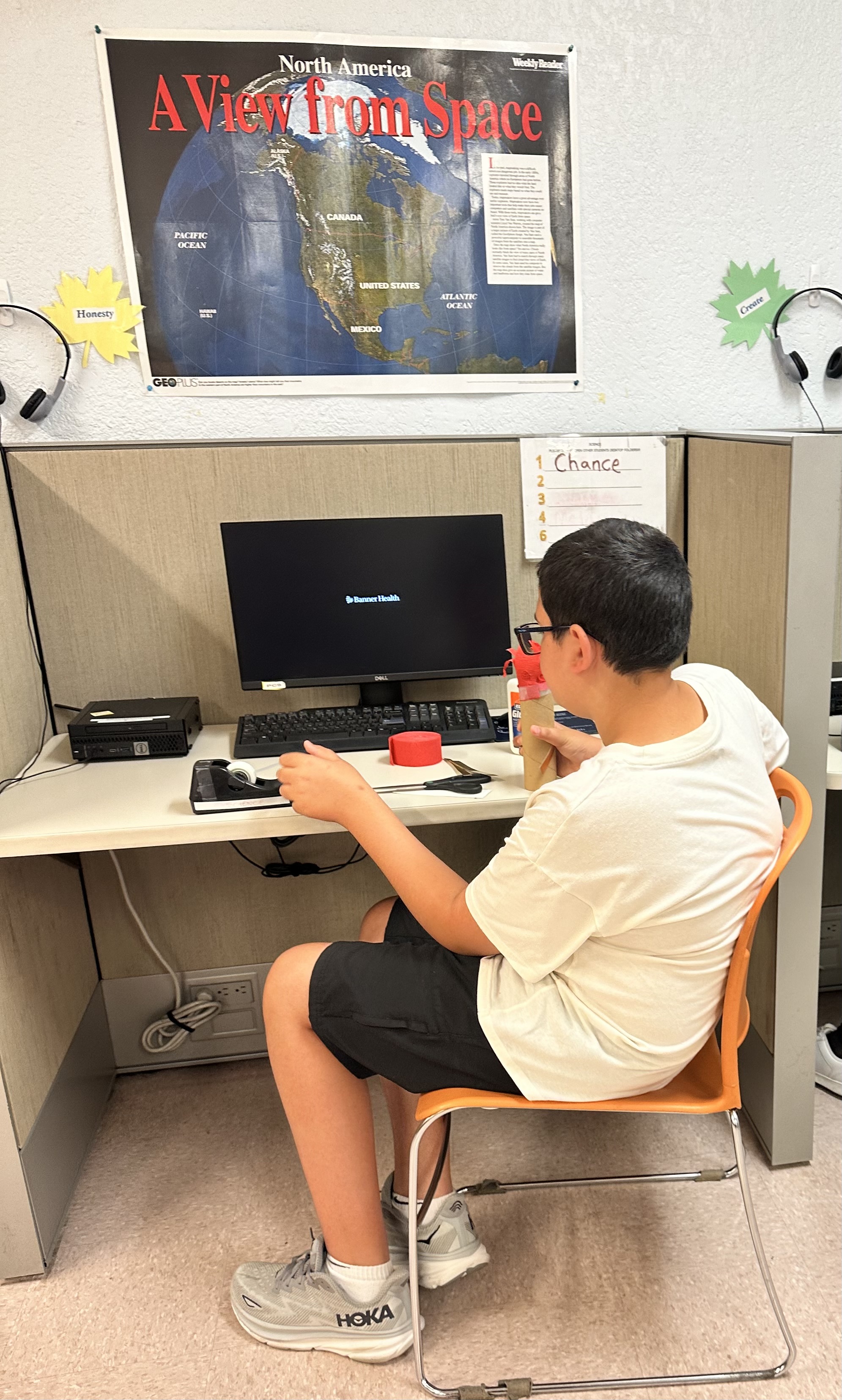
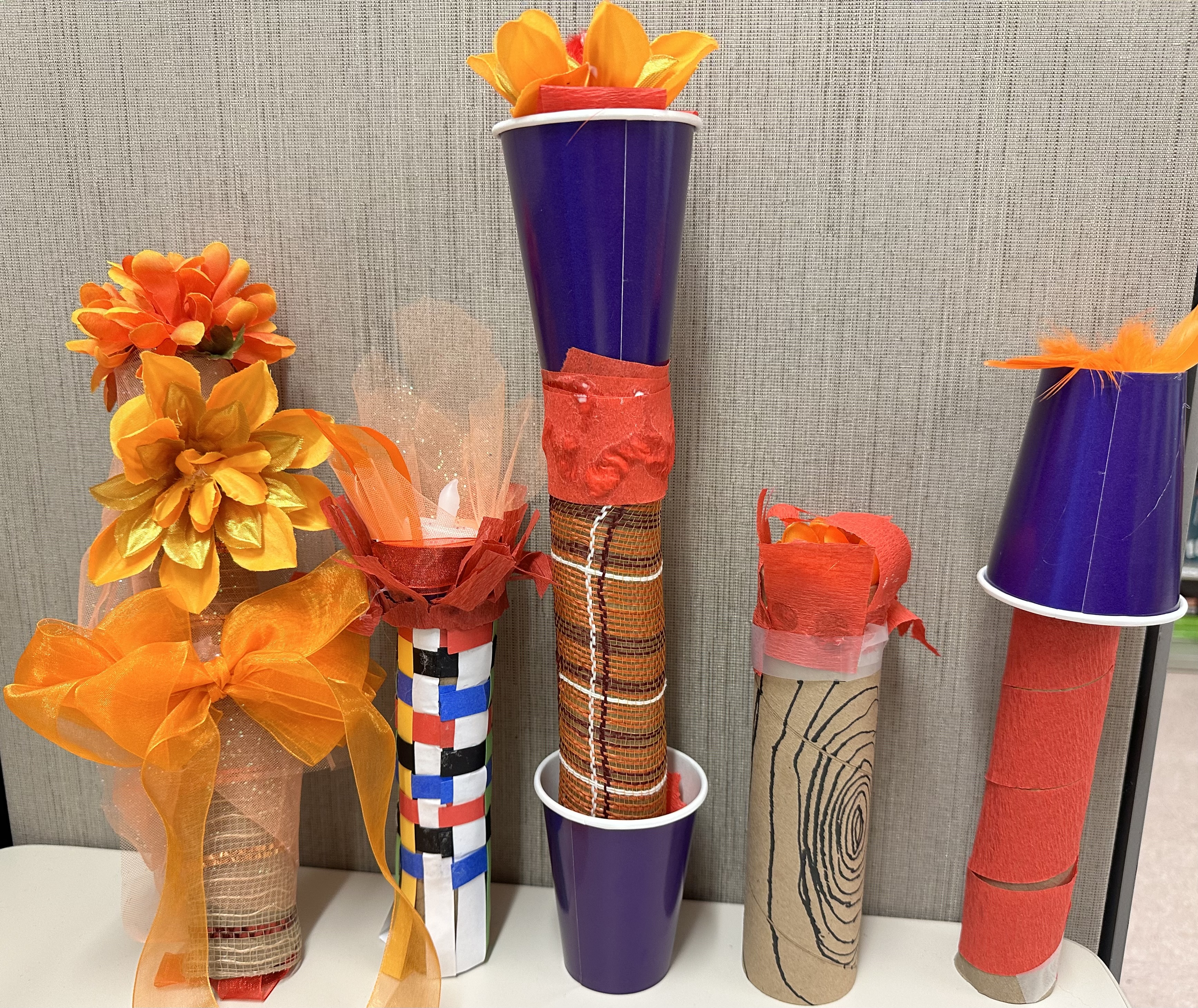
After learning about the torch run, students researched previous designs of the Olympic torch. They discovered the meaning behind a few of their favorites that each designer was trying to portray. Then, they sketched and built their own torch models from recycled materials.
Extracurricular Activities
In-School Activity: Learning about Juneteenth
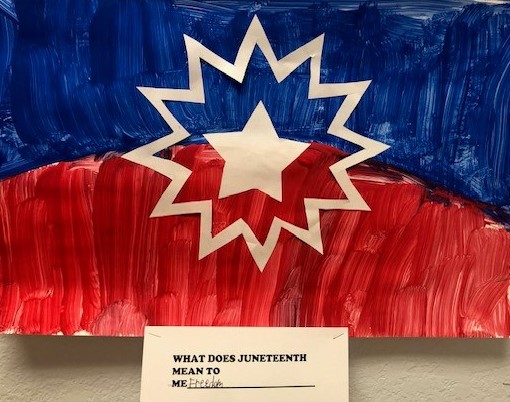
On Monday, students discussed the significance of Juneteenth, which falls on Wednesday of this second week of summer school, then explored the symbolic meaning of its flag. The students also watched a short film on the history of Juneteenth. As a creative wrap-up to the lesson, students painted their own version of the Juneteenth flag and included a word that best represents what the day means to them based on the class discussion.
Tempe Historical Museum Field Trip

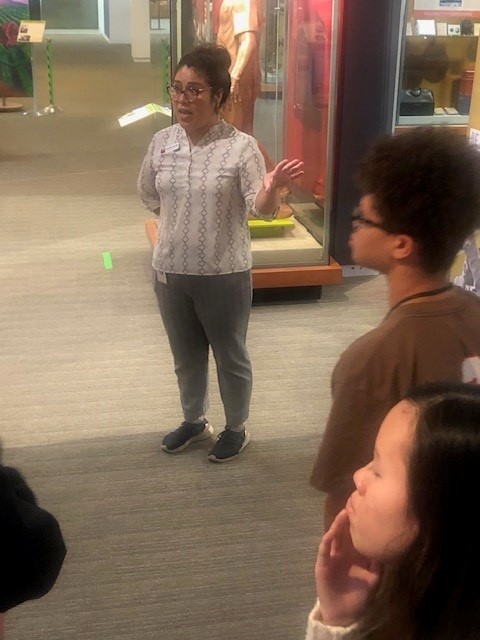
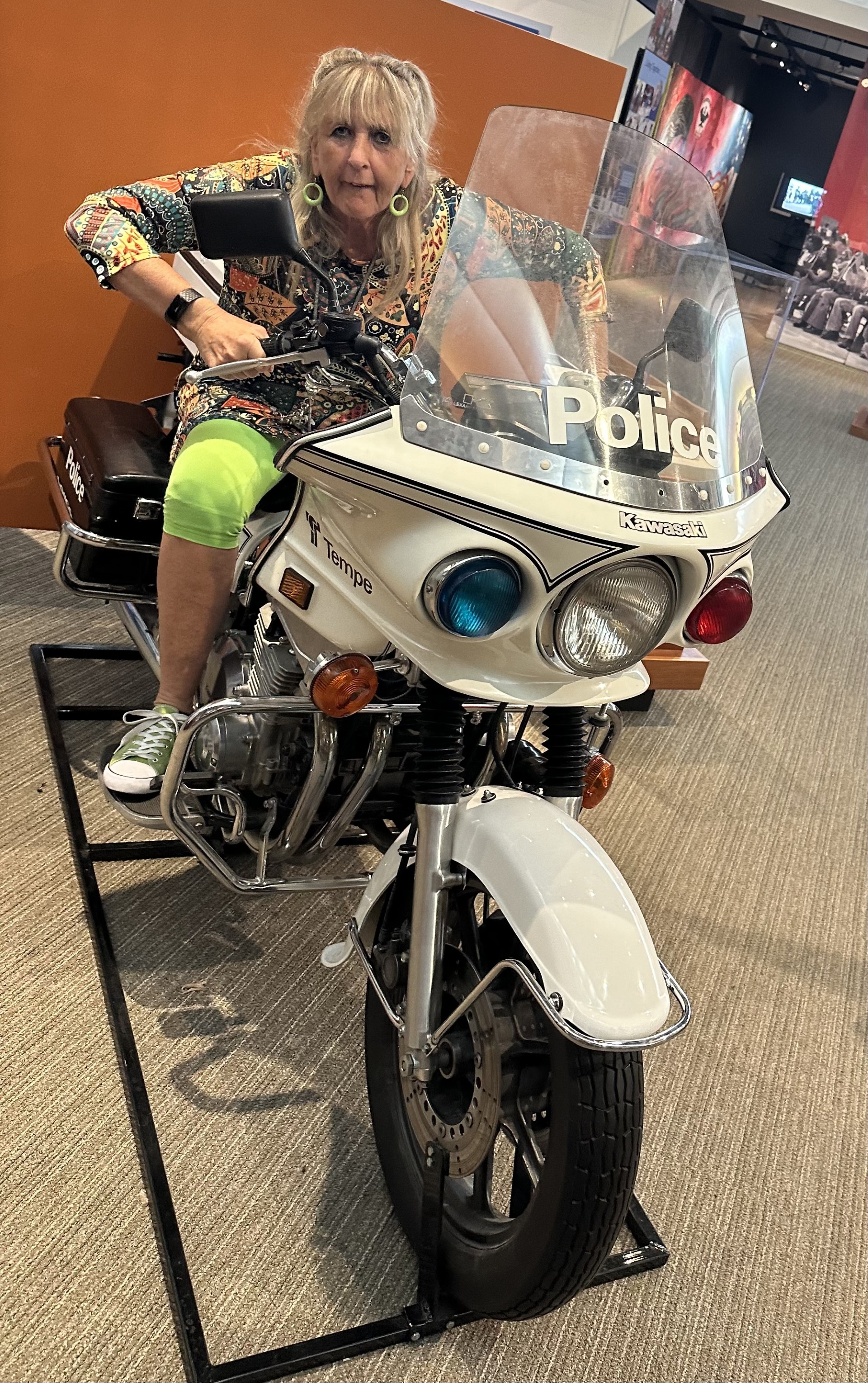
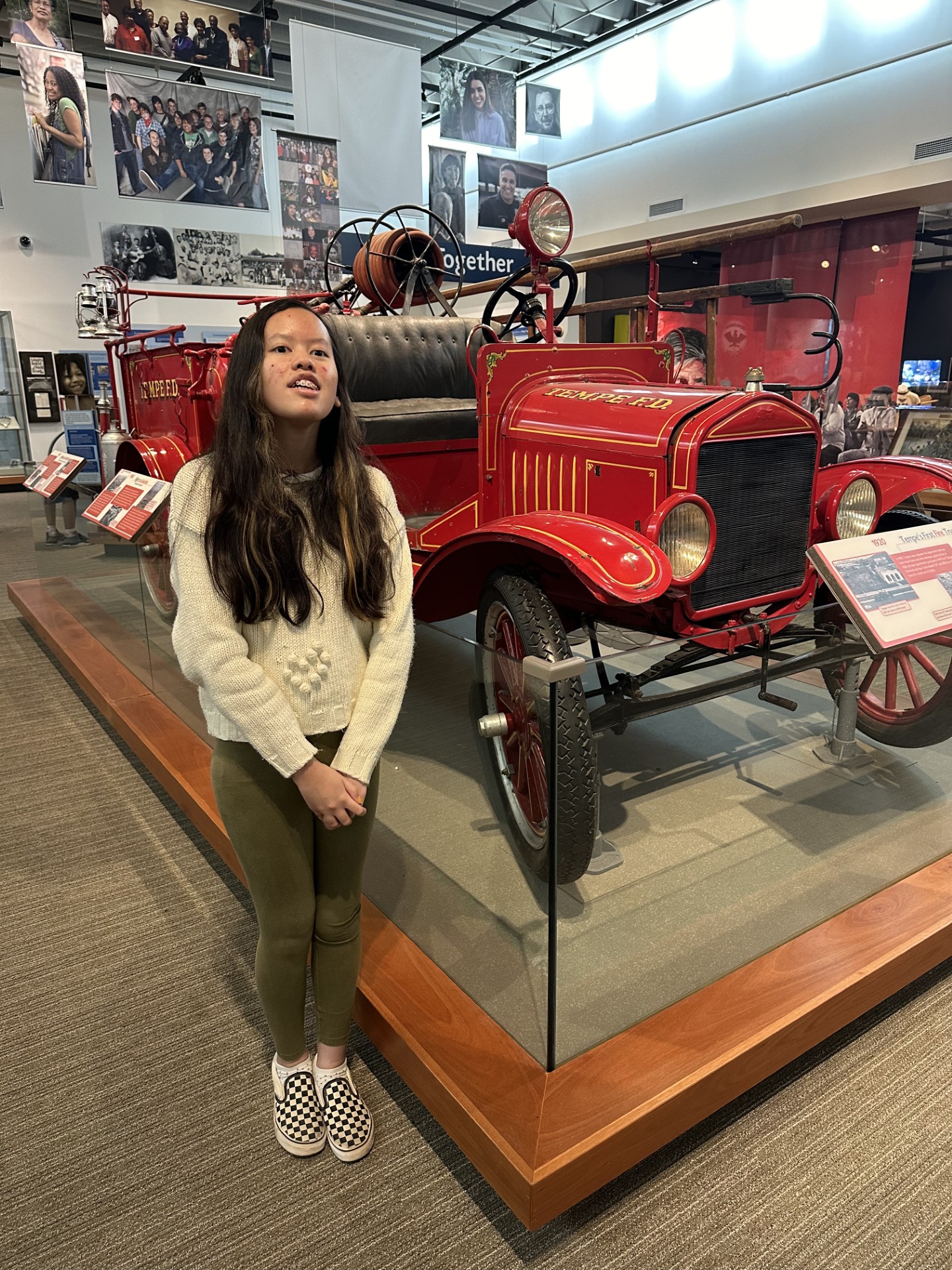
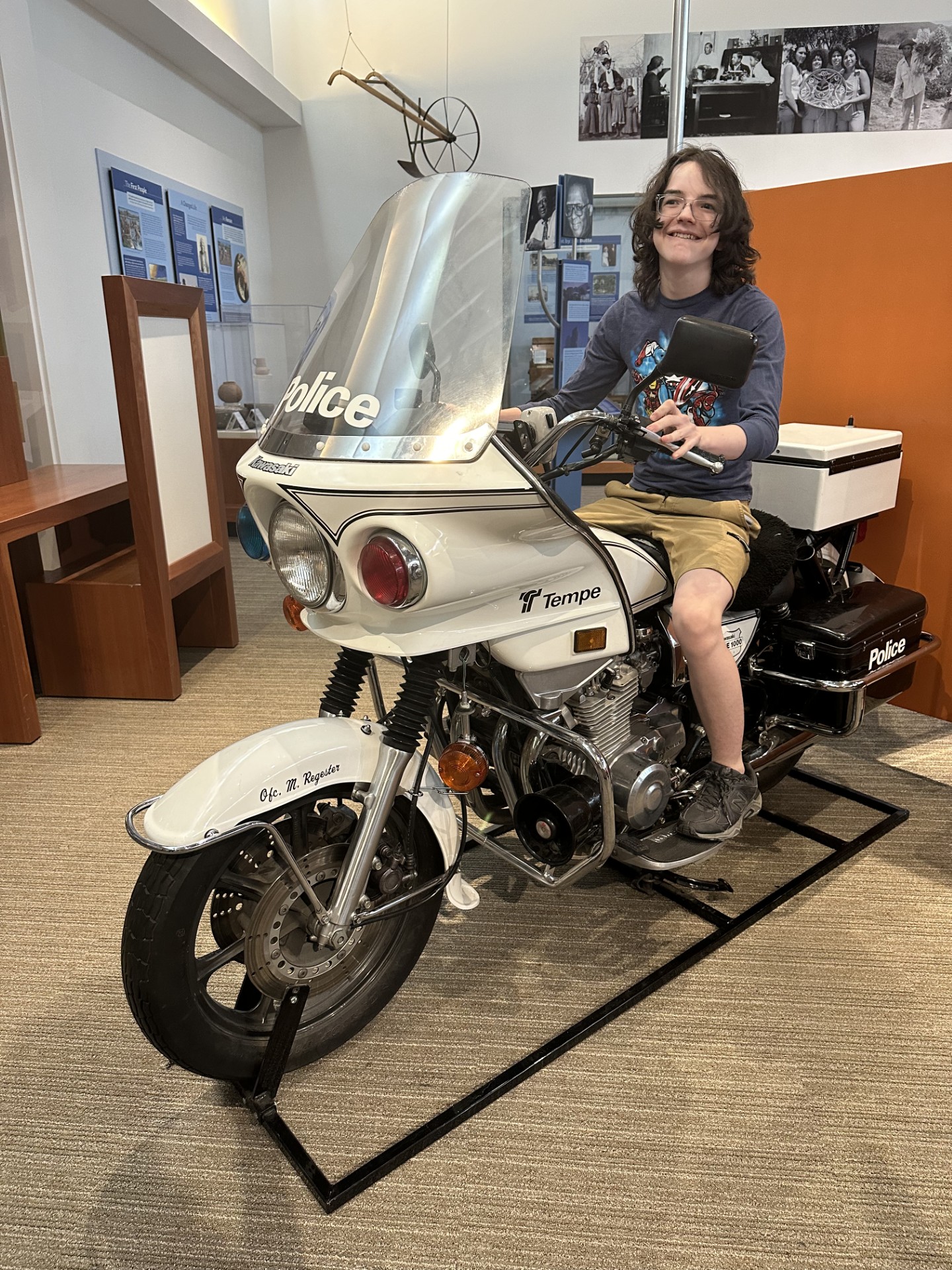
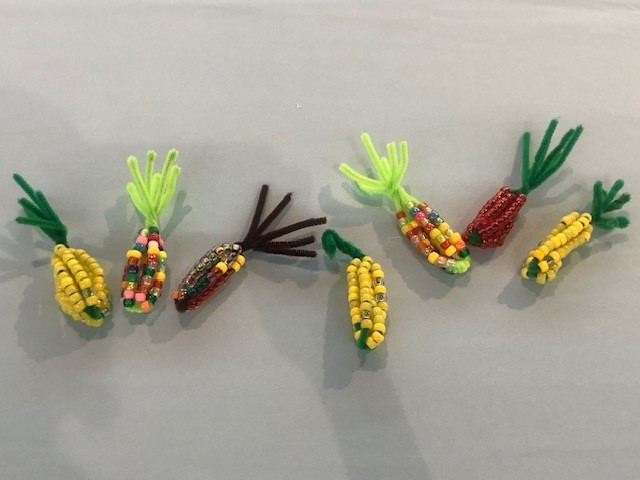
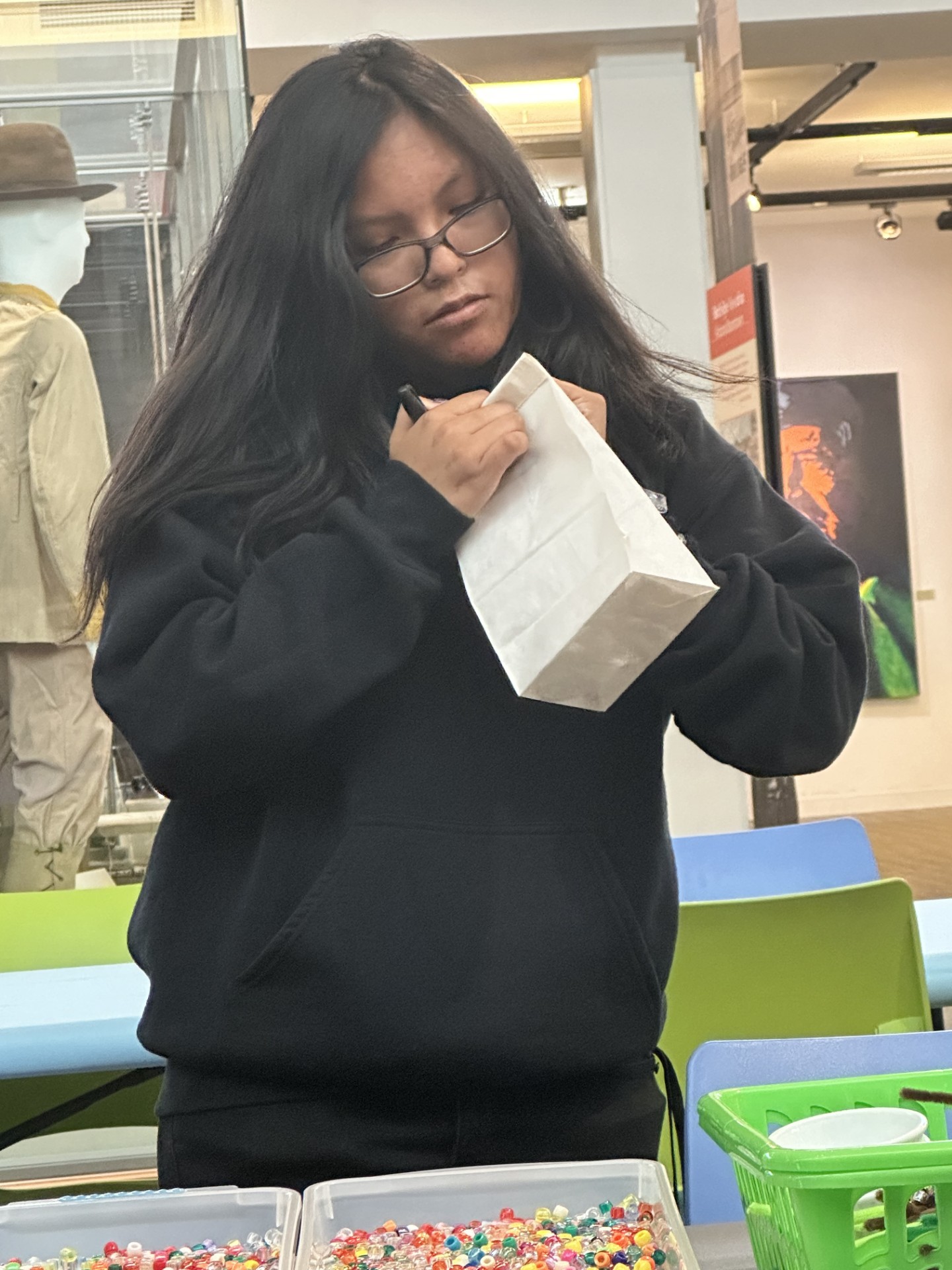
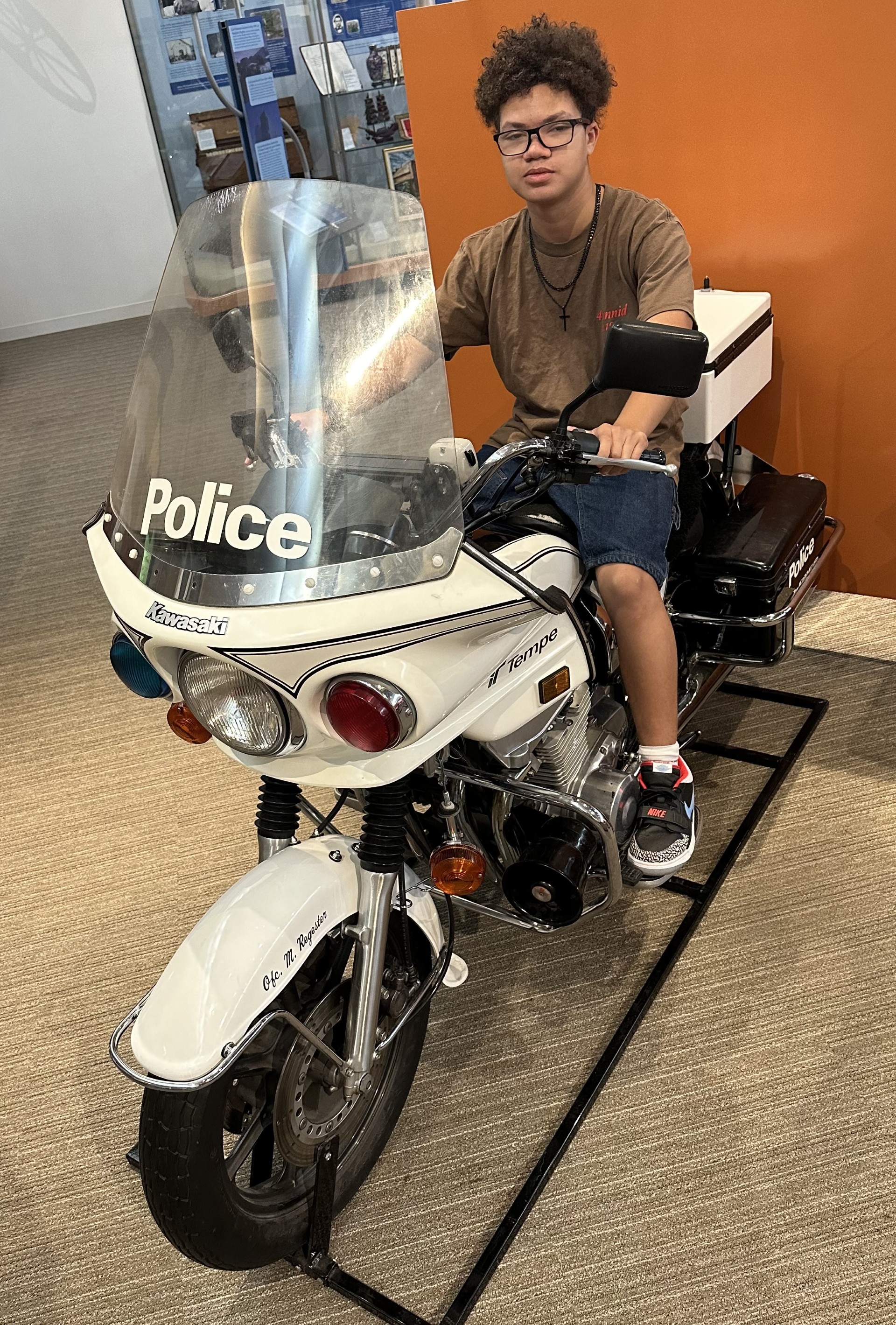
The students visited the Tempe Historical Museum where they learned about the important contributions of migrant workers, including activist Cesar Chavez. This field trip provided a valuable opportunity for the students to gain a deeper understanding of social justice issues and the impact of individuals like Chavez in shaping our history. In addition to a guided tour led by museum staffer, Jen Sweeney (pictured below), the kids participated in a scavenger hunt bingo game and completed a hands-on activity creating pony bead corn crafts.


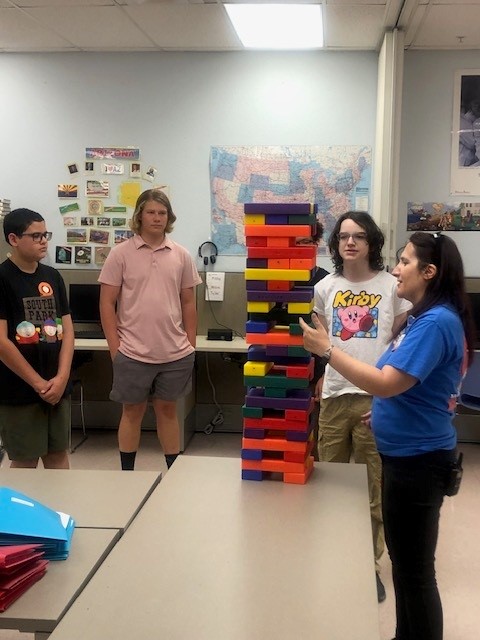
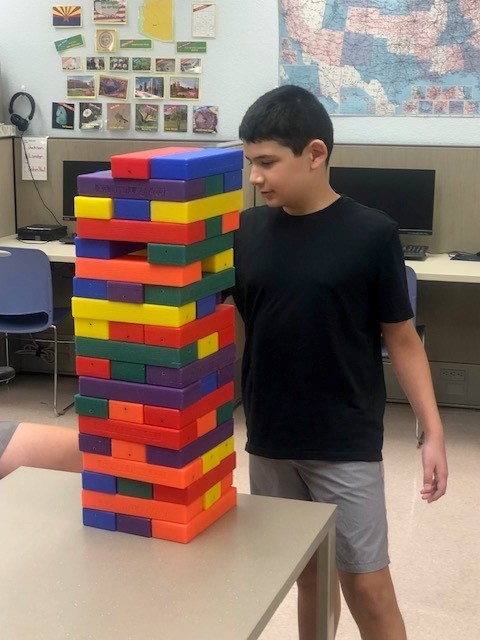
In-School Activities: Jenga Group Game


WEEK 3
Olympics Project
Making Personal Connections: The Olympic Oath and Values
In a group discussion, students shared their thoughts about the Olympic Oath and evaluated the importance of certain values upheld by the Olympics. They took a values inventory survey to see how these values relate to their personal values. After brainstorming and sorting values into broad categories, students reflected about what individual value is the most important to them and why. Next, students reviewed the basics of structuring a paragraph (using a hook, organizing details, etc.) as a class discussion. After reviewing a teacher example, students wrote a paragraph about the personal value they selected as the most important. Then, they created word art for a large wall display about Olympic and personal values.
Olympic Rings Scaling Activity
Students revisited the concept of scaling two-dimensional figures from last year’s Star Wars and Lion King projects by enlarging an image of the Olympic Rings.

Using geometry-specific vocabulary words like radius, diameter, and circumference, students reviewed the parts of a circle and practiced calculating for unknown values.

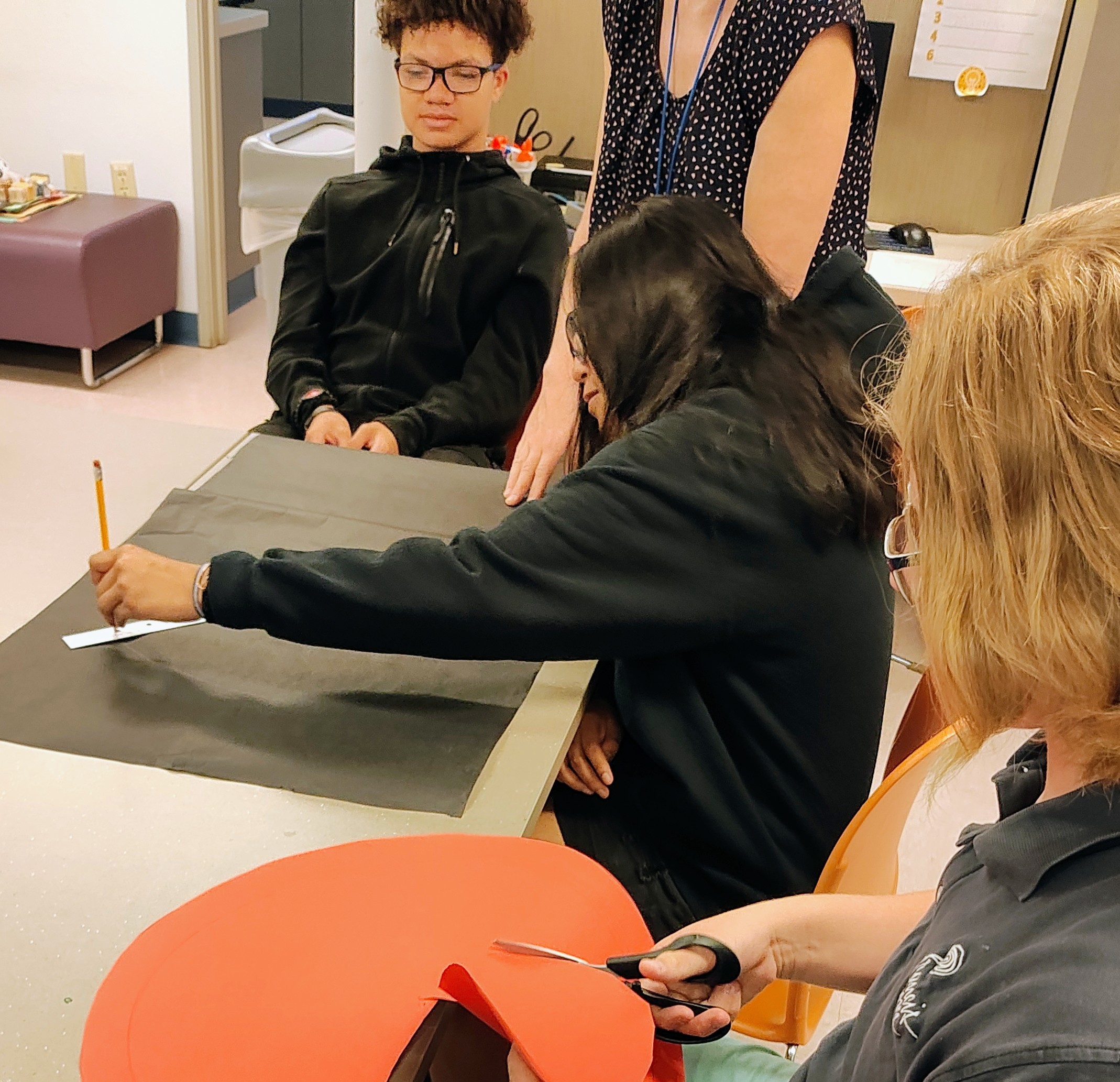
Then, they used crafted compasses to create their enlarged Olympic Rings on posterboard for a wall display, which is pictured above.
Their calculations sheets, shown below, appear on the Olympic Rings display on the bulletin board. Click on the images below to see an enlarged view of each student’s worksheet.


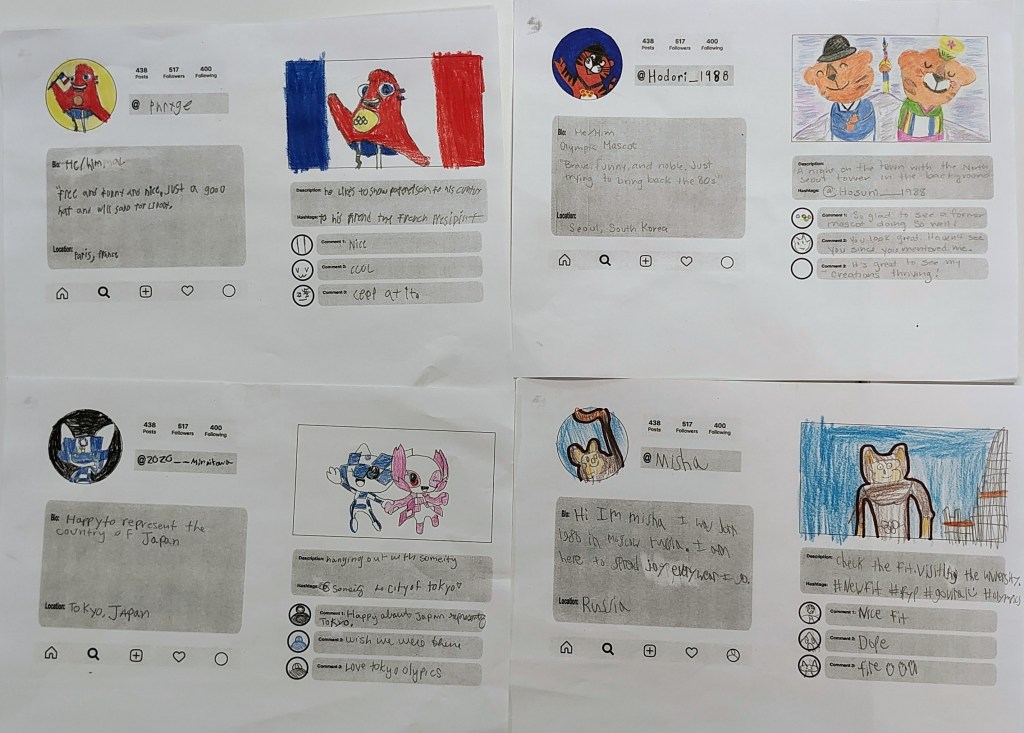
Mascot Activity
Each Summer Olympics Games has a unique mascot. Students used online resources to research a randomly selected mascot from a previous year. Using a template, students converted what they learned into a creative social media profile that highlighted images of the mascot, the host location of the year’s Olympics, details about the symbolism behind the host location’s choice of mascot, and more.
Venn Diagramming – Comparing and Contrasting
Through videos and selected readings, students learned about the Ancient Olympic Games. Then, they completed a sorting activity to compare the Ancient Games to the Modern Olympics using printed phrases provided by teachers. By reading each phrase and placing them in the correct part of a tactile Venn Diagram, students practiced identifying similarities and differences between two events.
Extracurricular Activities
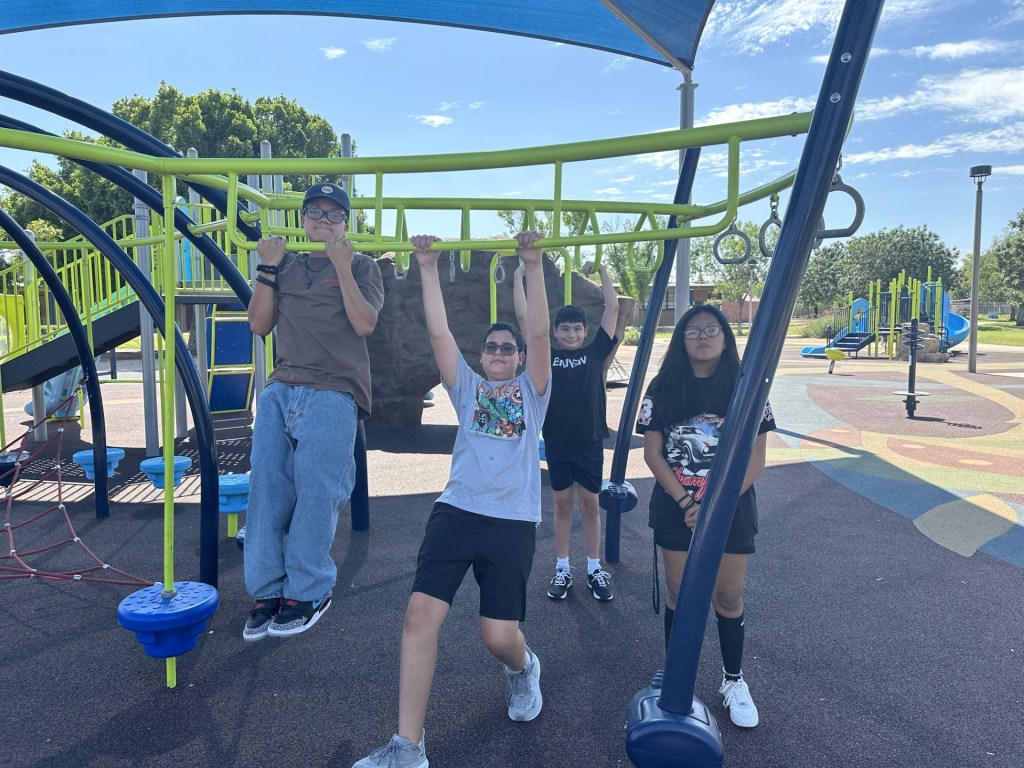
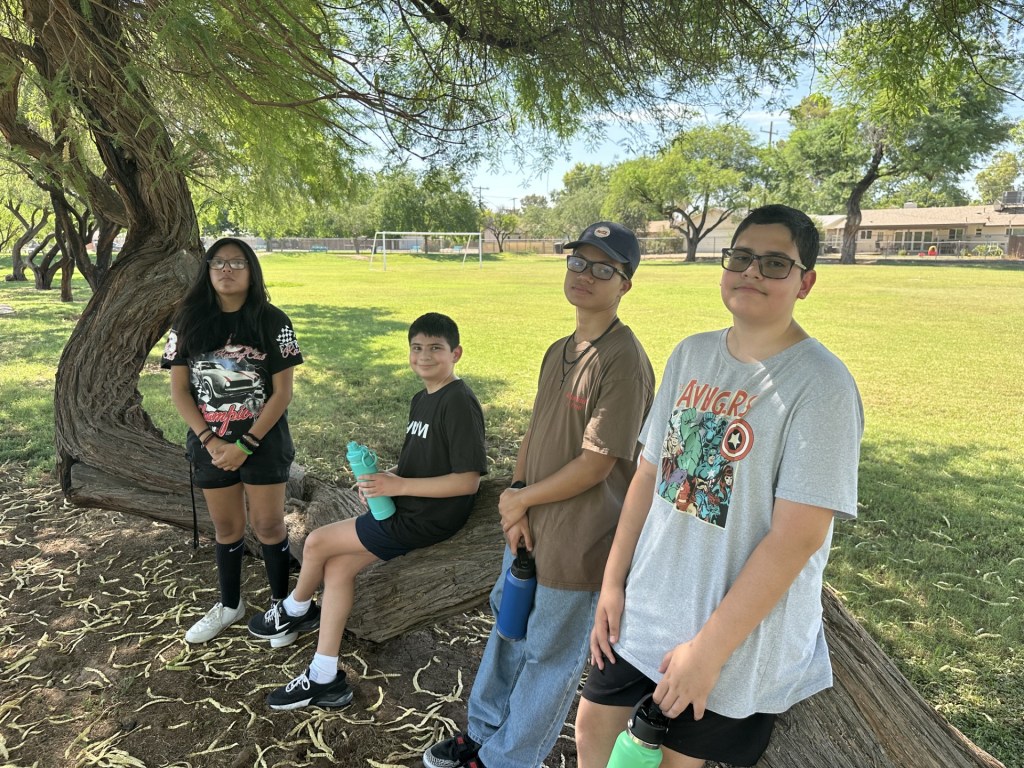
Mitchell Park Excursion
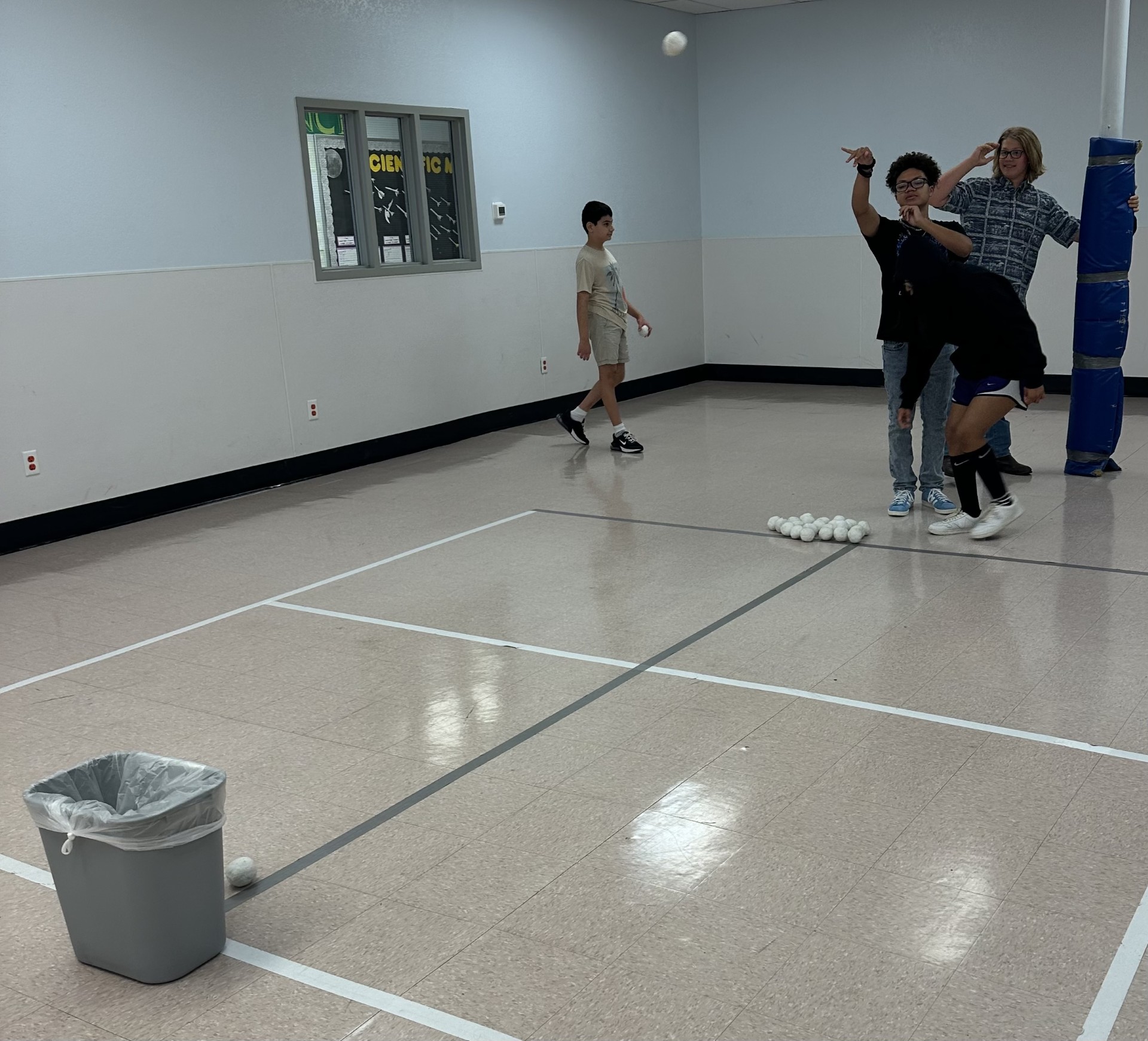
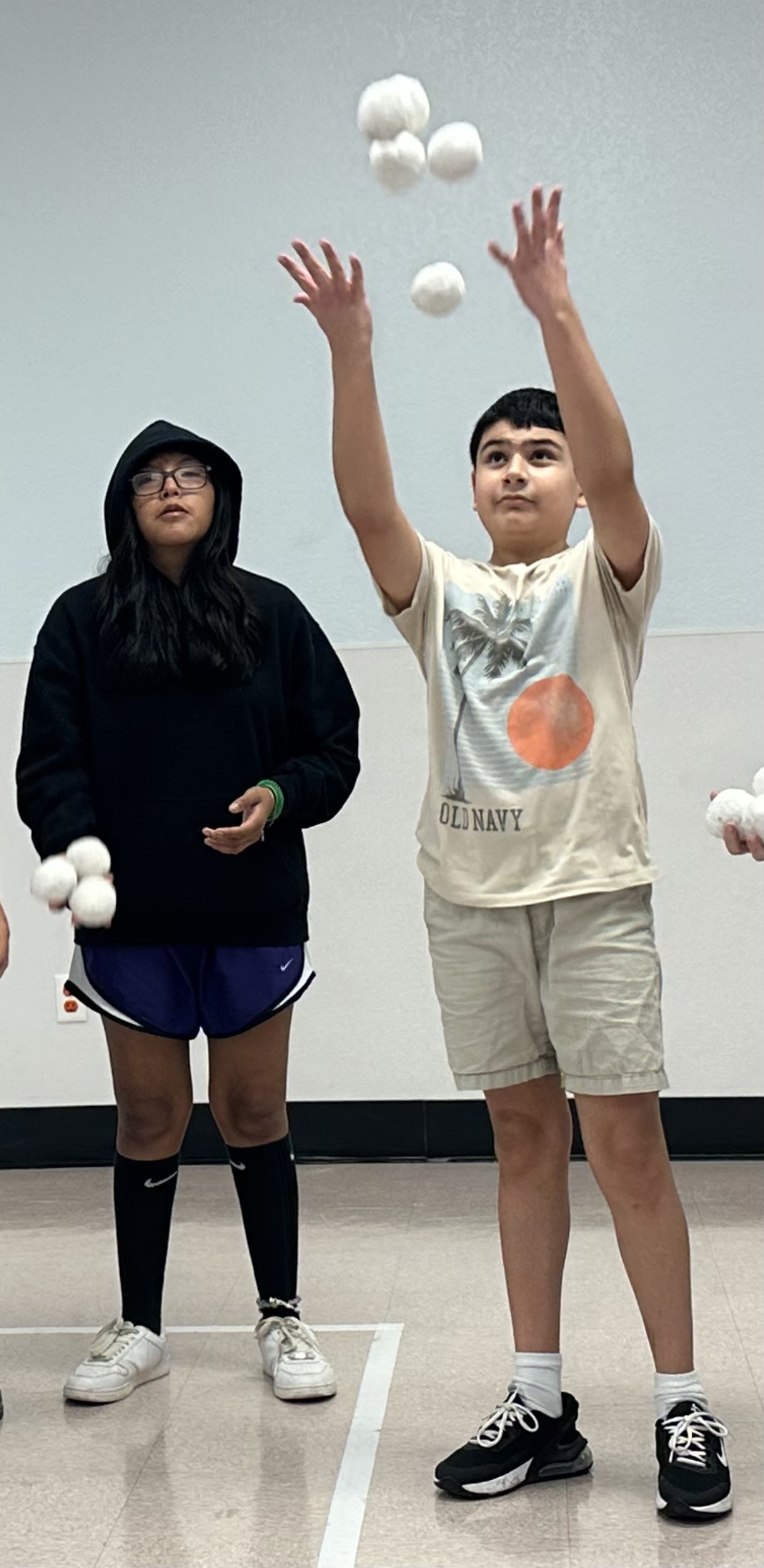
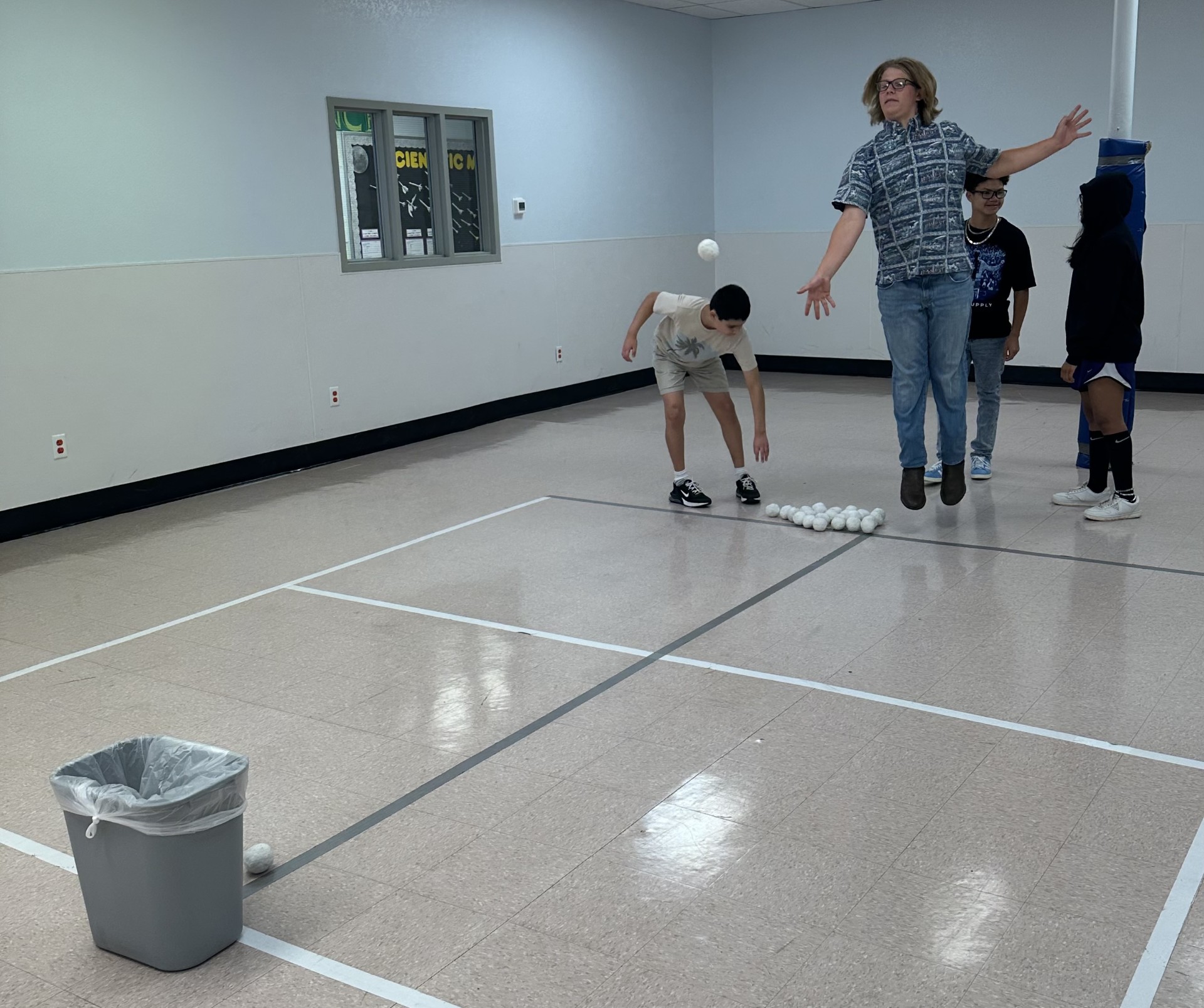
In-School Activity: Summer Snowball Competition

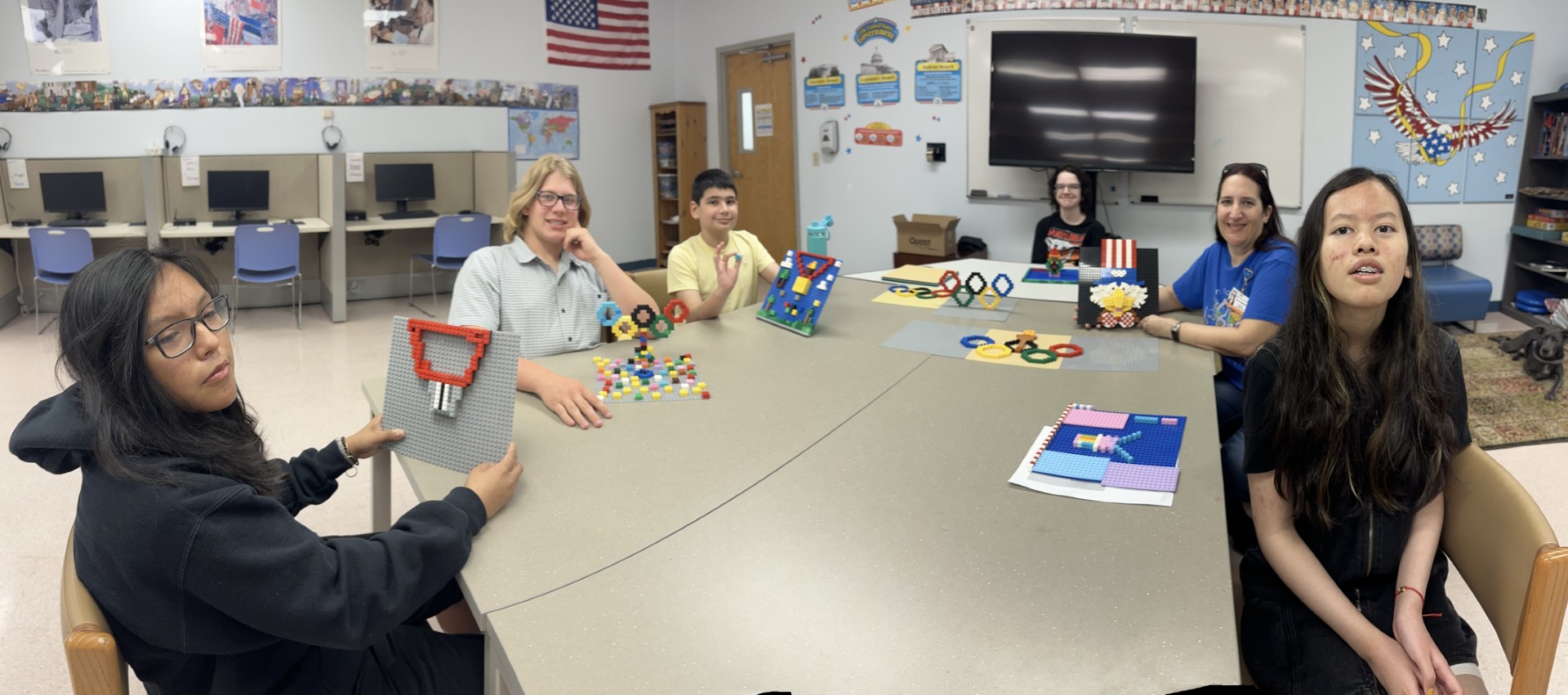
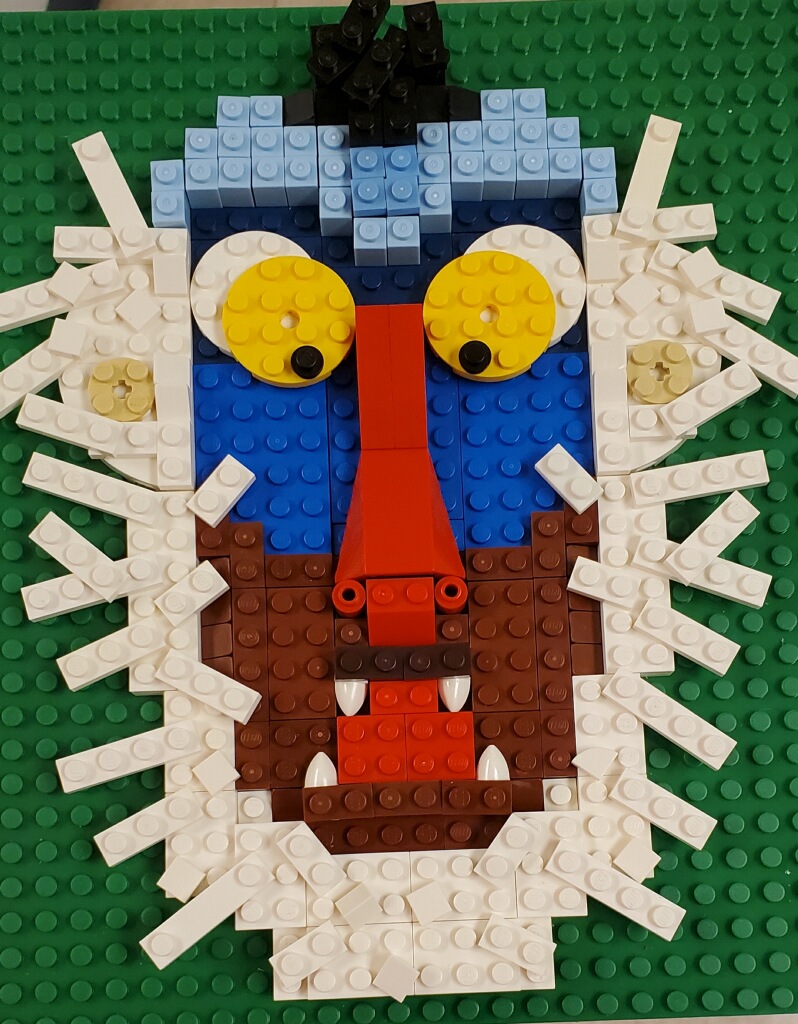
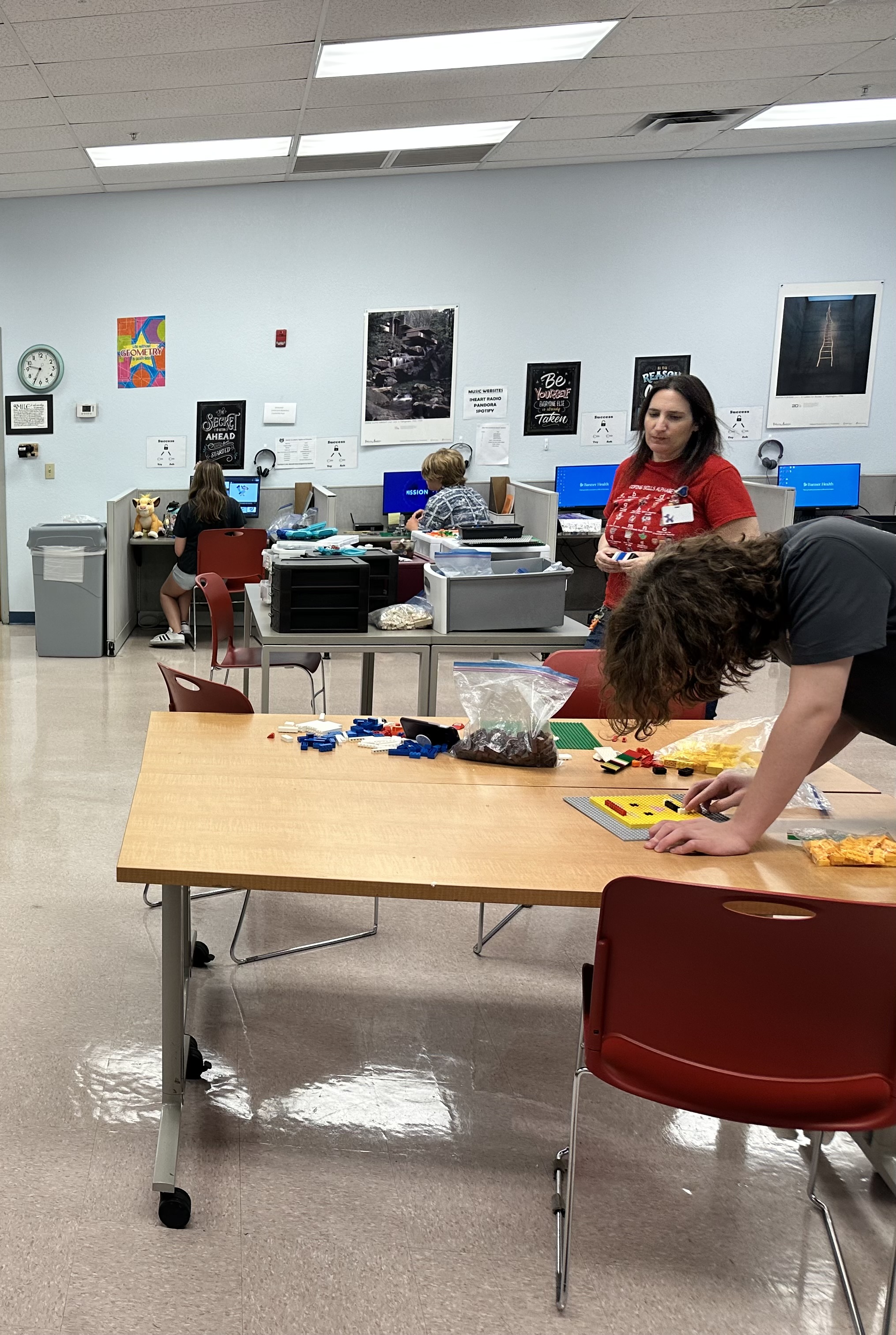
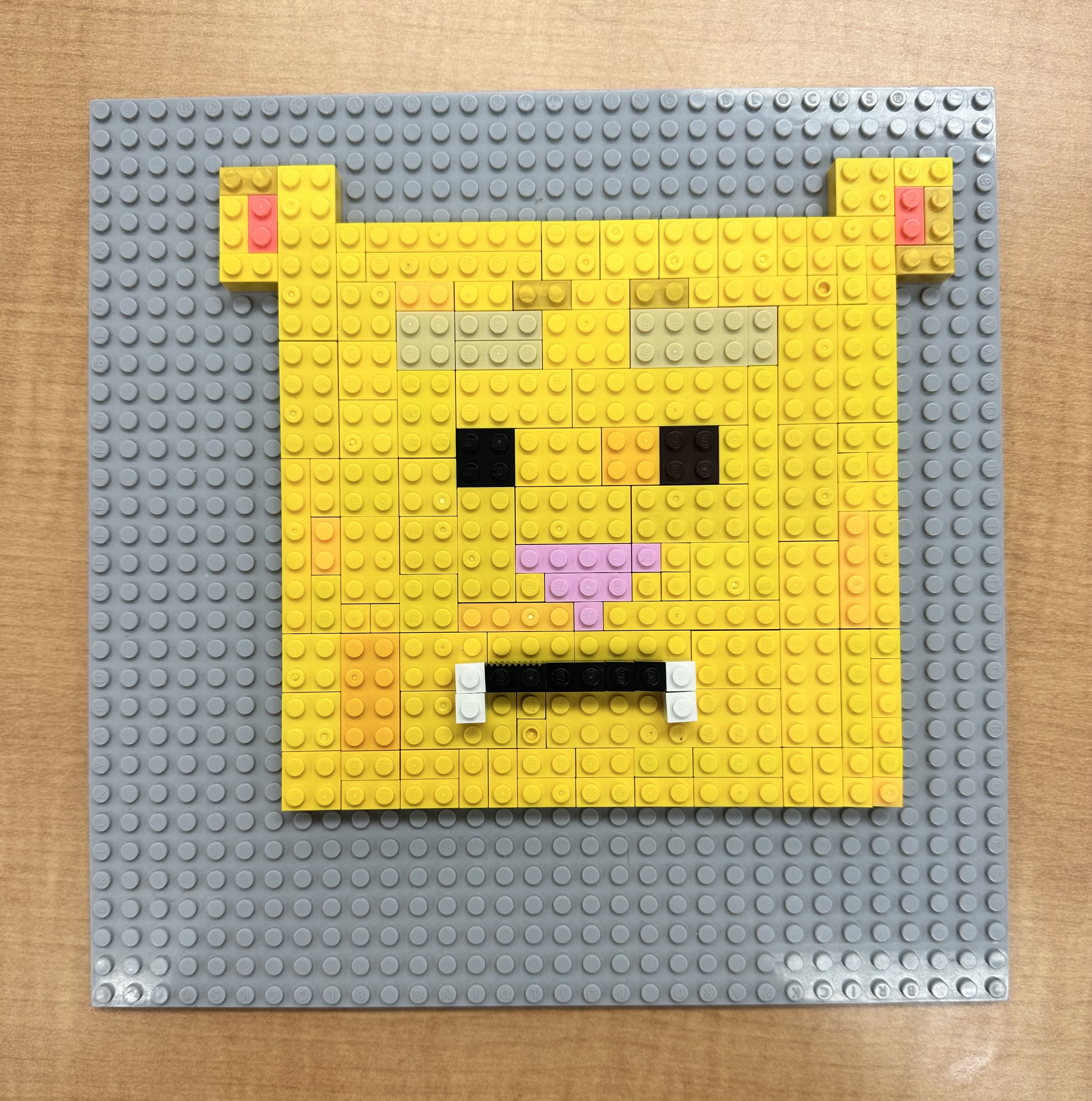
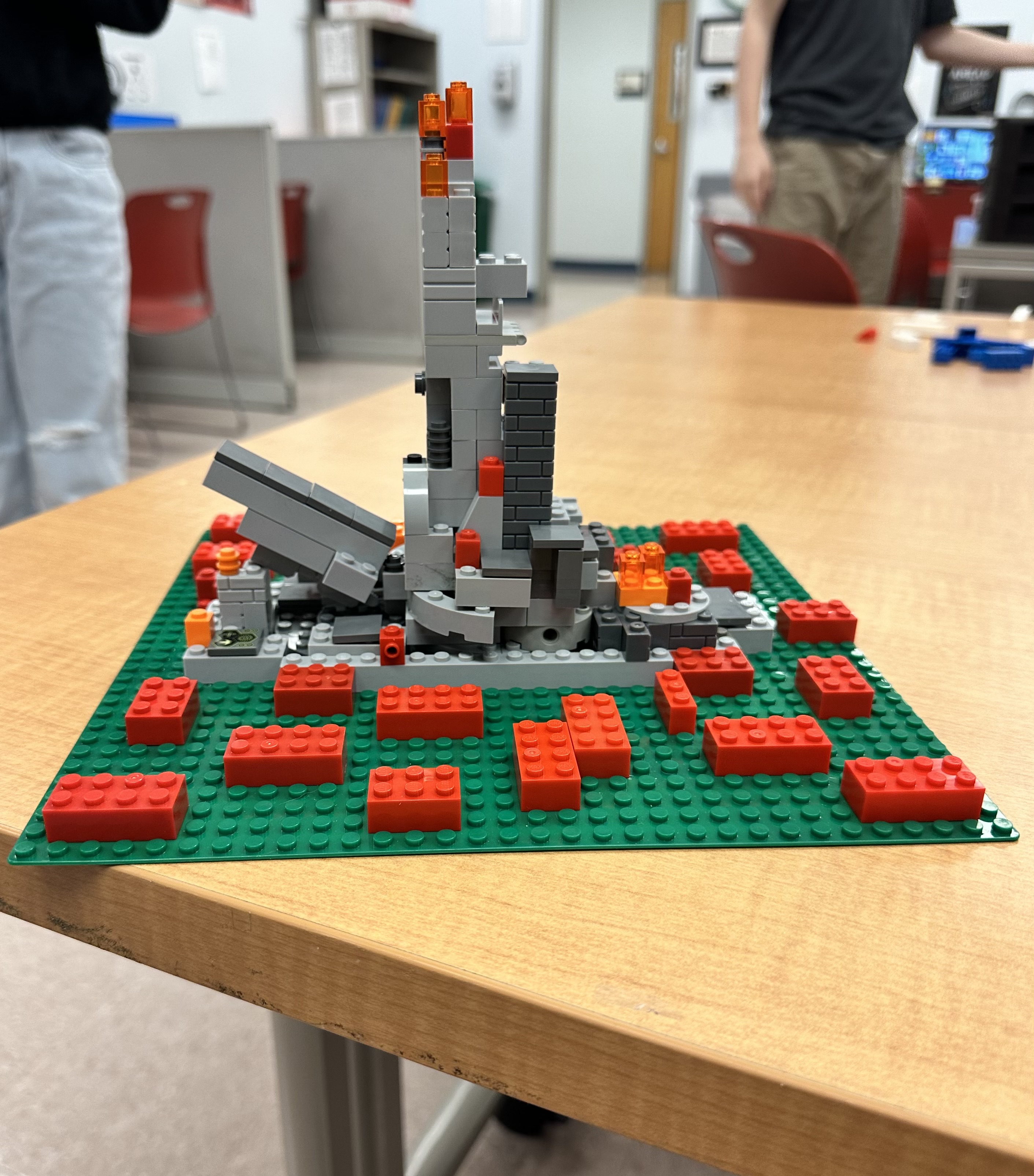
In-School Activity: Olympic-Themed LEGO Creations
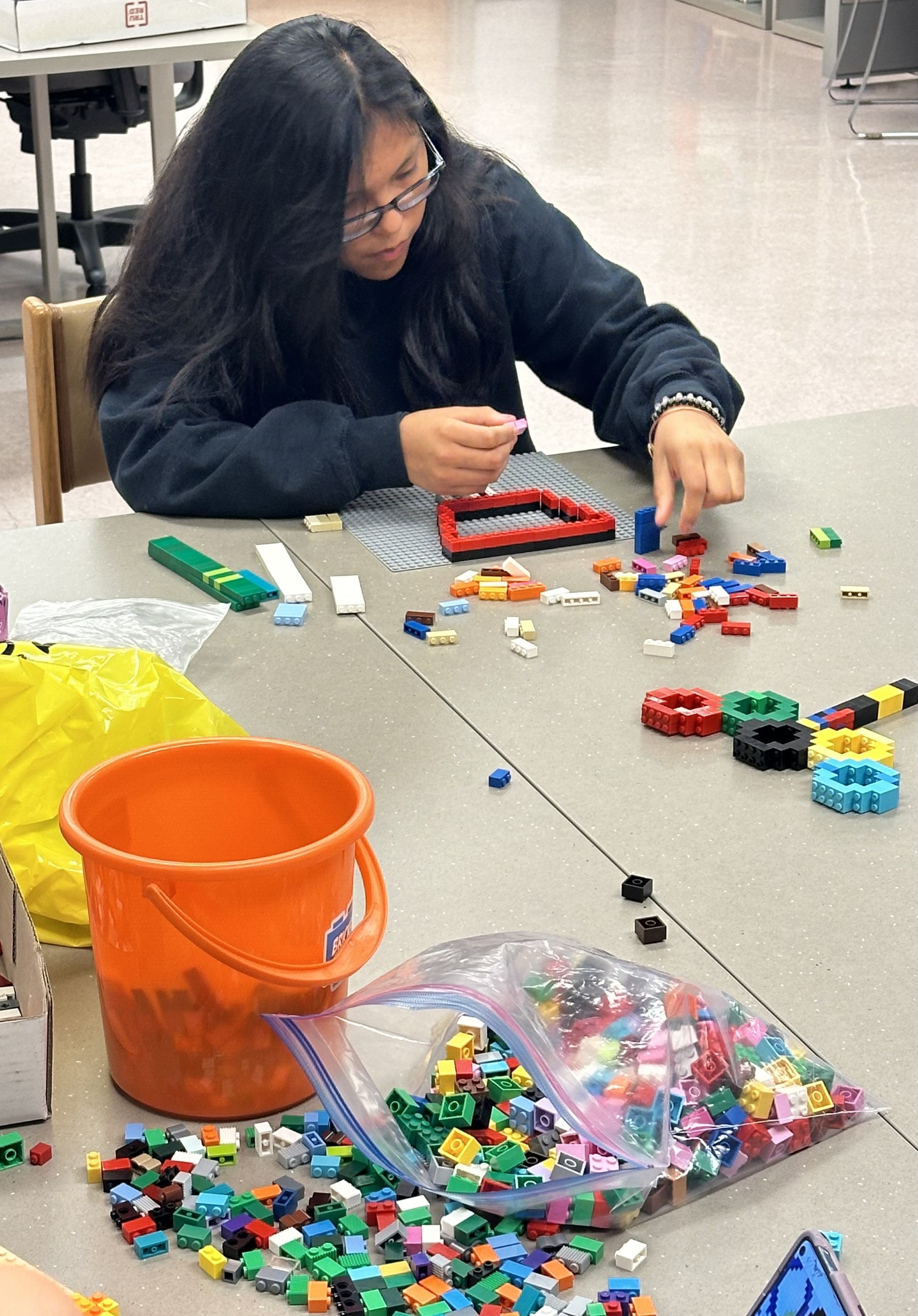
On Thursday, staff and students visited Bricks and Minifigs in Gilbert and hunted through bins of previously owned LEGOS to find valuable pieces needed to complete our Olympic LEGO creations. This excursion was specifically planned to contribute to the Olympic-themed academic work that students are focused on this summer.
See our students’ creations below.





WEEK 4
Olympics Project
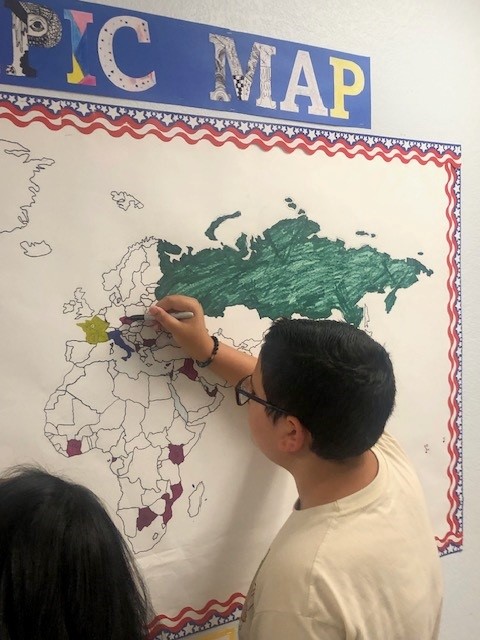
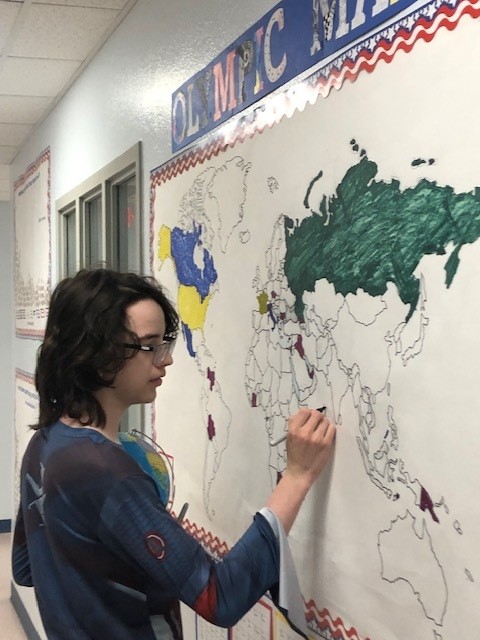
This week, students used a random number generator to be assigned a country name as part of a warm-up activity. Then, they researched whether that country participated in the Olympics, hosted the Olympics, or was not invited to the Olympics. The countries were color-coded on the large World Map based on their research, requiring students to follow the map legend to ensure the correct information was displayed.

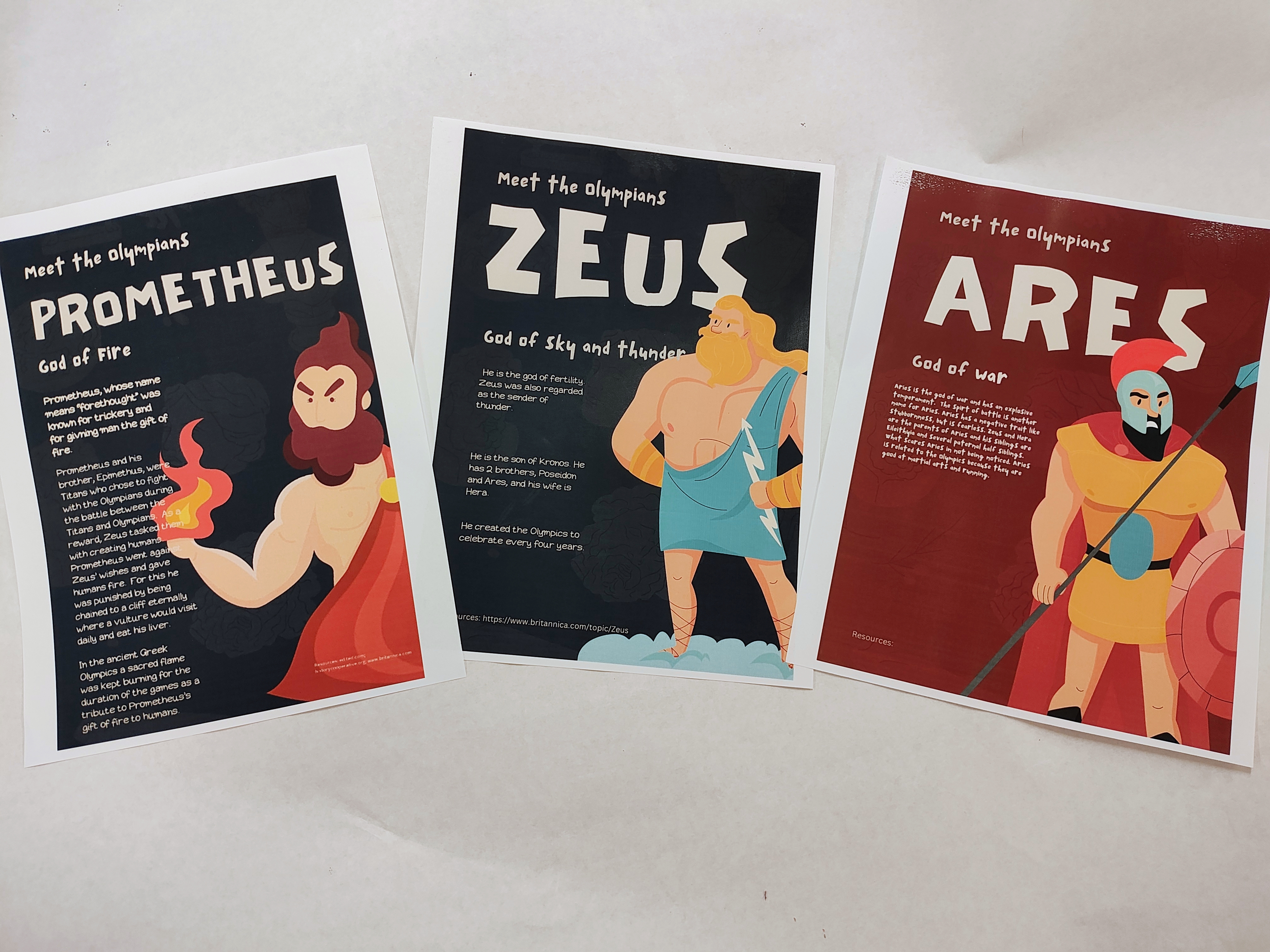
Additionally, students studied the connections between Ancient Greek Mythology and the Olympic Games. They read short online articles and filled out reading comprehension worksheets. Then, students chose a favorite Greek mythology character and created a colorful poster on a Canva.com digital template about that character and their connection to the ancient Olympics. They practiced summarizing their readings and citing their online sources.

Finally, students studied the metric system. Metric units are not commonly used in everyday life in the United States, but they are important in Science and Math applications. Students completed a variety of activities to practice naming metric measurements, including a matching game and a prefix foldable.

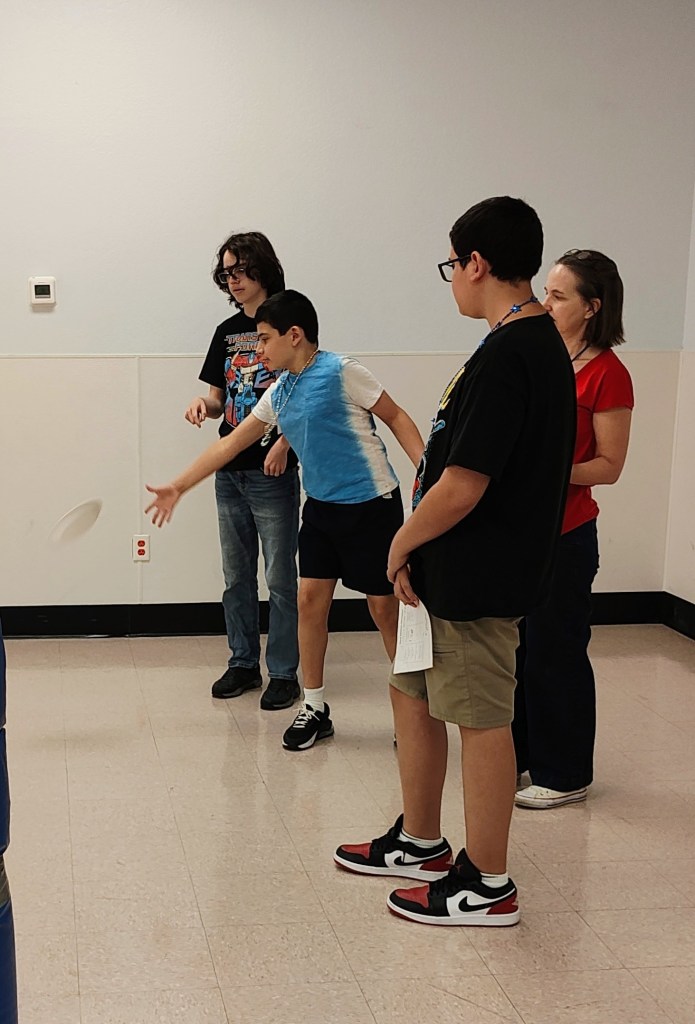
They also competed in their own version of the Olympic games using a straw as a javelin, a paper plate for a discus, a cotton ball for a shot put, etc., to practice recording metric measurements.
Then, students learned about the difference between precision and accuracy and discovered the importance of each in taking measurements, especially at the Olympic Games!
Extracurricular Activities
Music Therapy – Summer school students engaged in group drumming using instruments purchased by the Banner Health Foundation’s Highest and Best Use Award. Emily led students and staff as they played rhythmic games and improvised music. Everyone had a great time!


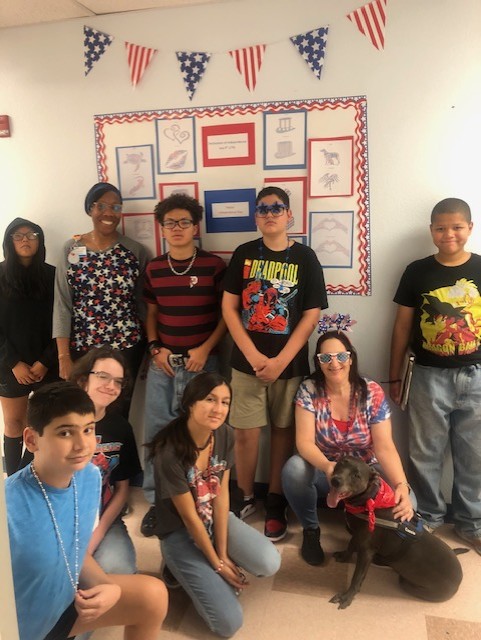
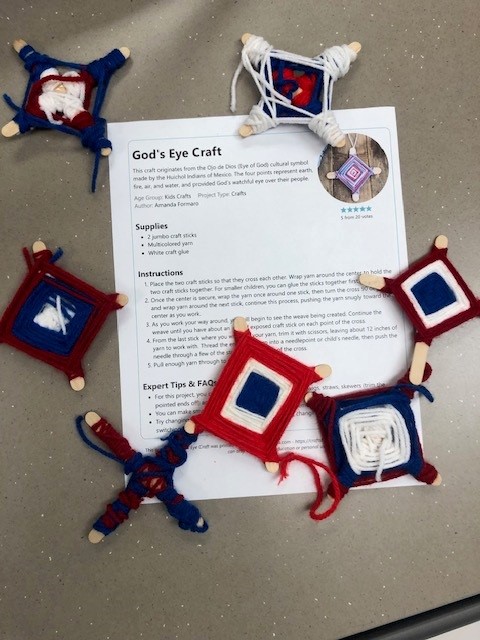
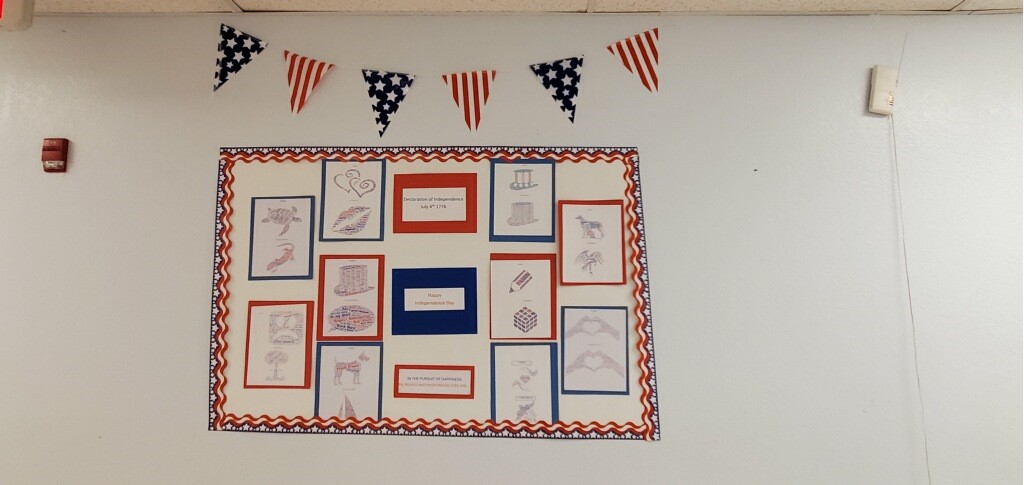
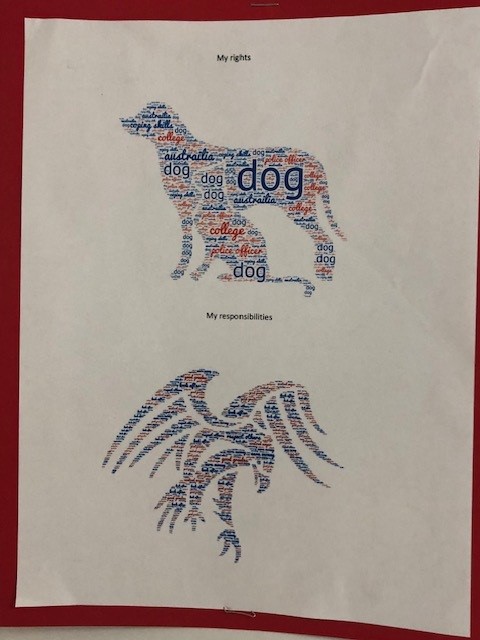
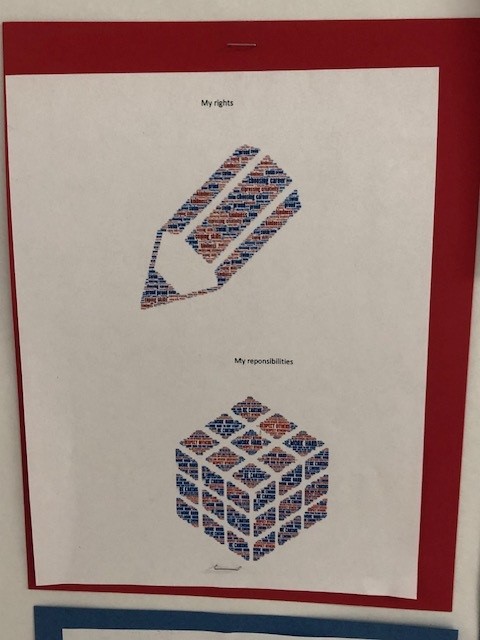
Crafts and July 4th Word Art – Students completed a crafting activity making a God’s eyes in red, white and blue. Then, they discussed the ideals associated with Independence Day and did a group counseling exercise with Tricia using WordArt.




WEEK 5
Olympics Project
Students practiced identifying different units of measure and described how they are used in the Olympics with a collaborative matching game. They worked in pairs to try to match a unit of measure such as kilograms and meter to corresponding Olympic objects and events.

This activity helped students become more familiar with metric units and allowed them to make predictions about the magnitude of the units used to describe different distances, times, and masses featured in the Olympics.
Additionally, students researched the host locations and notable facts of the Summer Games from each of the Modern Olympics since 1896. They created PowerPoint slides for their assigned years about the Olympic Games; they also created a corresponding slide about what was happening in the world during those years (e.g., top song, best film, etc.). Then, they organized the completed slides into a printable timeline for a wall display.

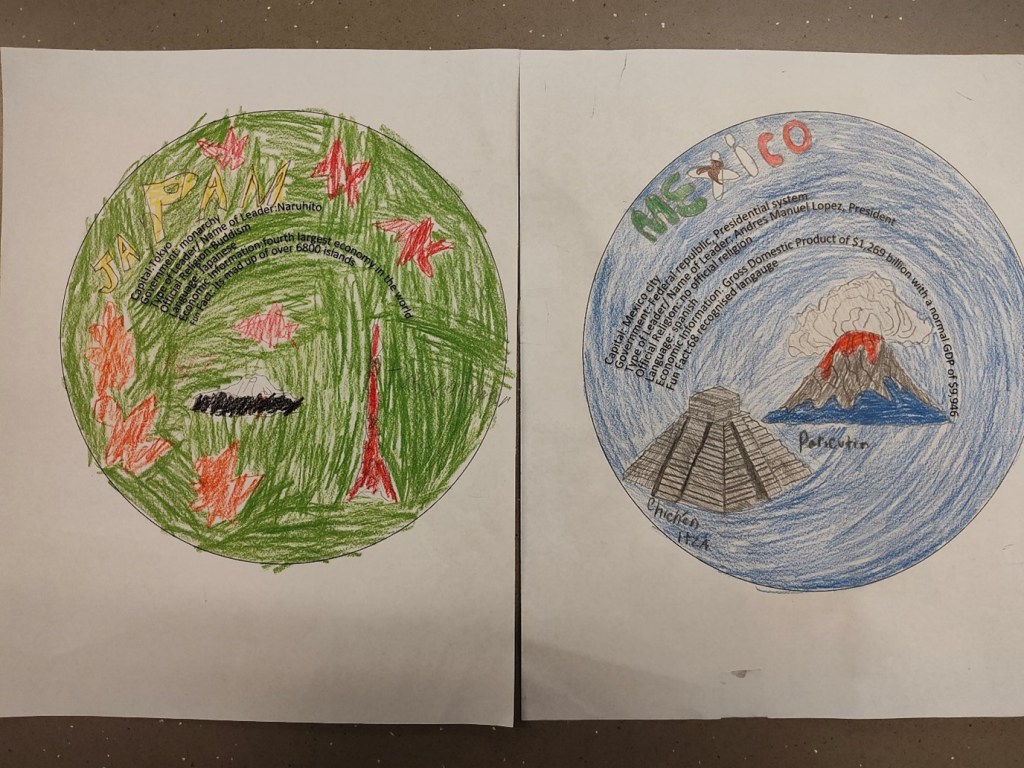
Next, each student chose a current or previous host country of the Summer Olympics to further research and create a “detail bubble” that included facts about the country’s economy, language, and capital, for example. To enhance their efforts, students added colorful, relevant artwork to their bubbles to showcase important landmarks, landscapes, and symbols of the host country.
Students also discussed the many different events featured in the Summer Olympic Games. They used printed cards with images of the different events’ symbols/pictograms to play a memory matching game. Later, they used a graphic organizer and a teacher-created paragraph template with sentence starters to write a detailed description of one of the events.

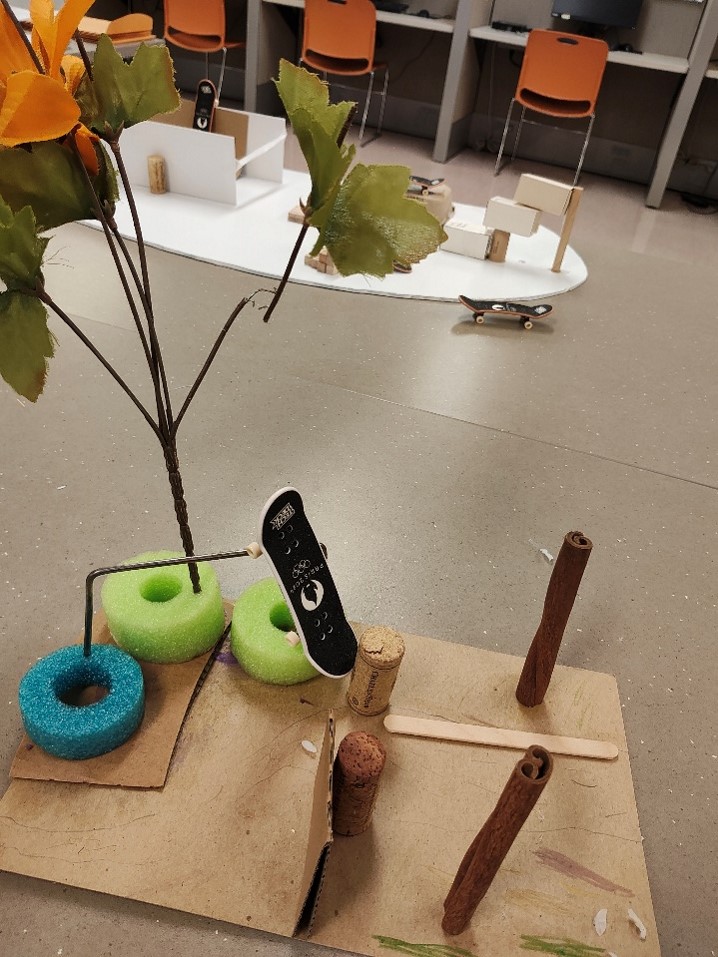
Finally, students learned about aspects of the Engineering Design Process with a short video and discussion. Then they used what they learned to plan and draw their ideas to create their own skate park out of recycled materials to celebrate skateboarding becoming an official Olympic sport. This hands-on activity was a fun and engaging way to end week 5.


Extracurricular Activities
Students’ main activity this week followed the Olympic theme. Using recycled materials, students made medals for each other as well as for staff. Each medal had to state a positive quality or skill of the recipient, such as kindness or artistic ability.

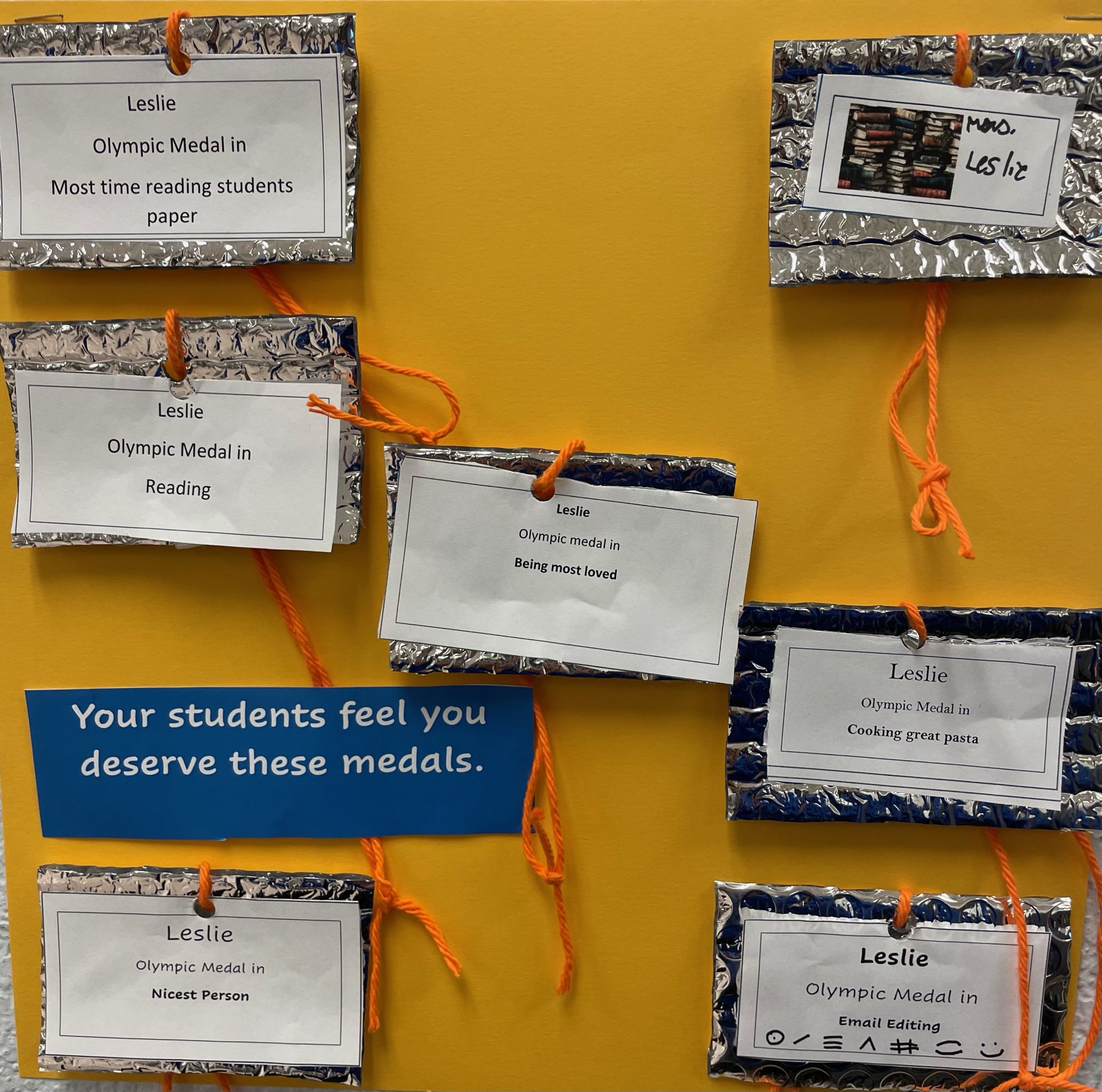
Students placed the medals that they made for their peers into a cigar box that was then presented to each student. Staff received their medals on posters to be displayed in classrooms. Not only was everyone happy to receive such uplifting messages, but they were also surprised at the little things that their peers noticed about them, such as their awesome choices in footwear.
WEEK 6
Olympics Project
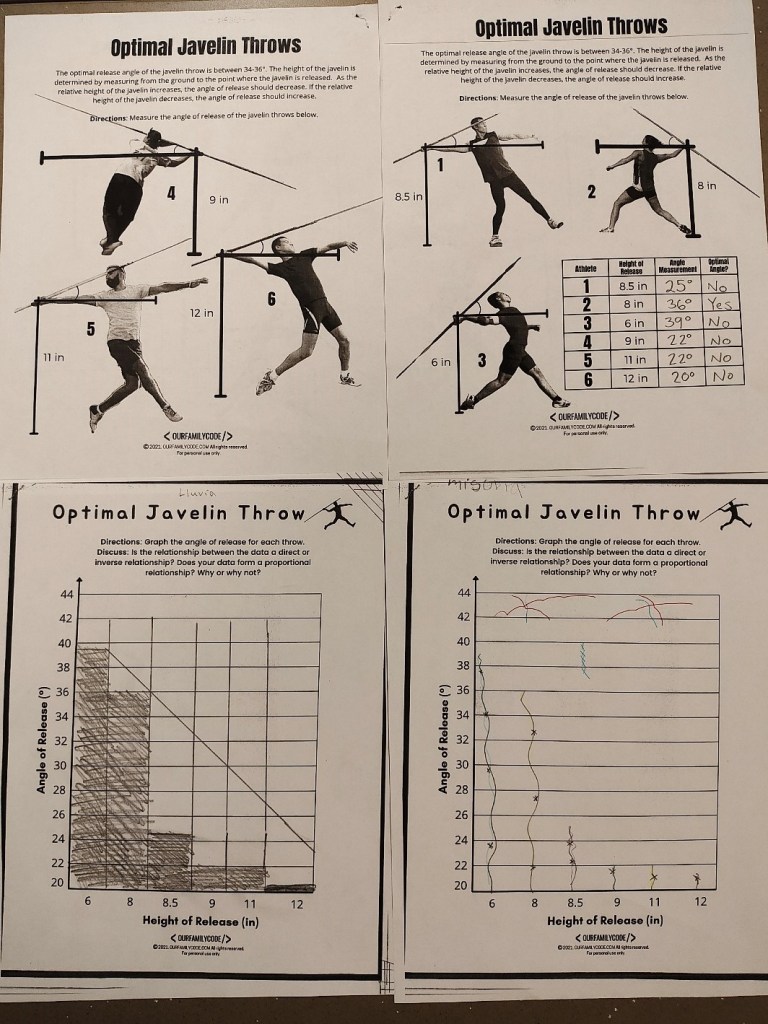
Students practiced using a ruler to measure the height of various images of athletes. Then, they used a protractor to measure release angles on those images of athletes throwing a Javelin. They graphed their results, and they were able to see the relationship between the height of Javelin release (based on the height of the athlete) and the optimal angle of release.
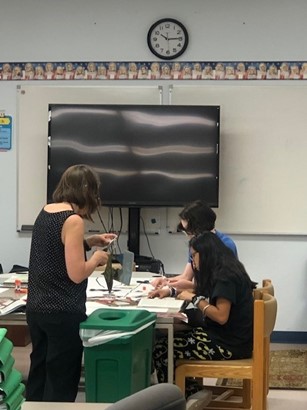
As a character analysis activity, which links to English standards, students watched videos of Olympic athletes from various sports talking about their routines, motivations, families, and support systems. Then, as a group, they discussed the attributes of an Olympic athlete based on information gleaned from the videos.
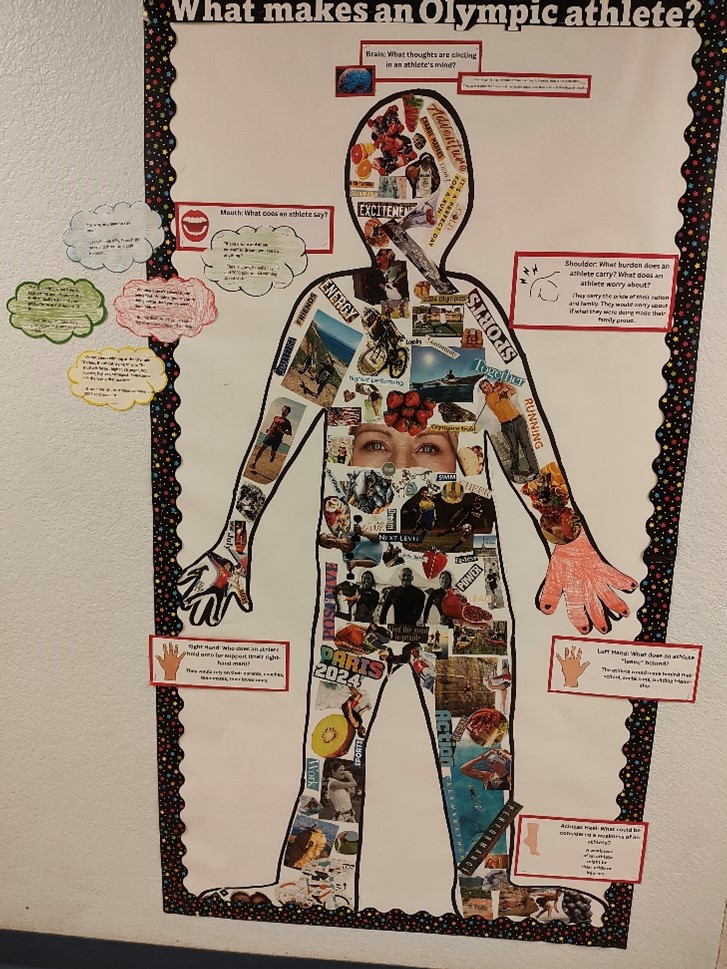
They used their findings to create a wall display for “What Makes an Olympic Athlete.” Students described what might go through an athlete’s mind during the games, what they left behind to follow their Olympic dreams, and who they rely on. Then, they displayed the information in a visually-appealing collage using magazine clippings and text boxes.

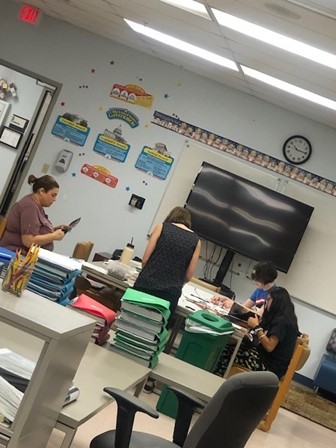
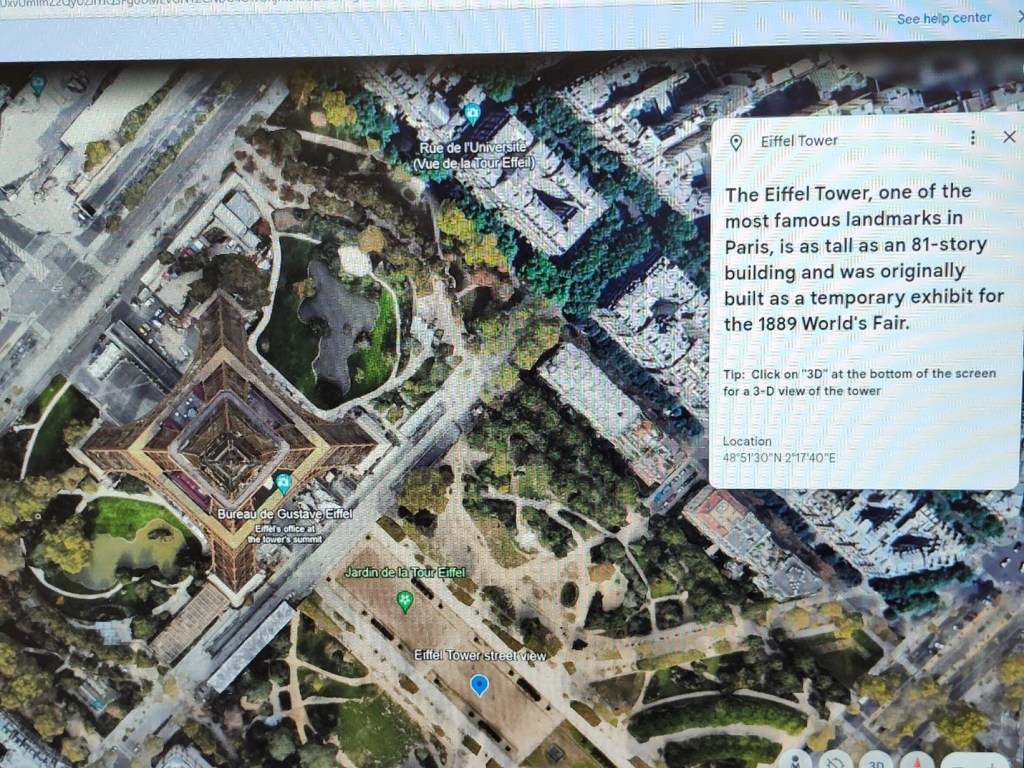
Next, students used Google Maps to explore Paris, France, the site of this year’s Olympic Games. They were able to examine famous landmarks and answer comprehension questions about specific sites of interest. To further study Paris and special features of this year’s Games (like new sports, notable athletes, etc.), students also read an article in a magazine and answered vocabulary and comprehension questions.
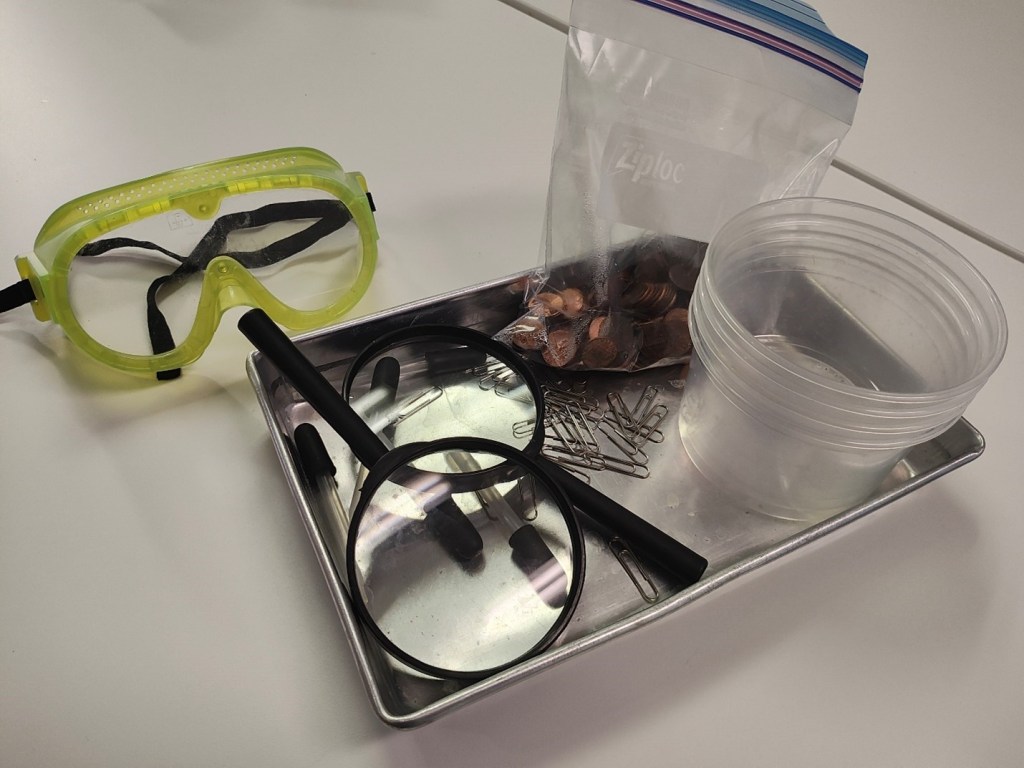
Finally, students completed a short H2Olympics water lab where they made predictions, tested them, and analyzed how the results connected to the properties of water. Activities included counting water droplets that could fit on a penny, counting how many pennies could fit in a full water cup before the water overflowed, and balancing paper clips on the surface of water.
Extracurricular Activities
MCC Planetarium Visit

Students had a great time visiting the Mesa Community College (MCC) Planetarium where they learned about our universe and the vast galaxies beyond our microcosm through a visually enthralling experience.
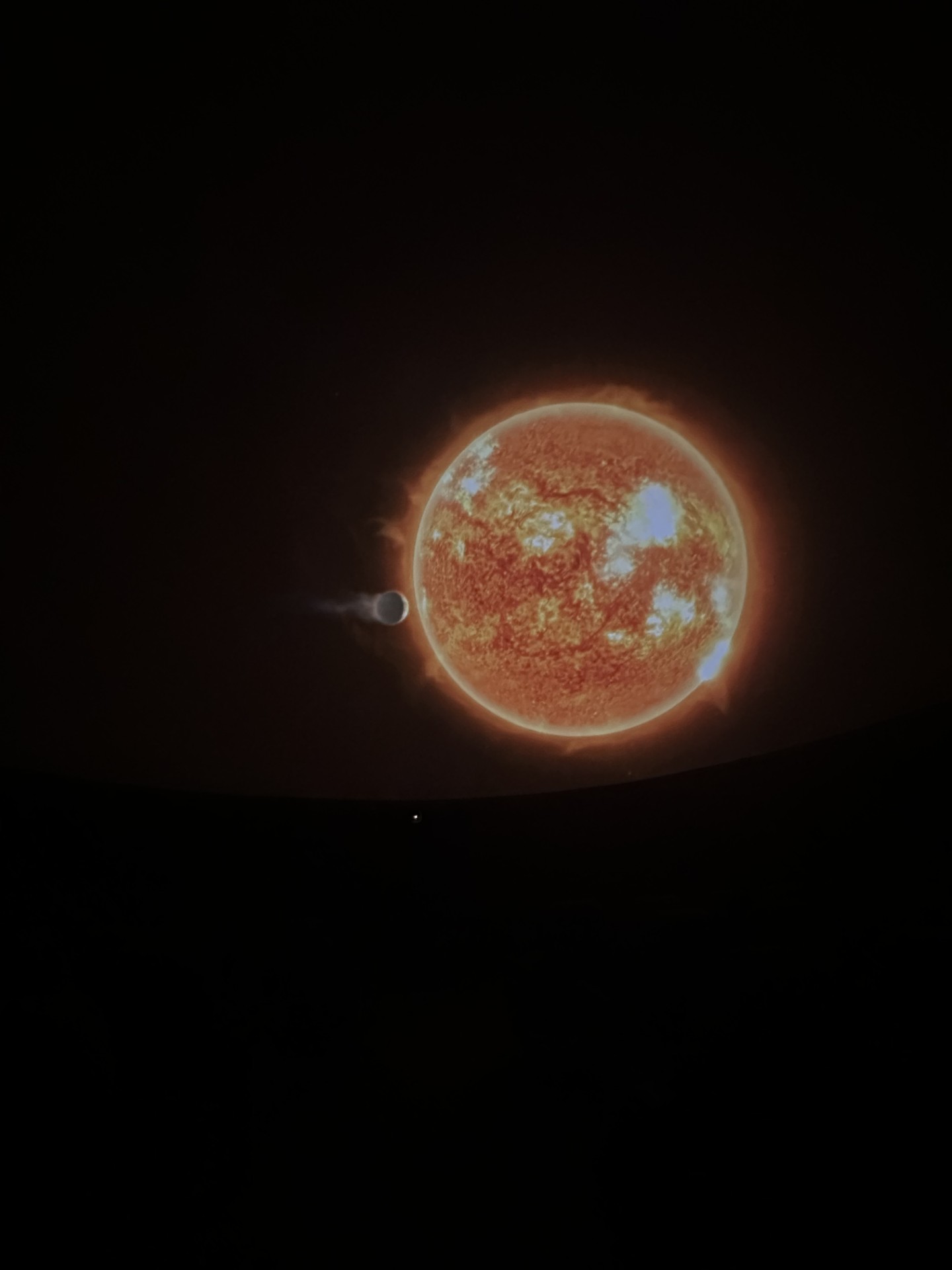



Dr. James Enos, the planetarium director and an astrophysicist who led the student tour, then engaged staff and students in a discussion about the possibility of life on other planets, the sun engulfing the Earth in 4.5 billion years, and the nature of black holes. Students then wrapped up their extracurricular time viewing an entertaining and educational film about our universe and exoplanets.
Thank you to the MCC Planetarium and to Dr. Enos for an extraordinary visit!
SUMMER SCHOOL 2023
OBJECTIVES:
During the Extended School Year (ESY), students will participate in fun and informative outings, enjoy social recreational time with their peers, and engage in a six-week, project-based, cross-curricular learning activity centered on two age-appropriate films: The Lion King and The Empire Strikes Back. These are two of our students’ favorite movies from the world of Disney and the universe of Star Wars.


Students will receive direct instruction from teachers in all four core classes, English, Math, Science, and Social Studies, to reinforce skills learned during the 2022-2023 school year. They will apply standards-based skills to the two films, as outlined in the table below:
| The Lion King | Star Wars |
| Examining Monarchies, Lines of Succession, and Absolute Monarchs (Social Studies) | Studying Feudal Japan and WW2, Reviewing the characteristics of Republics, Empires, and Dictatorships (Social Studies) |
| Identifying Character Traits with Textual Evidence, Diagramming the Elements of Plot, Citing Sources in MLA format, Editing for the Standard Conventions of English (English) | Identifying Character Traits with Textual Evidence, Diagramming the Elements of Plot, Citing Sources in MLA format, Editing for the Standard Conventions of English (English) |
| Researching and Classifying Biomes, Identifying Plant and Animal Adaptations (Science) | Researching and Classifying Biomes, Identifying Plant and Animal Adaptations (Science) |
| Measuring Dimensions of Images and Physical Items Using Metric Units, Calculating Ratios and Scale Factors, Building 3-Dimensional Scale Models (Math) | Measuring Dimensions of Images and Physical Items Using Metric Units, Calculating Ratios and Scale Factors, Building 3-Dimensional Scale Models (Math) |
By the end of the six-week summer school session, students will have created two gallery walks — one on The Lion King and one on Star Wars — that present viewers with a visually-appealing, comprehensive, and in-depth examination of the films across the four content areas.
WEEK 1
Students completed the historical connections assignment (Monarchies and Feudal Japan) on The Lion King and Star Wars. In addition, students collaborated to scale 8.5 x 11 images from each film to wall-sized murals, both of which will adorn one of the school’s hallways.
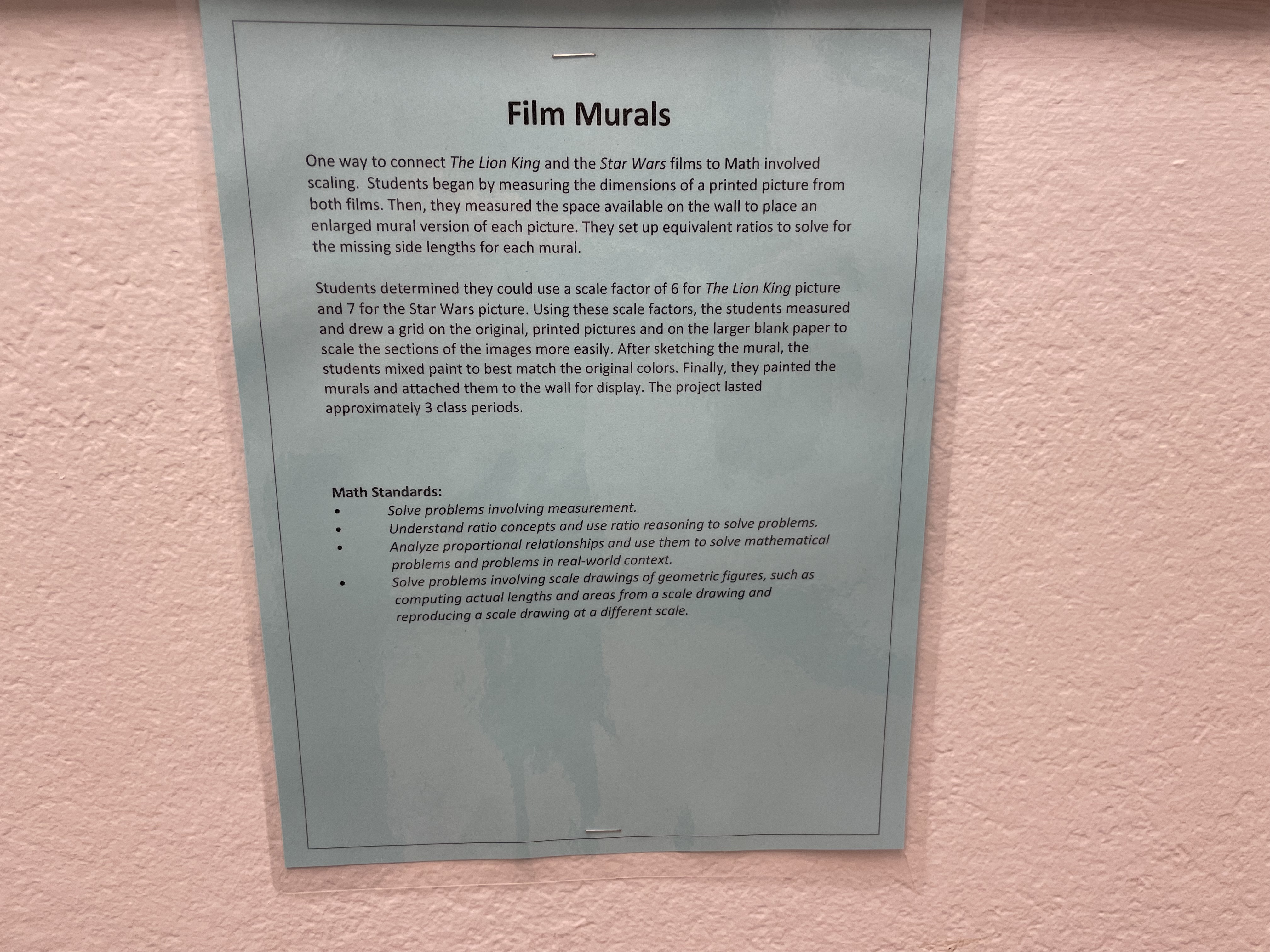


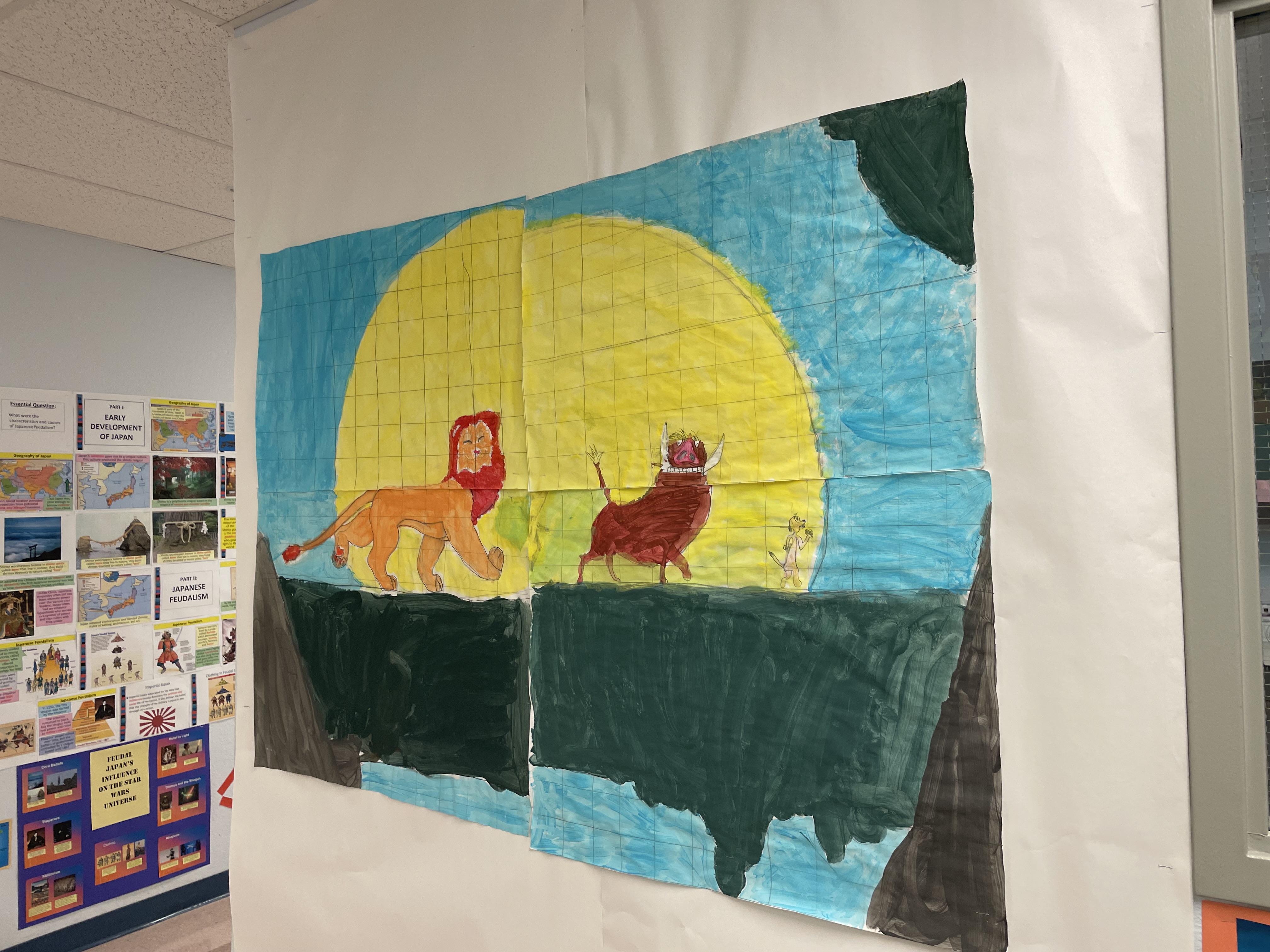
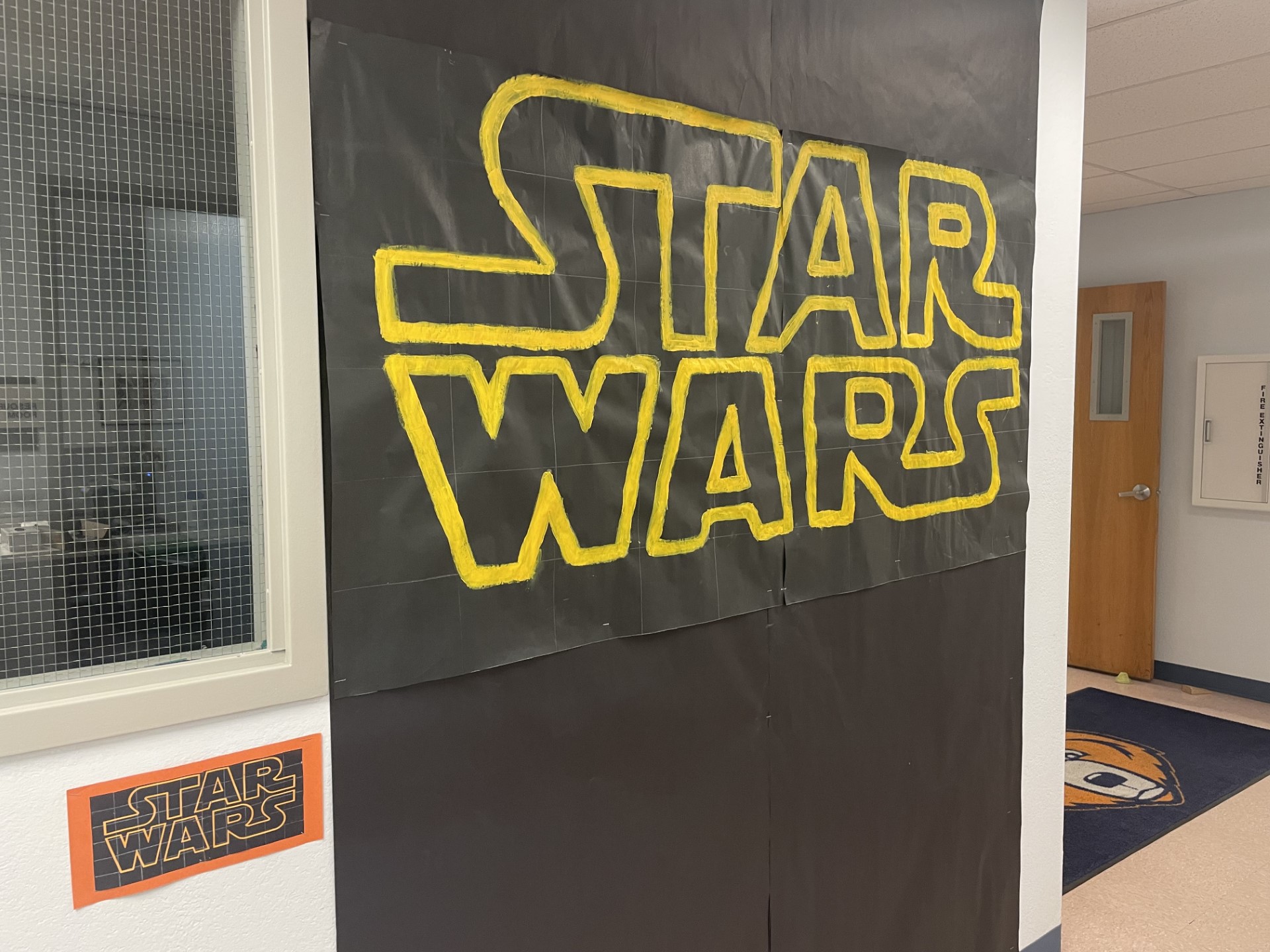
Above: Completed scaling project wall murals, pictured with the original 8.5 x 11 images


Above: Completed historical connections wall display

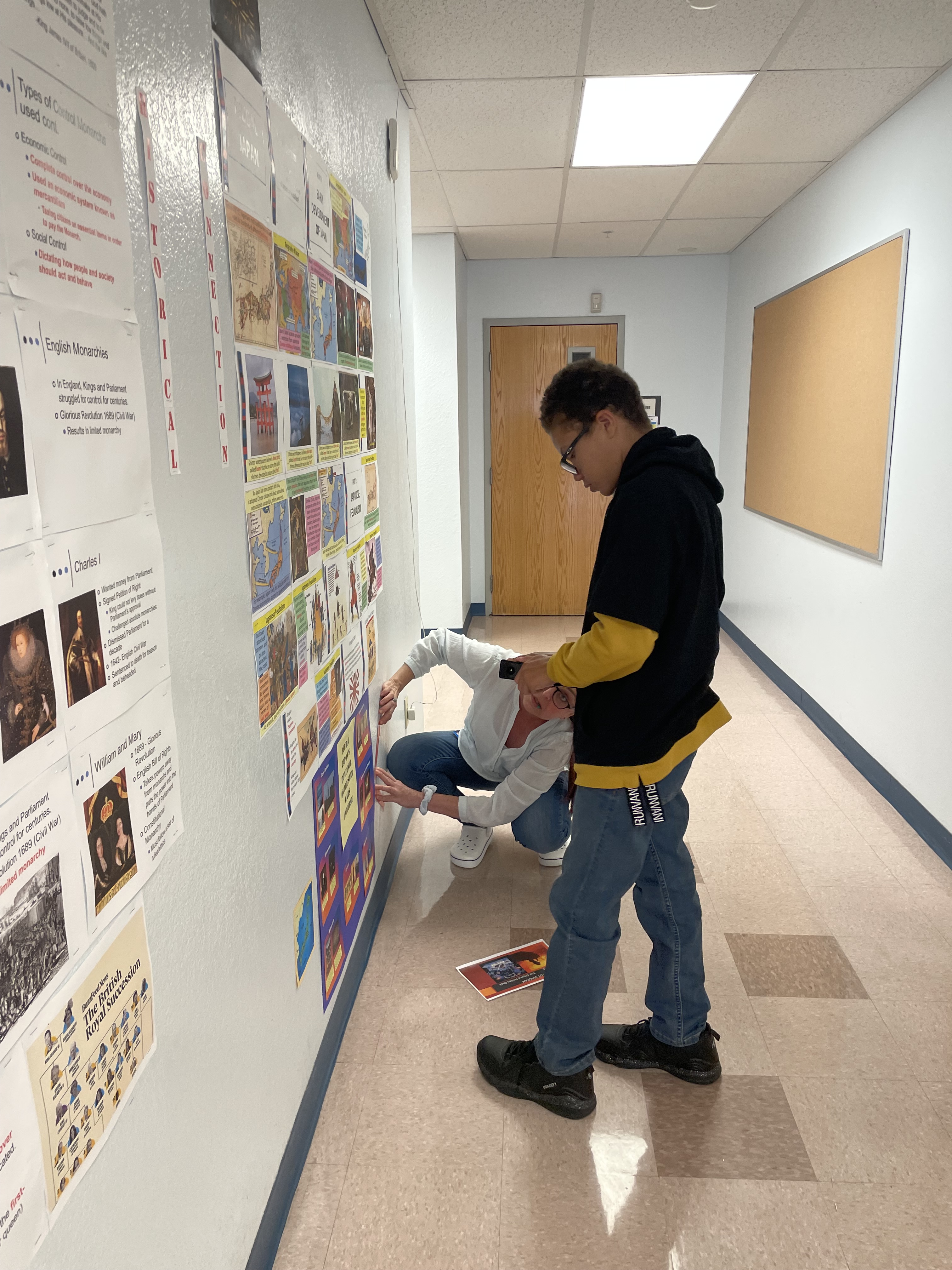
Above: Completed historical connections projects with Tyler and Shawnda affixing the completed work to the wall

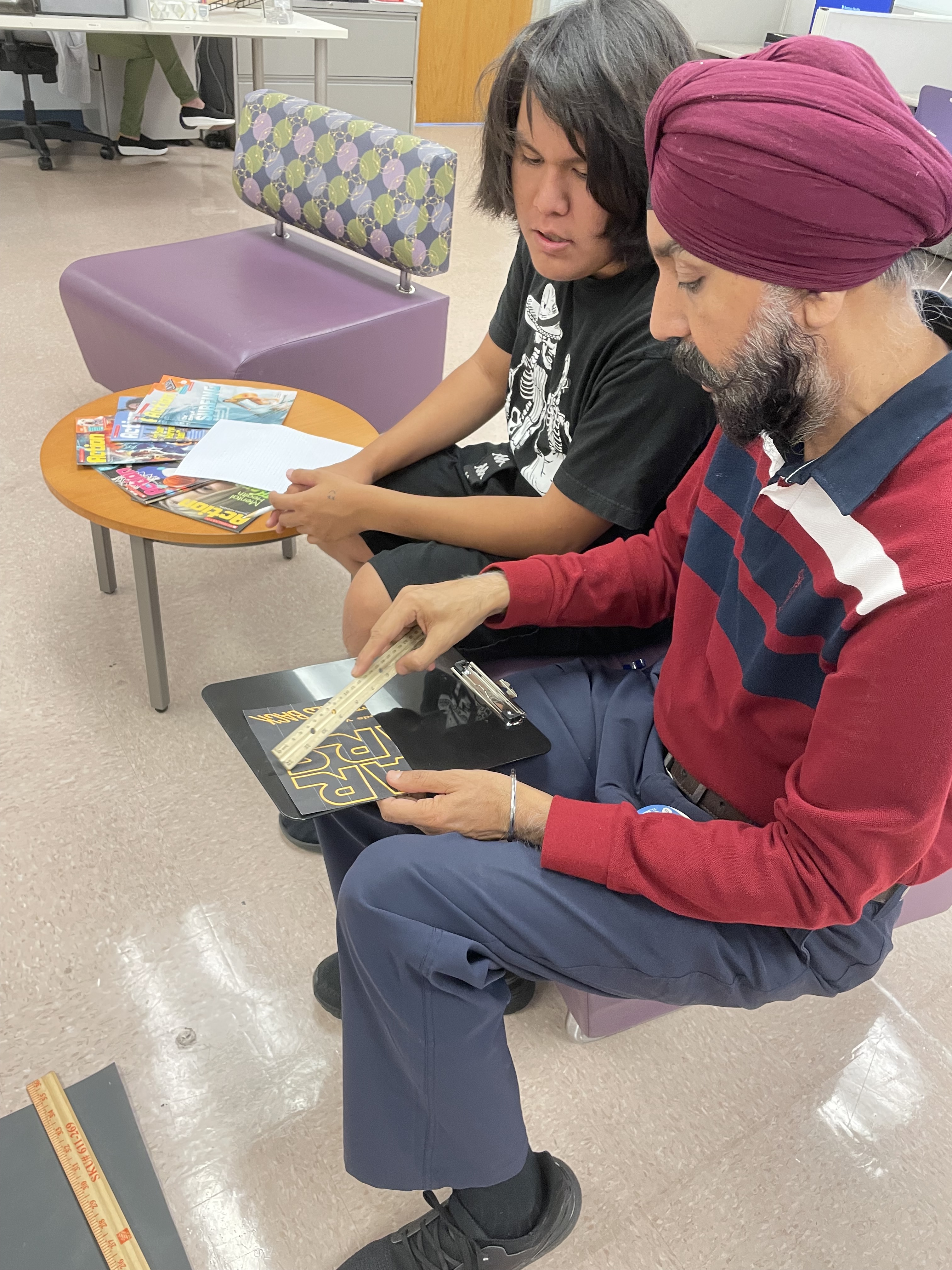
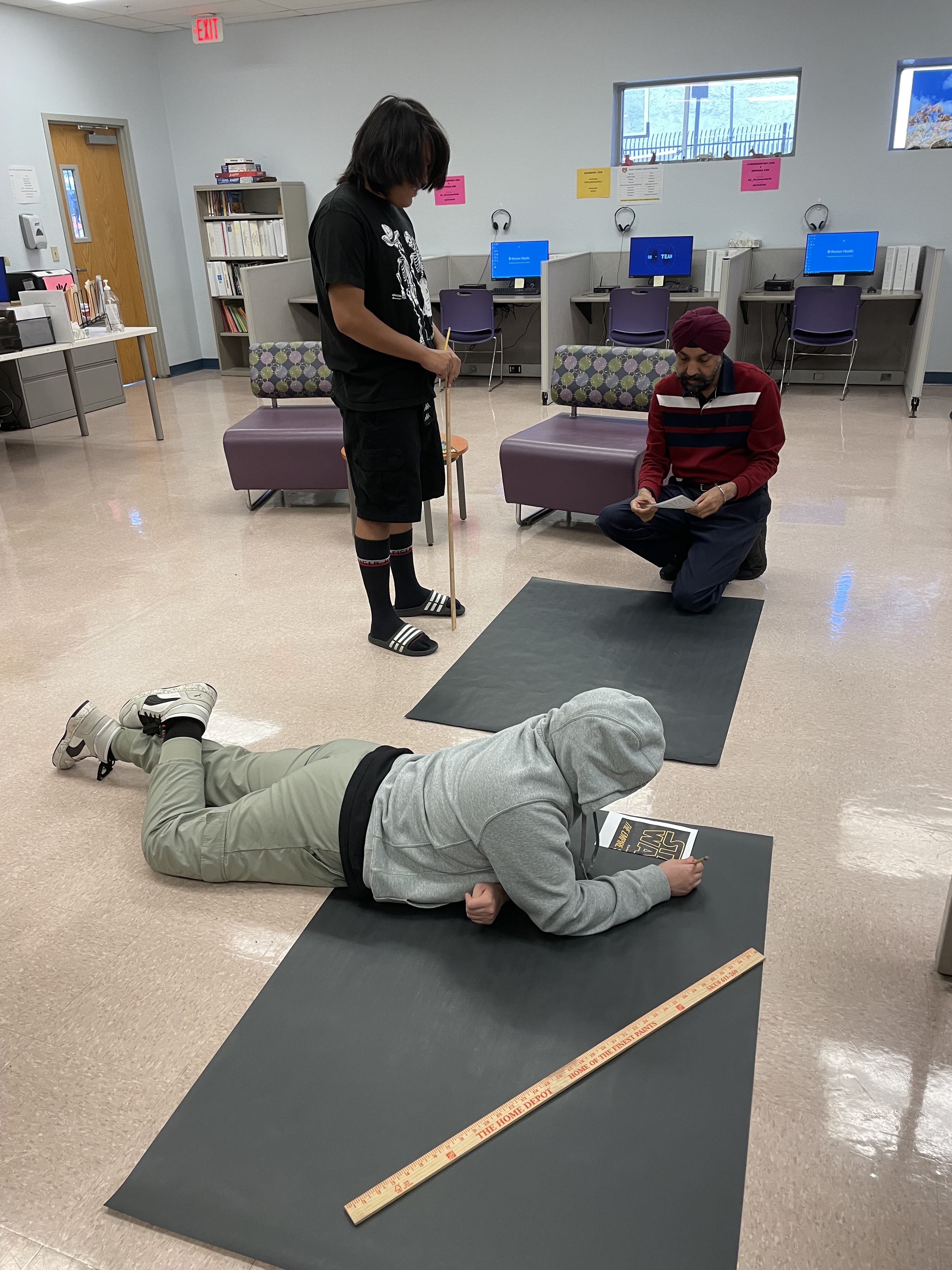

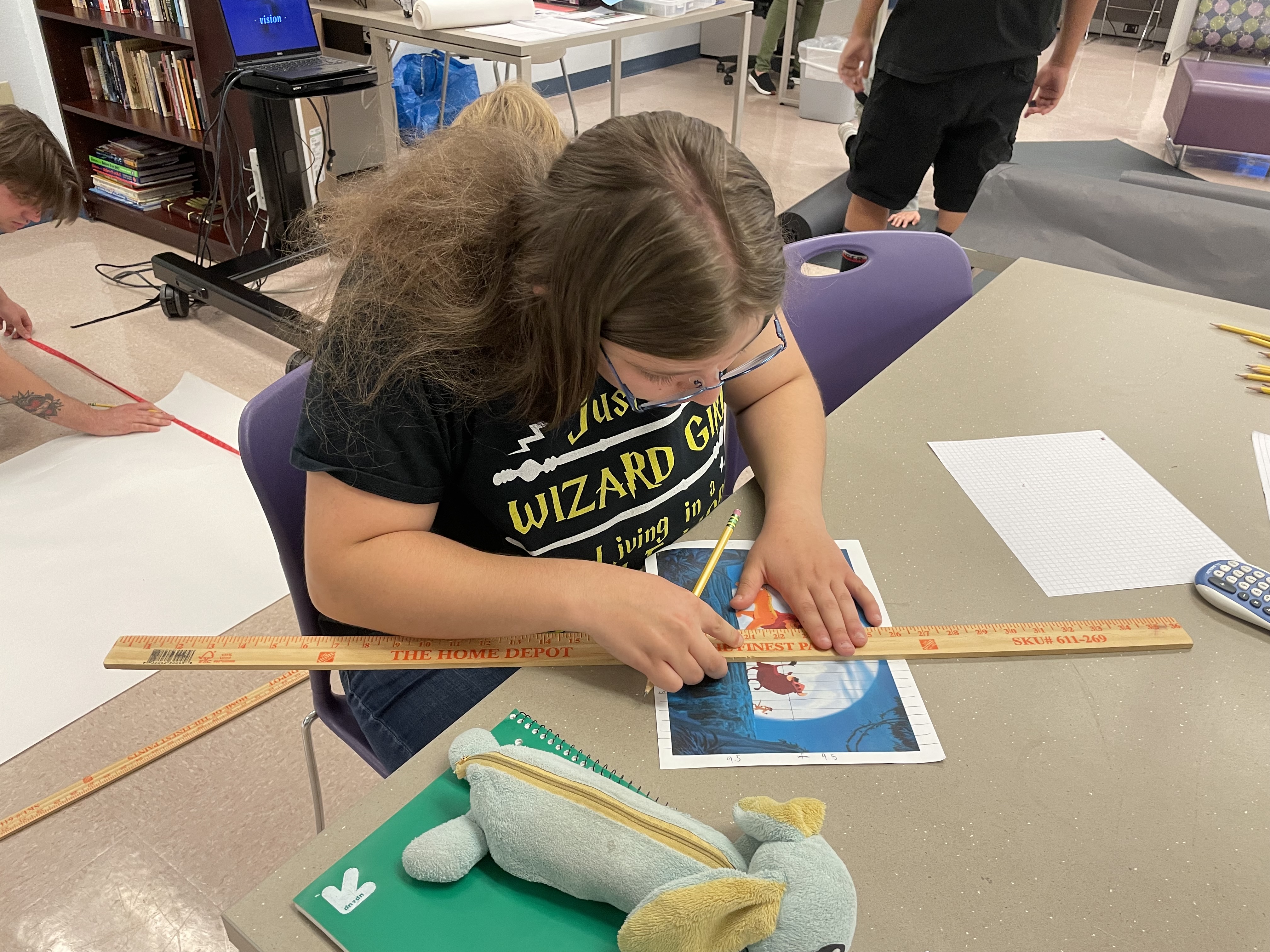
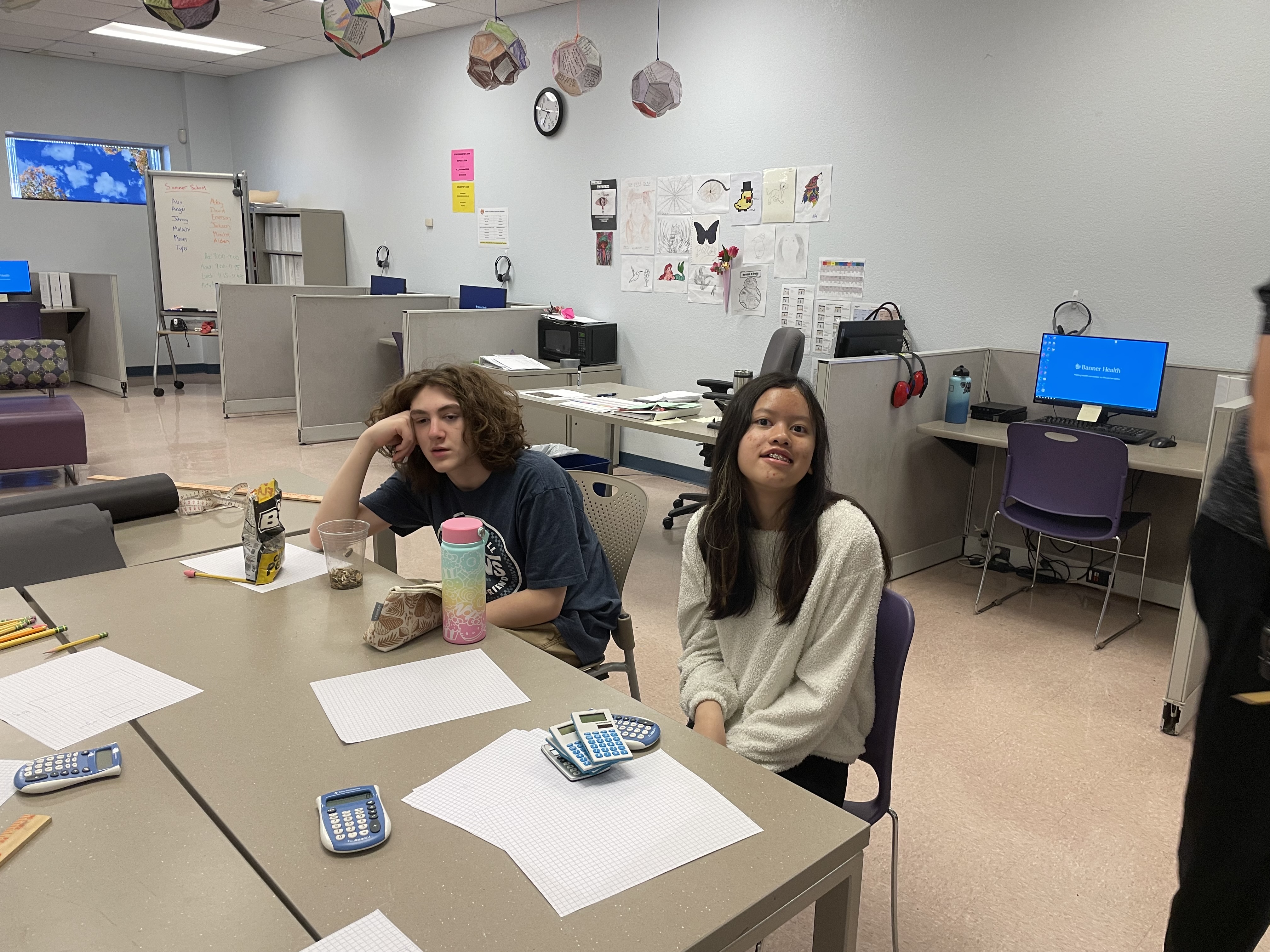
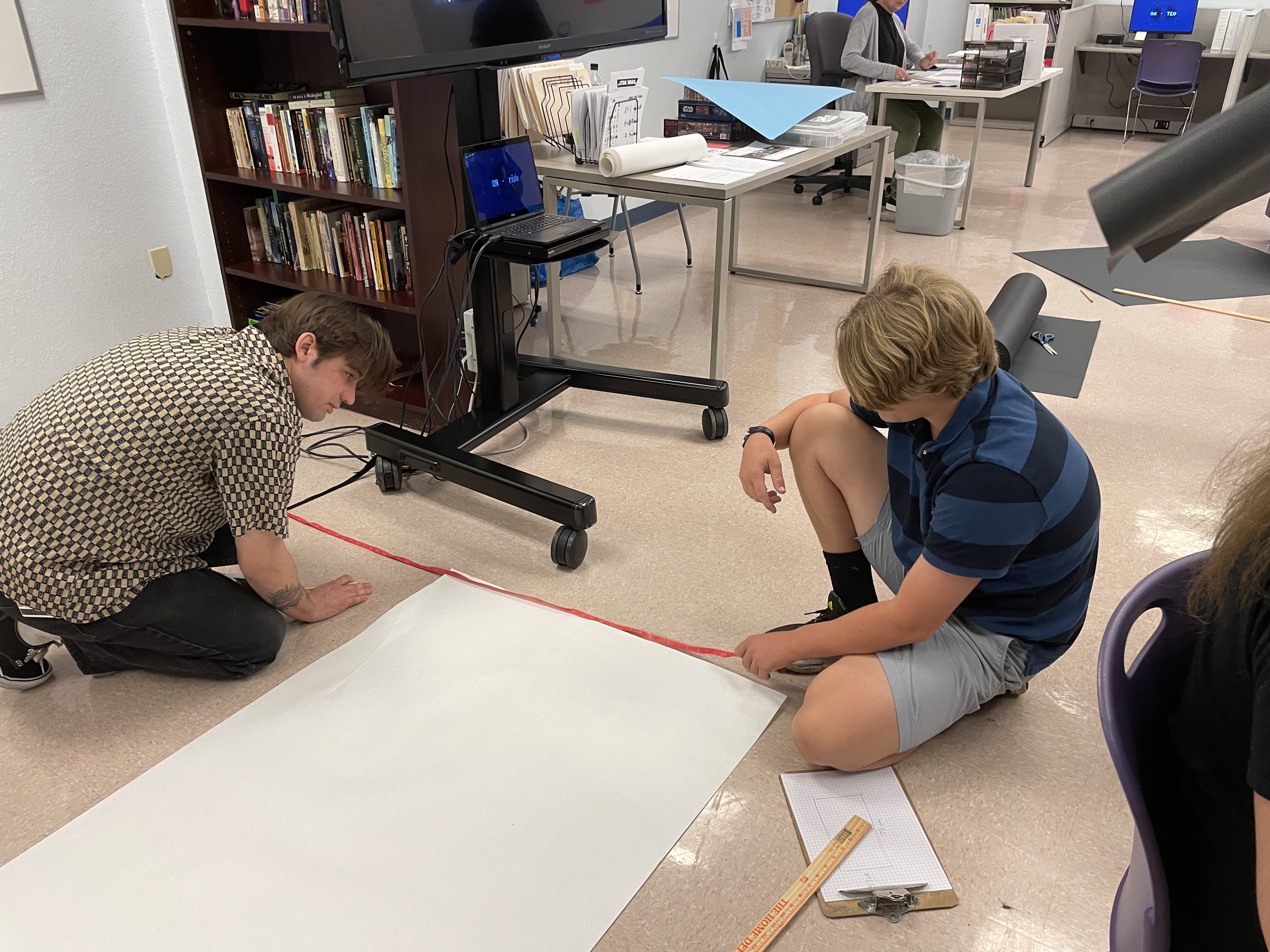
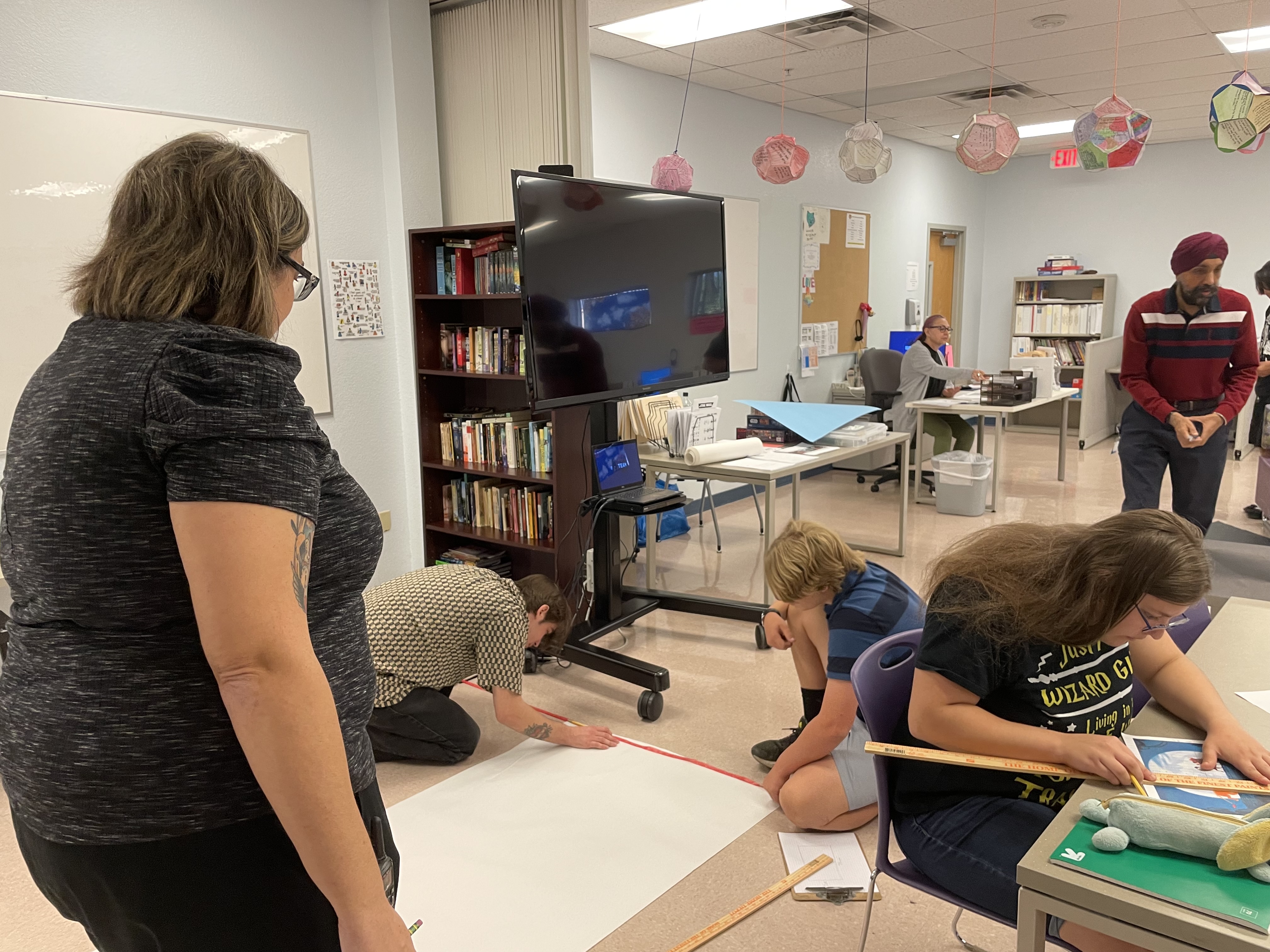
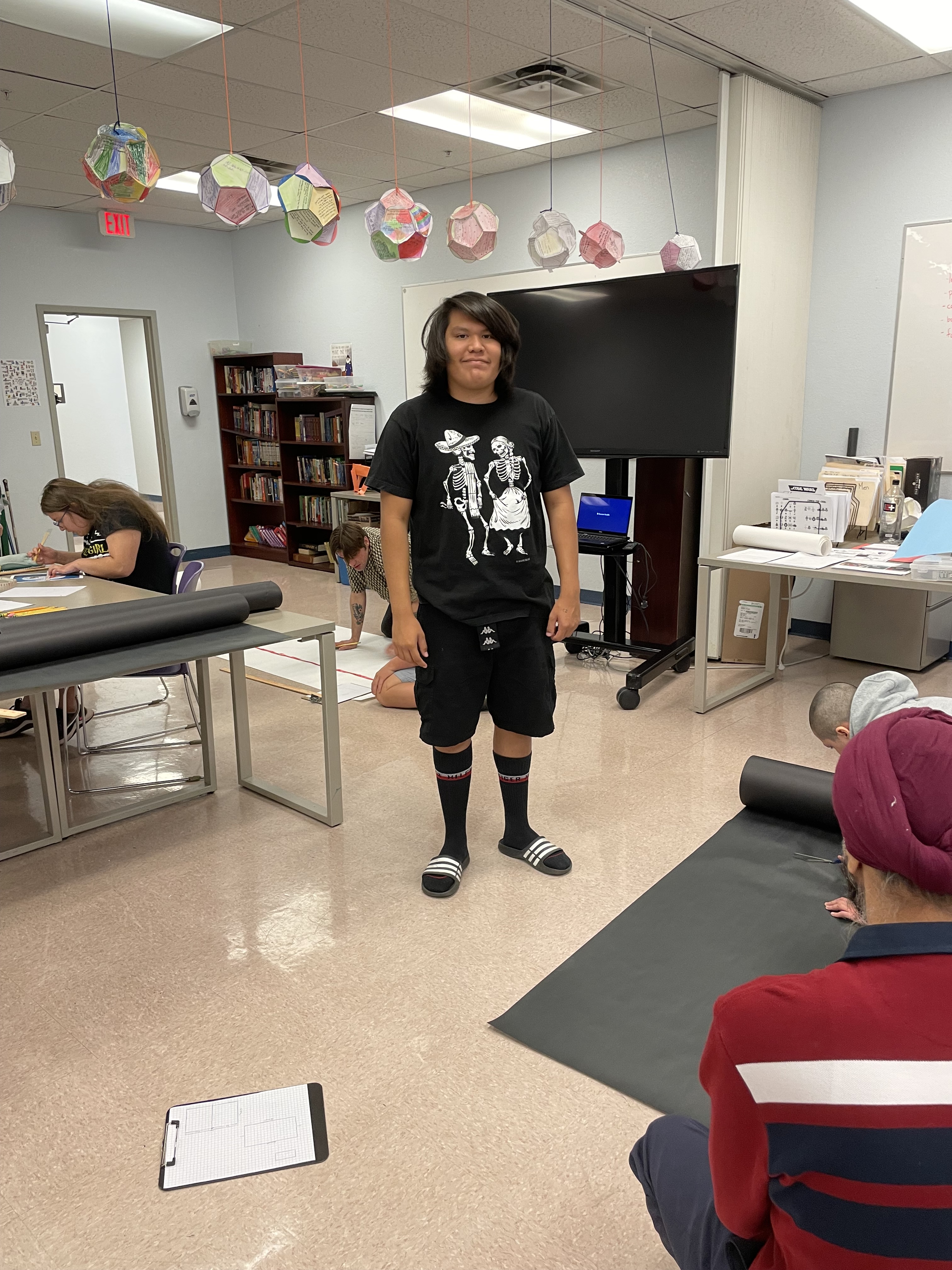
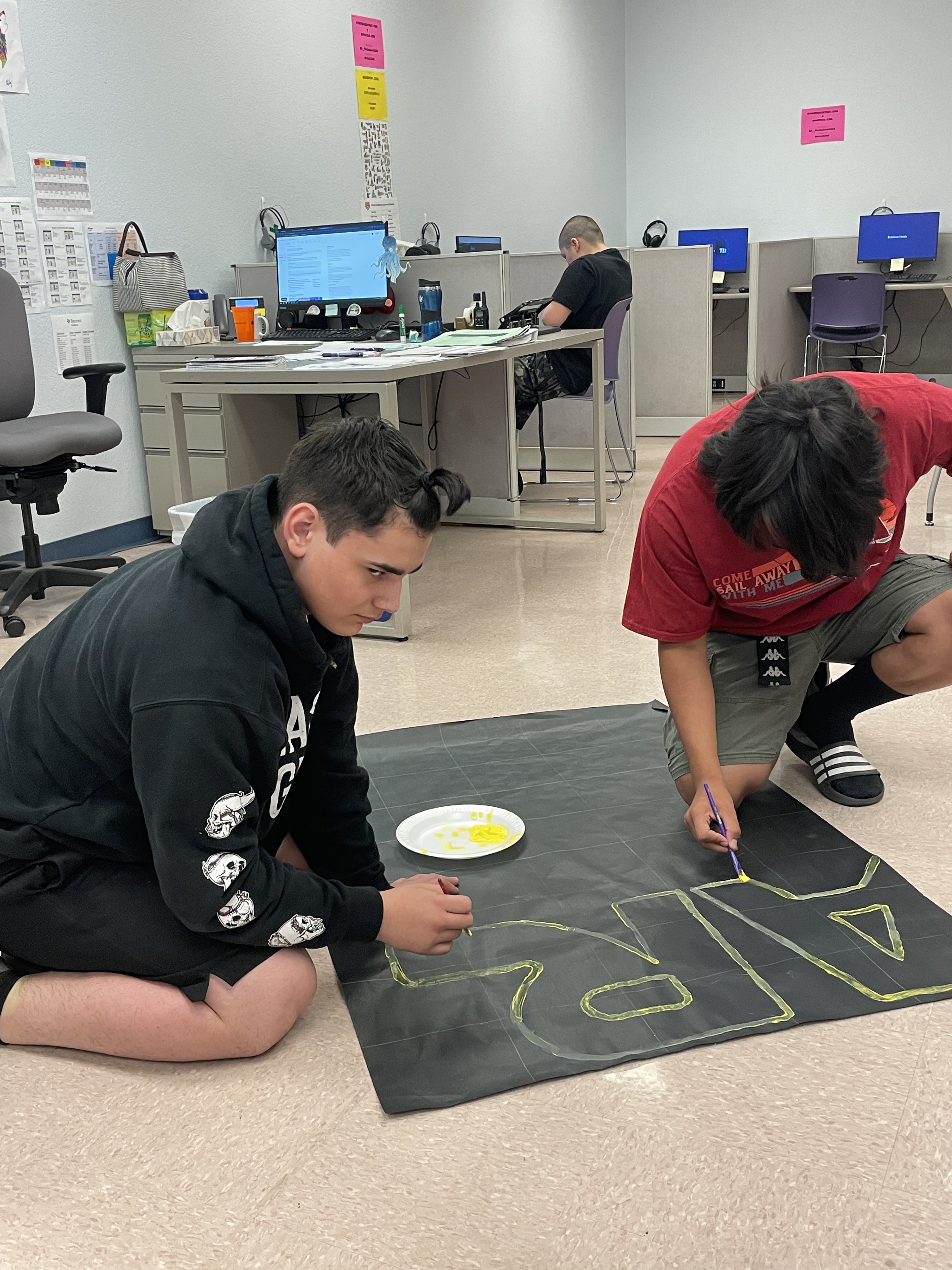


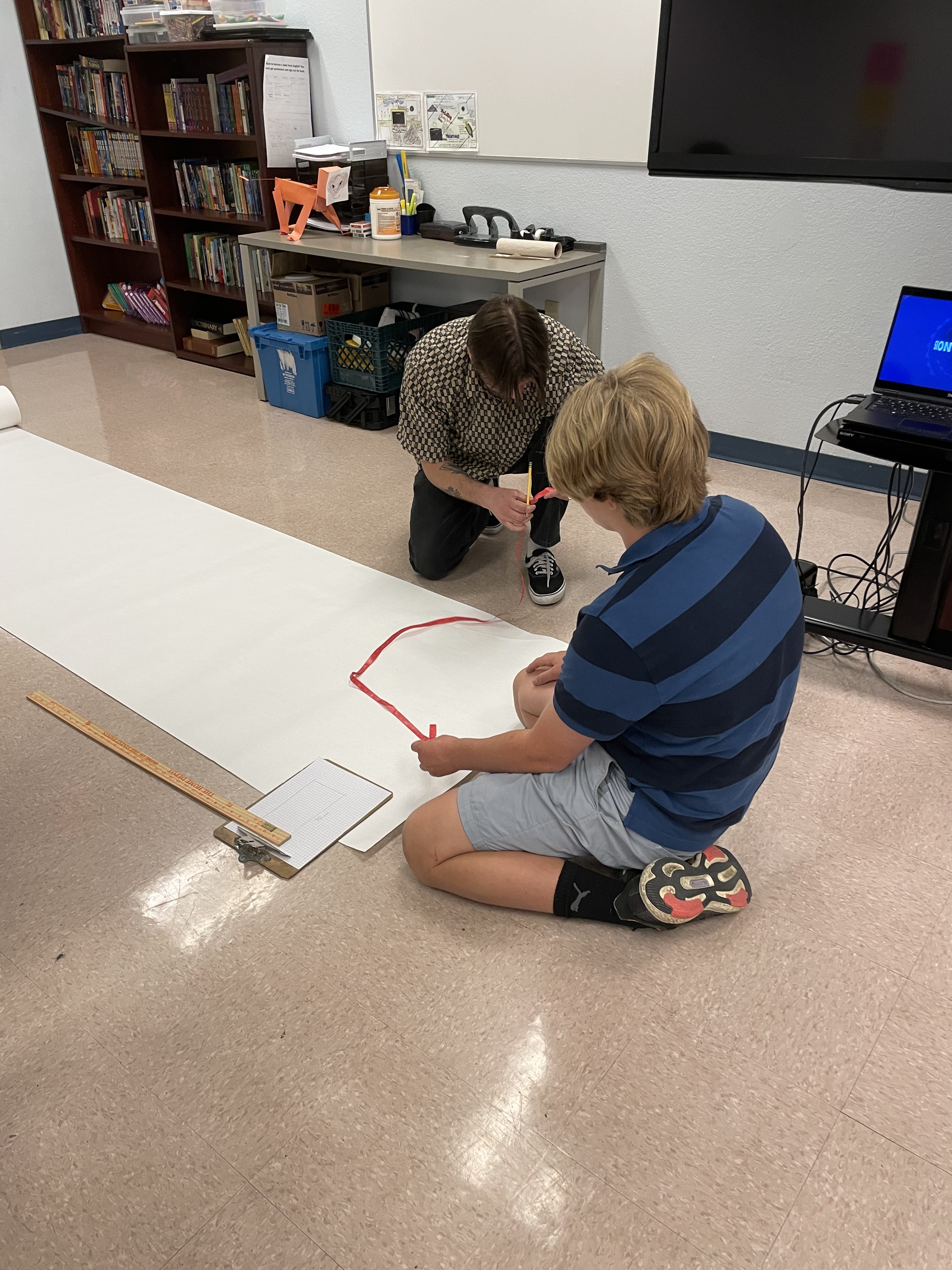
Above: Students begin the process of measuring the original 8.5 x 11 paper images and scaling each up by an appropriate factor to fit our hallway wall. Then, they began the intensive process of recreating the images to scale on large paper.
WEEK 2
Using reliable online sources that were vetted by Leslie and Tawna, students researched key issues to create timelines related to the worlds of Disney and Star Wars. The timeline project work links to both Social Studies and English standards.

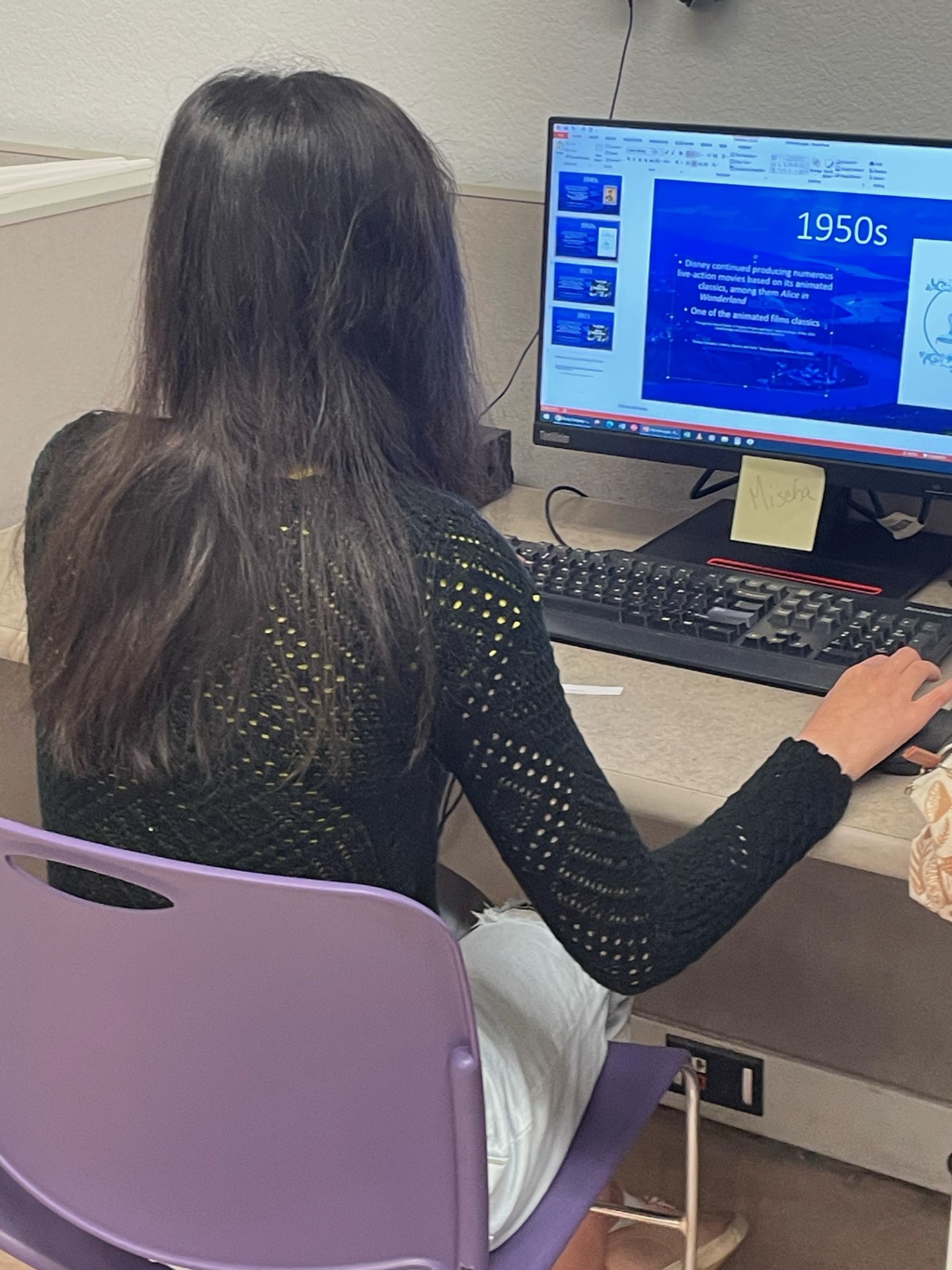
Above: Angel and Mischa work on their respective timelines.


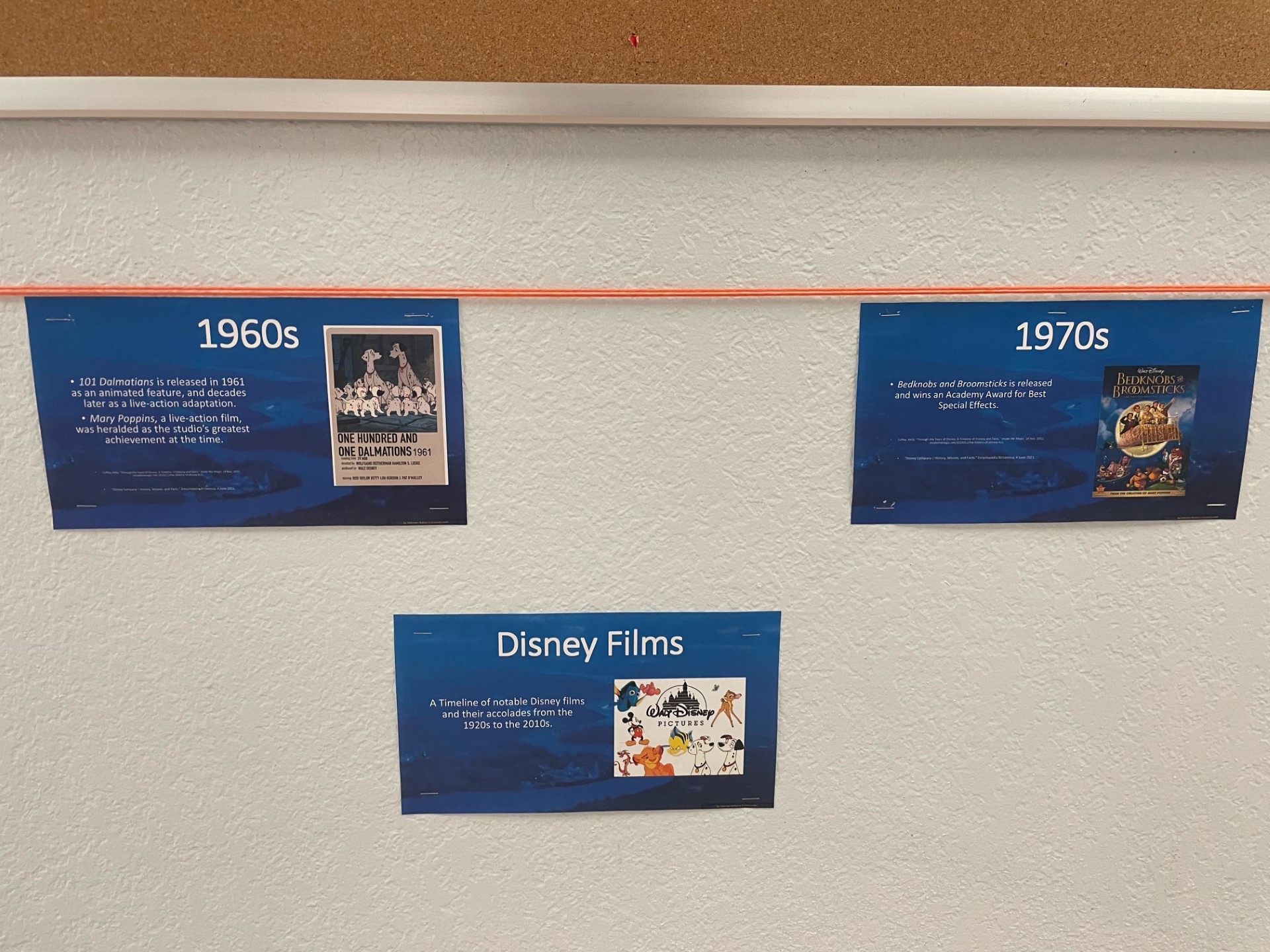
Above: Completed timelines displayed on the hallway wall along with the procedure and standards associated with the assignment
Students also followed complex directions to complete foldables of characters from each film to help embellish the empty mural areas.

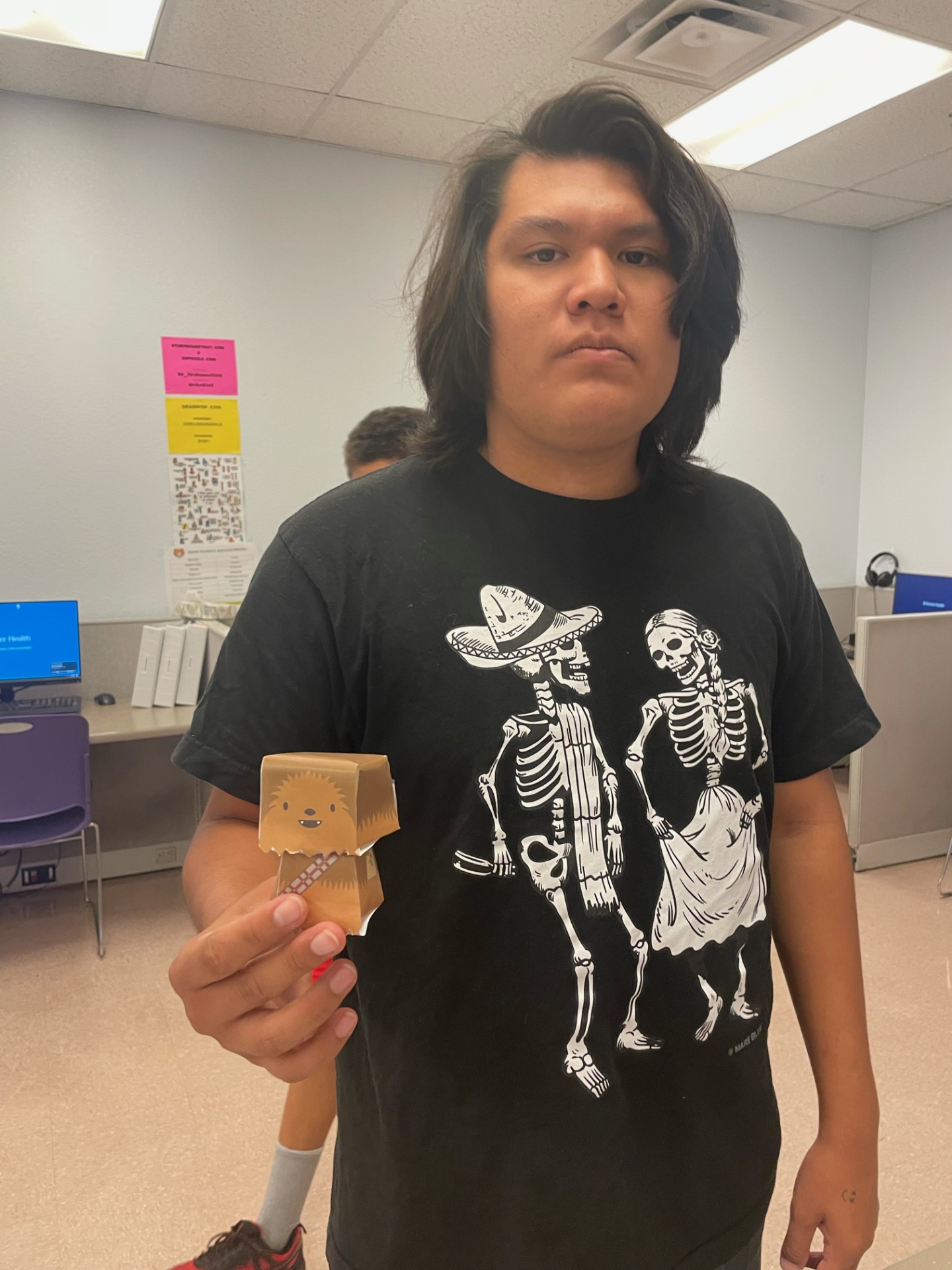
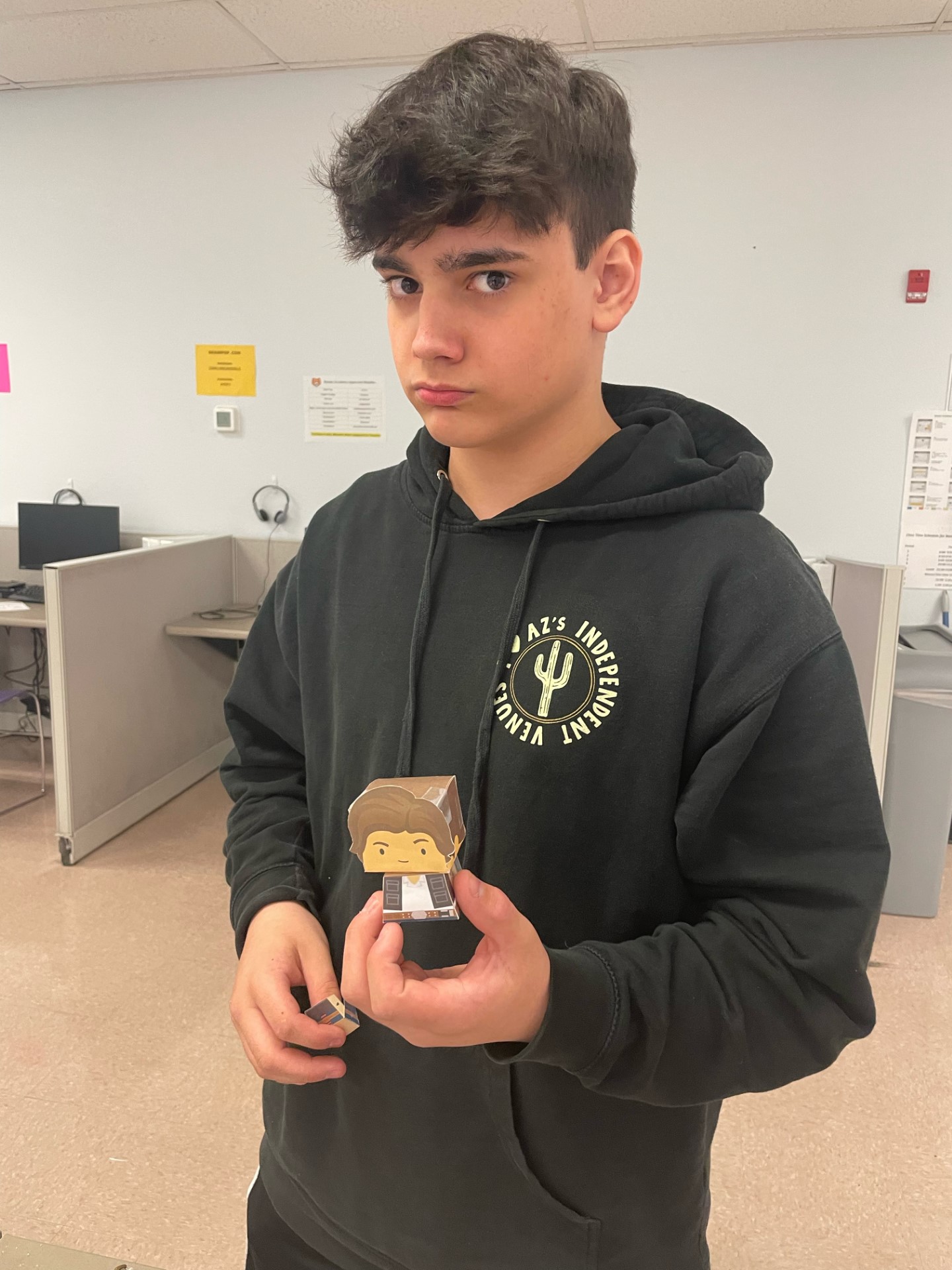

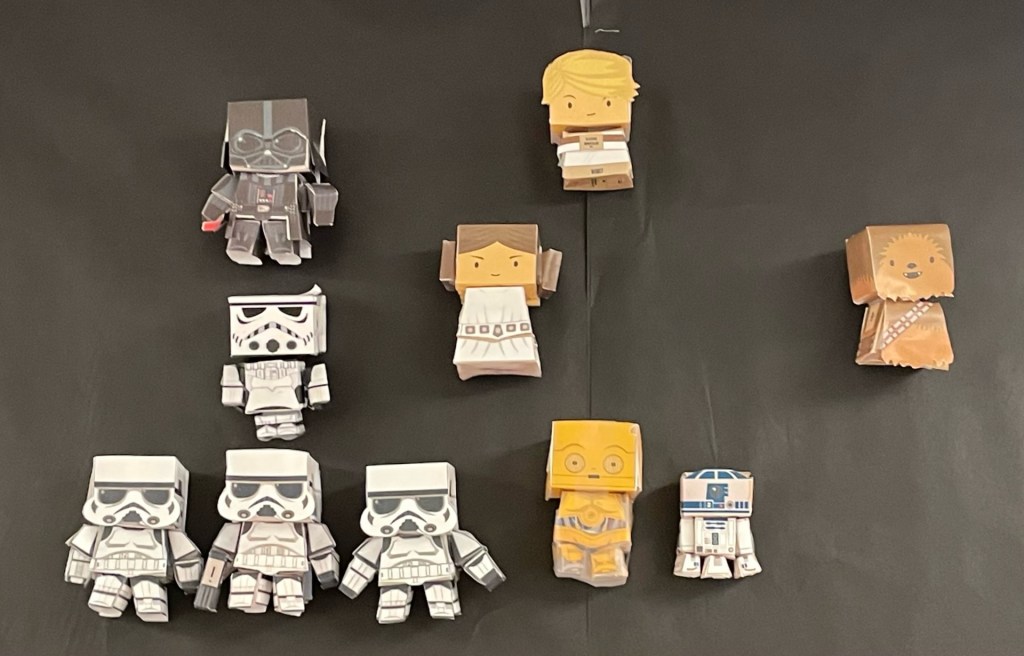
Above: Students display their completed Cubee foldables for Star Wars.
Students met additional English standards by completing a hexagonal character analysis project for 3 key players in each film. Students had to take prewritten traits for each character, then identify quotations (i.e., evidence) to support that specific trait. The end results were posted as separate hexagonal thinking posters, pictured below.

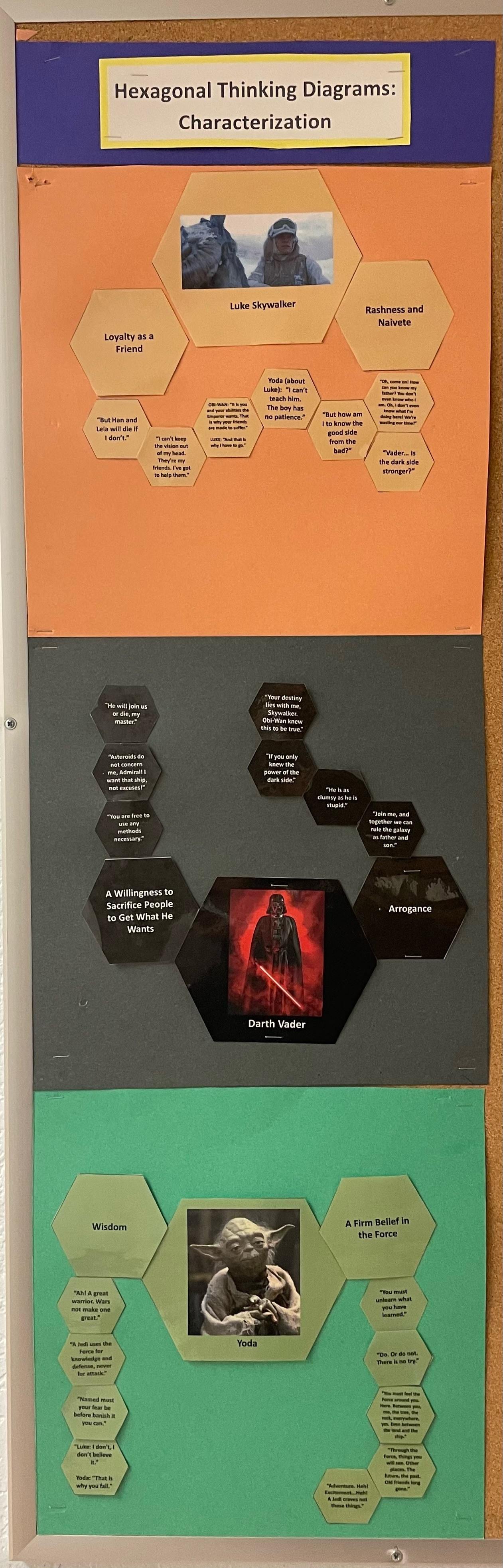


Top Row: The completed hexagonal thinking wall posters for The Lion King and The Empire Strikes Back
Second Row: Discussing character traits and learning about the hexagonal thinking process
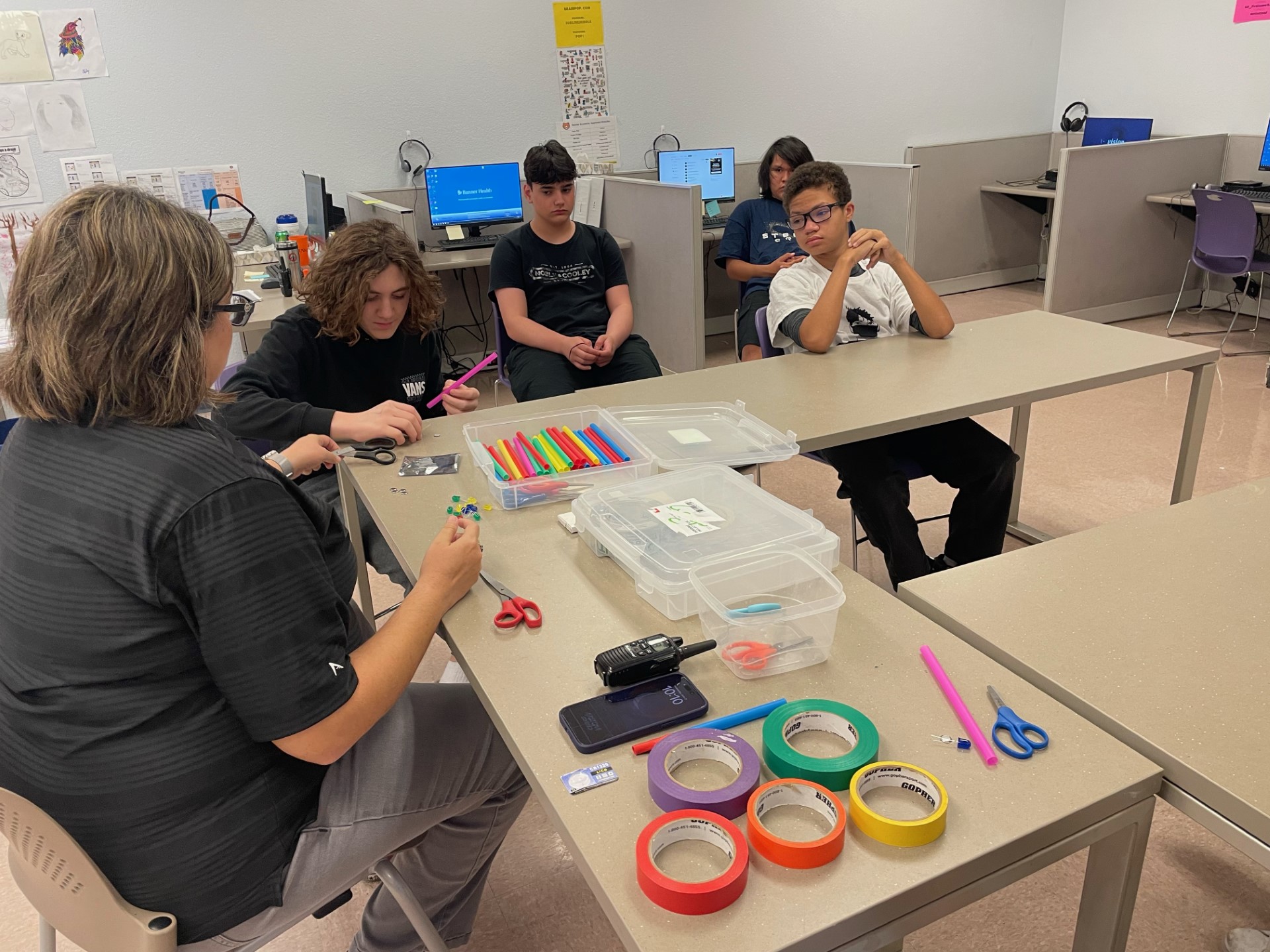
For fun, all students made their own mini-light sabers, a clear link to science and electronics. See photos below.
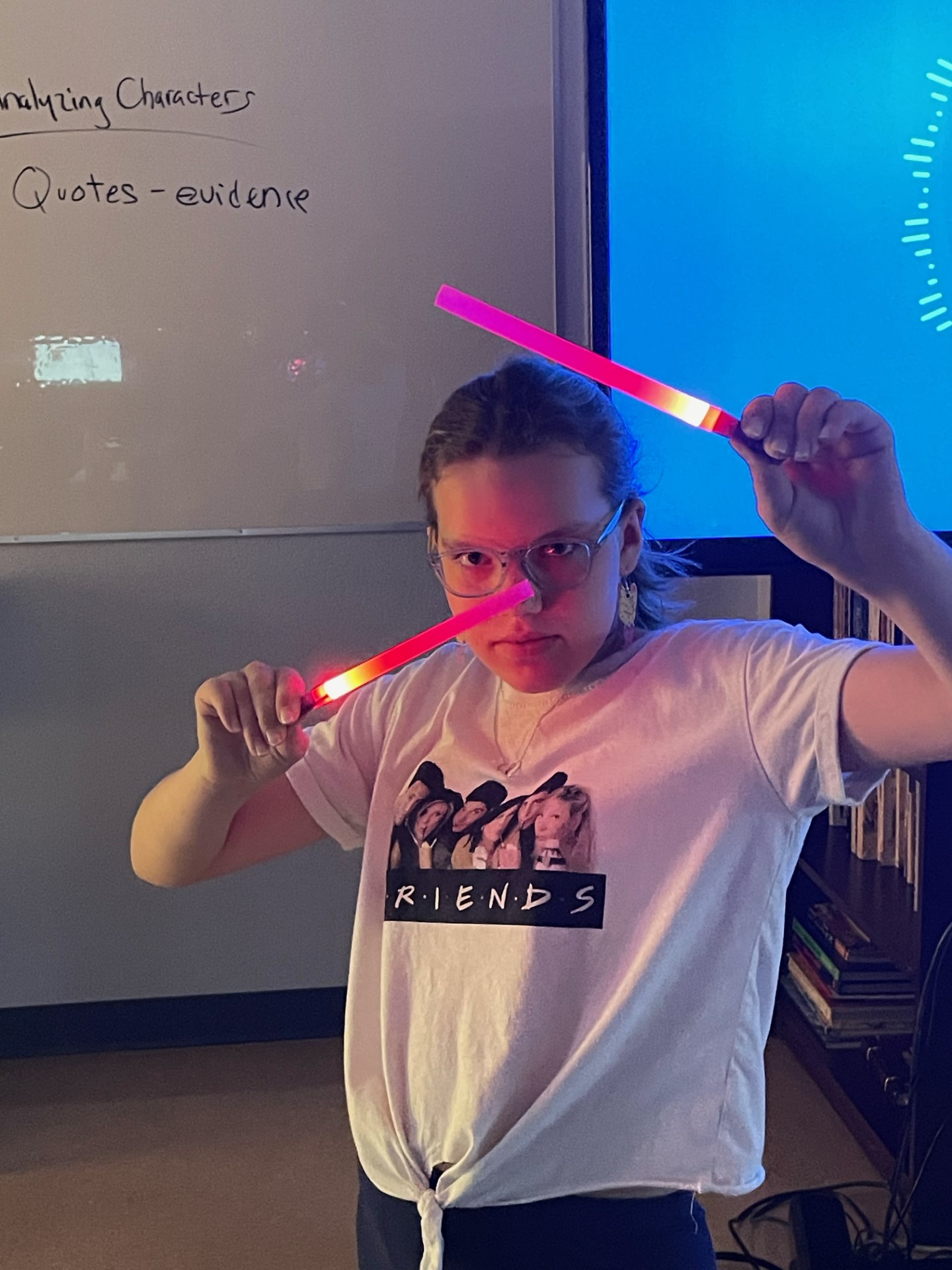


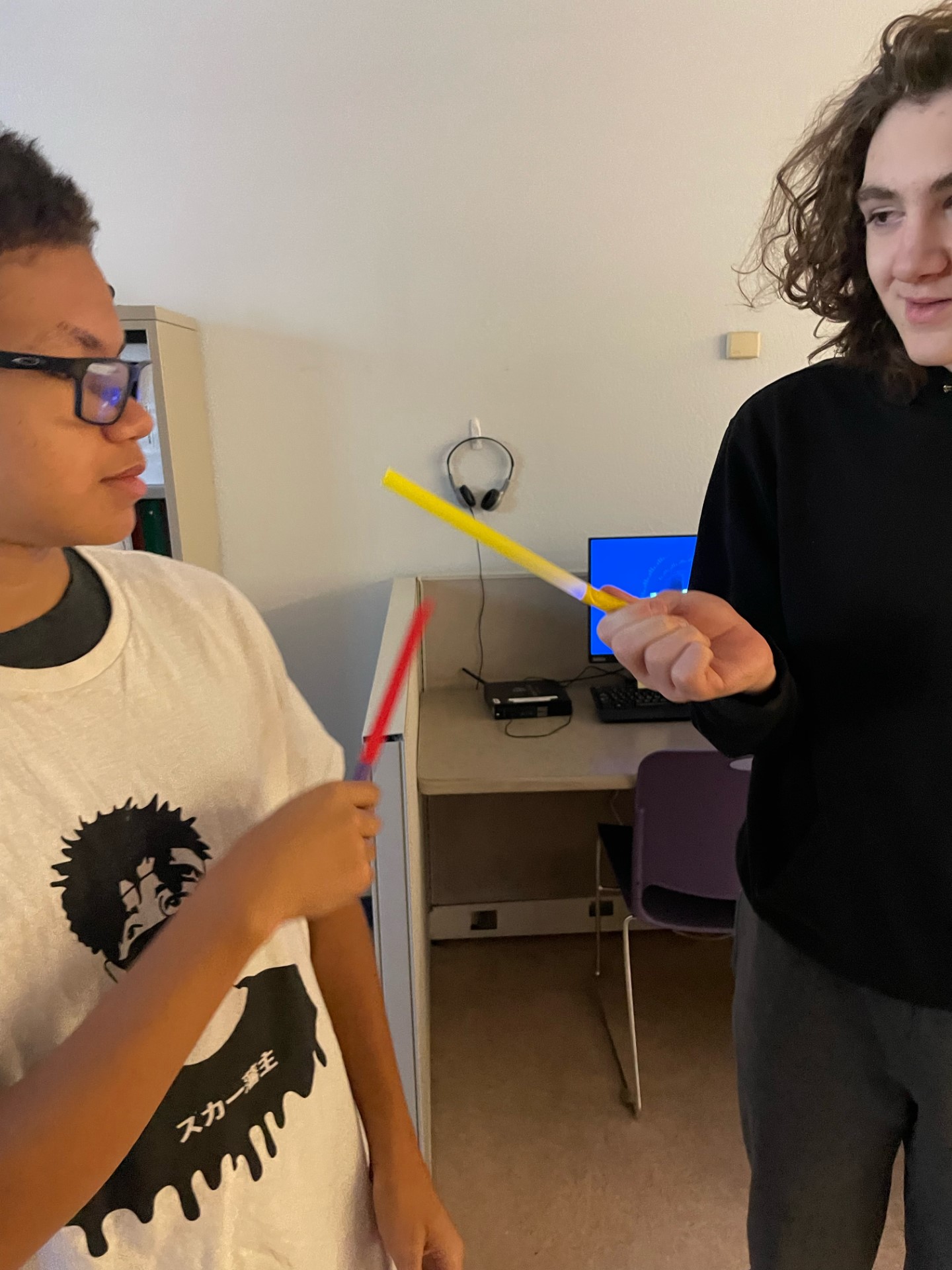
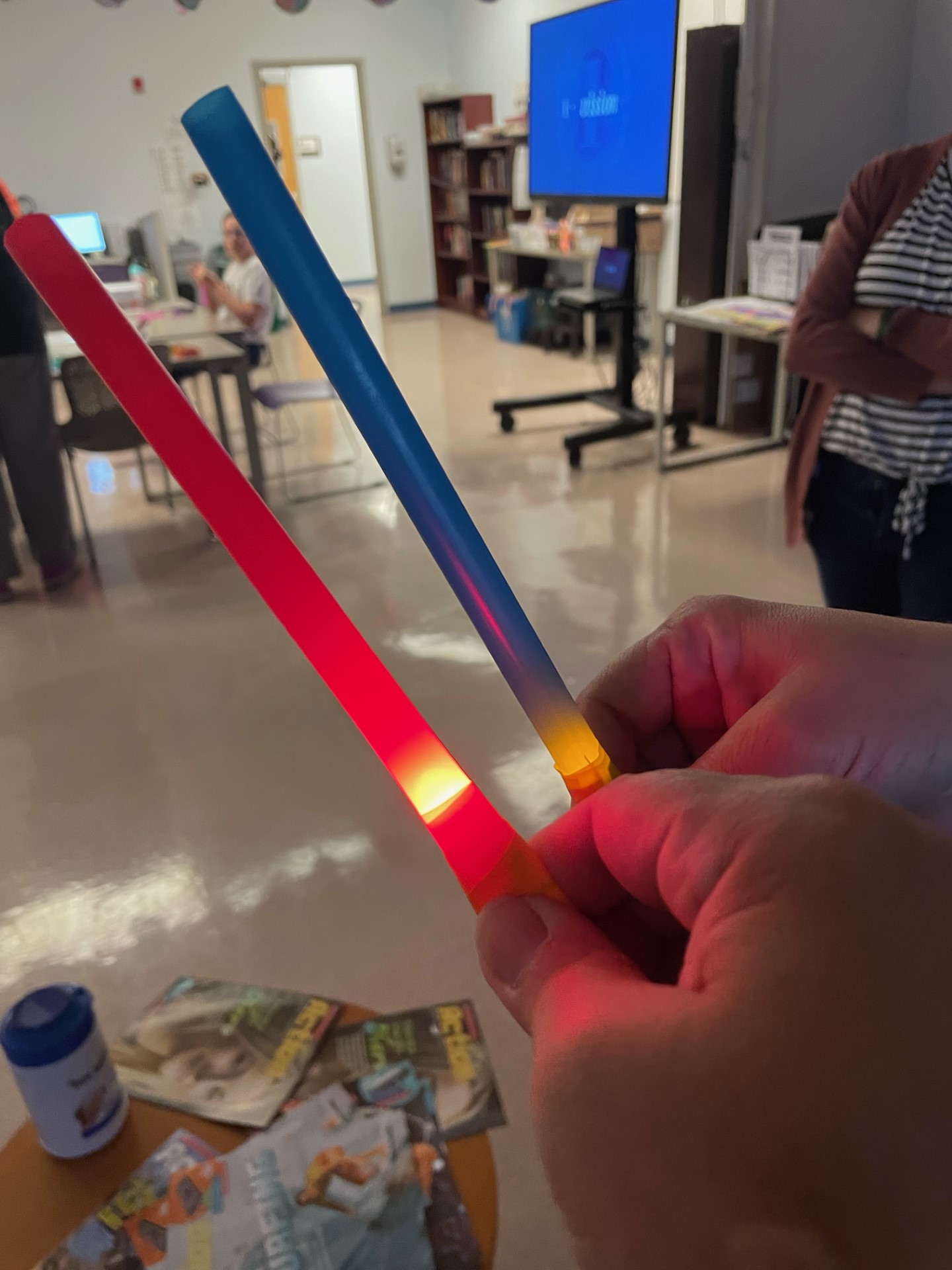

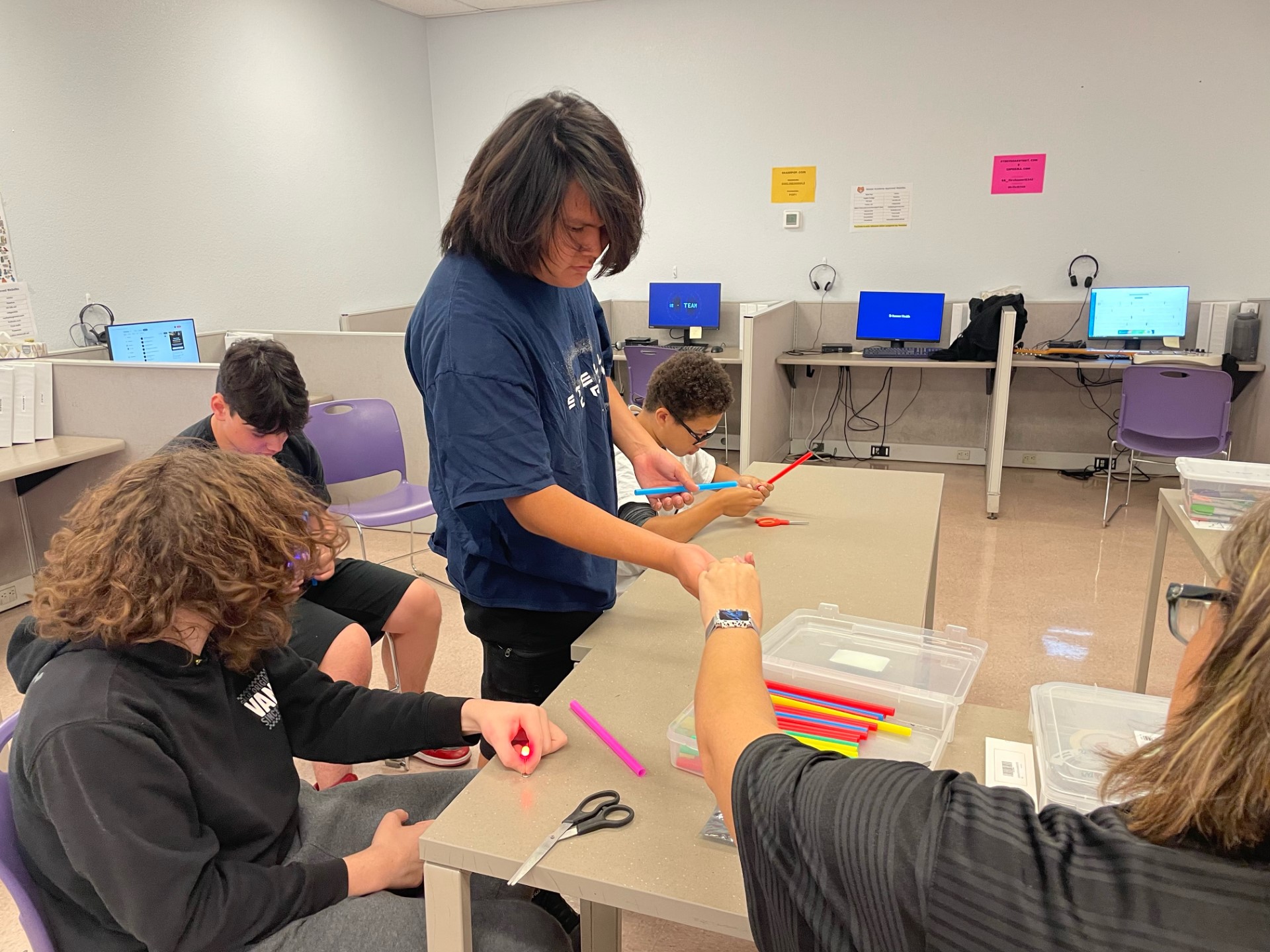
As a final activity for the week, students studied taxonomy and animal classifications. To link the study of each to the films, students created colorful taxonomy triangles and then used two animals — the lions and hyenas from The Lion King and the fictional Tauntauns and Wampas from The Empire Strikes Back — to fill in the triangles from Domain (top) to Species (bottom tip).

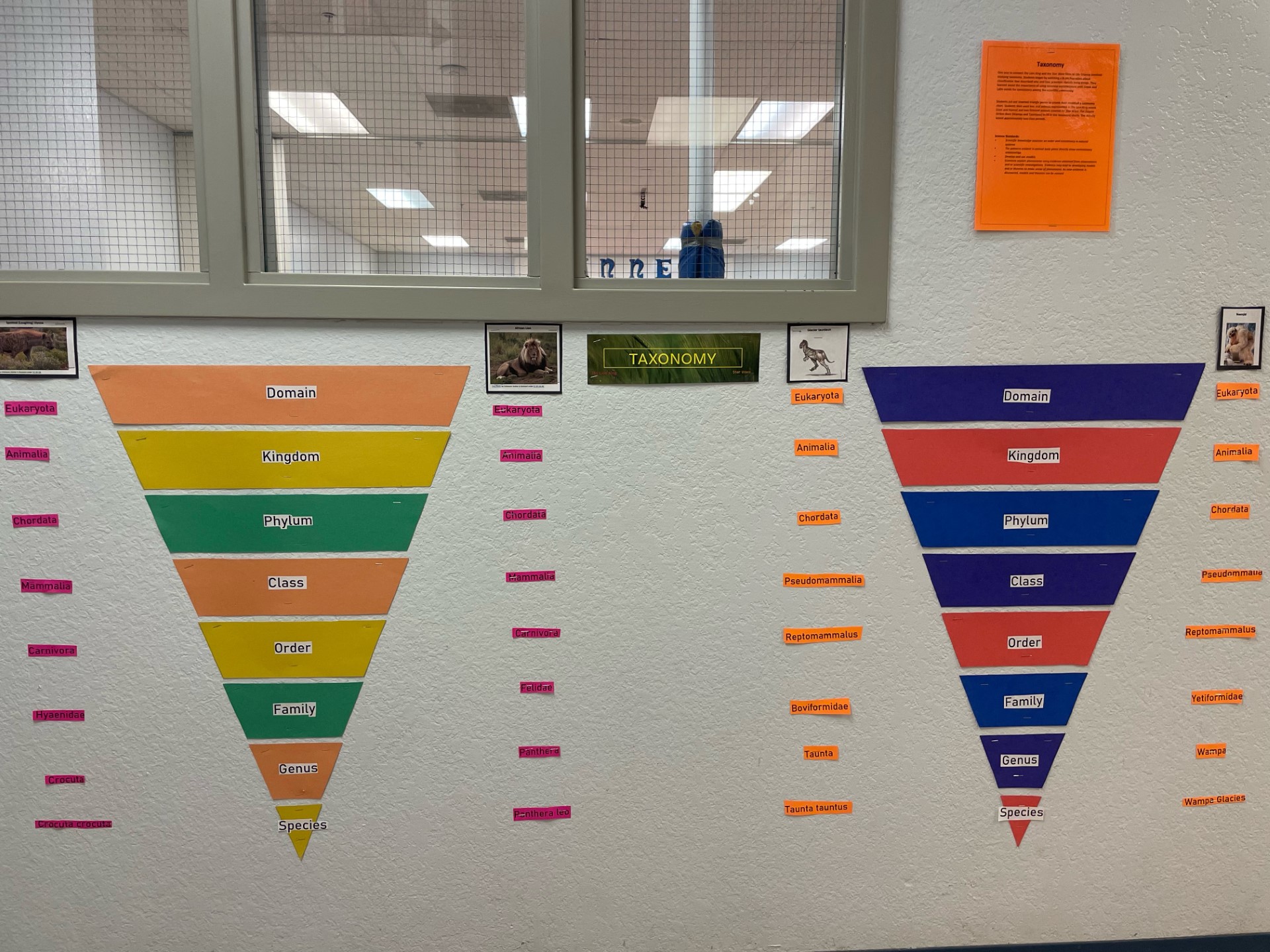
Above: The standards associated with the project and the final taxonomy wall displays.
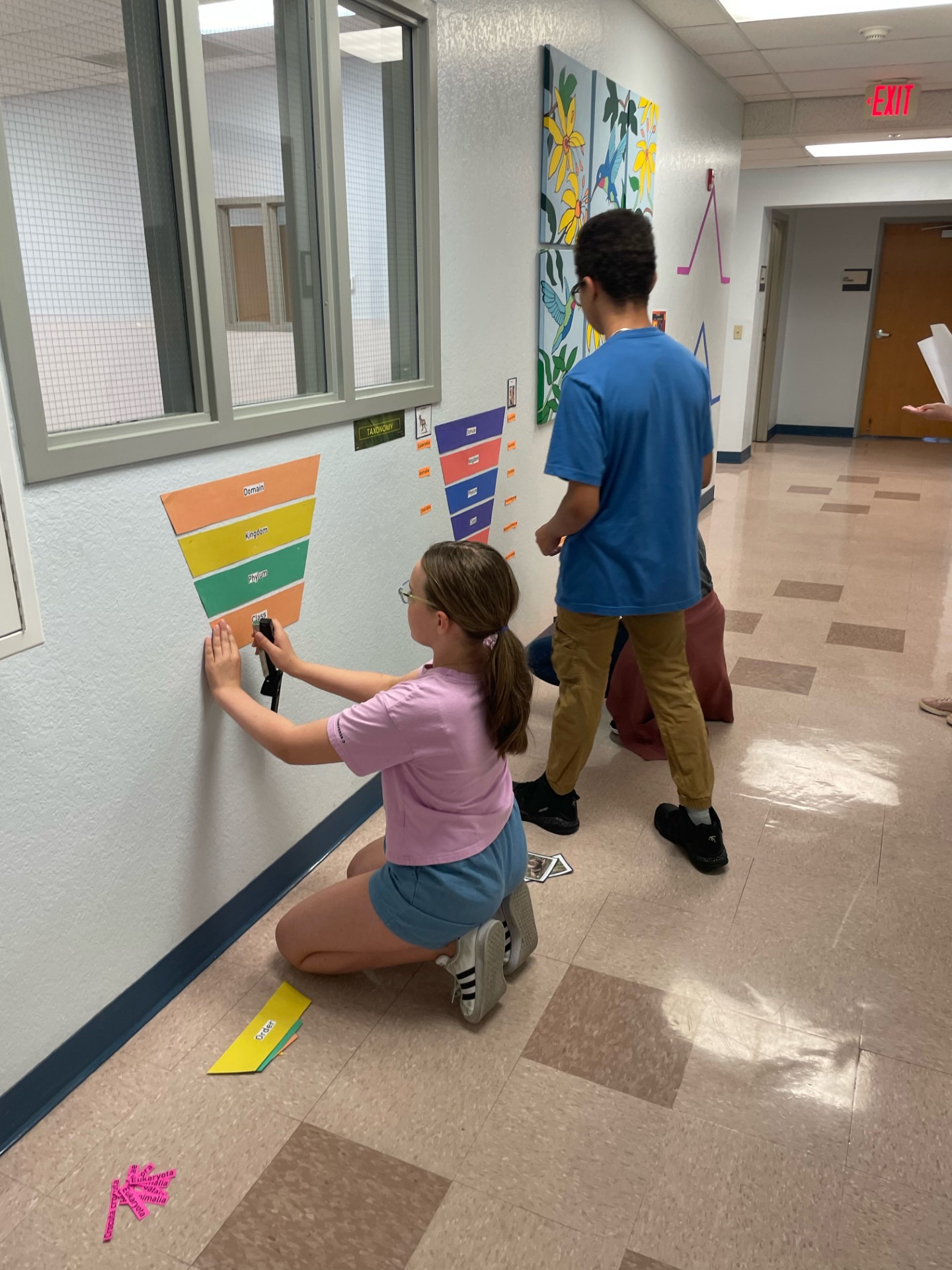


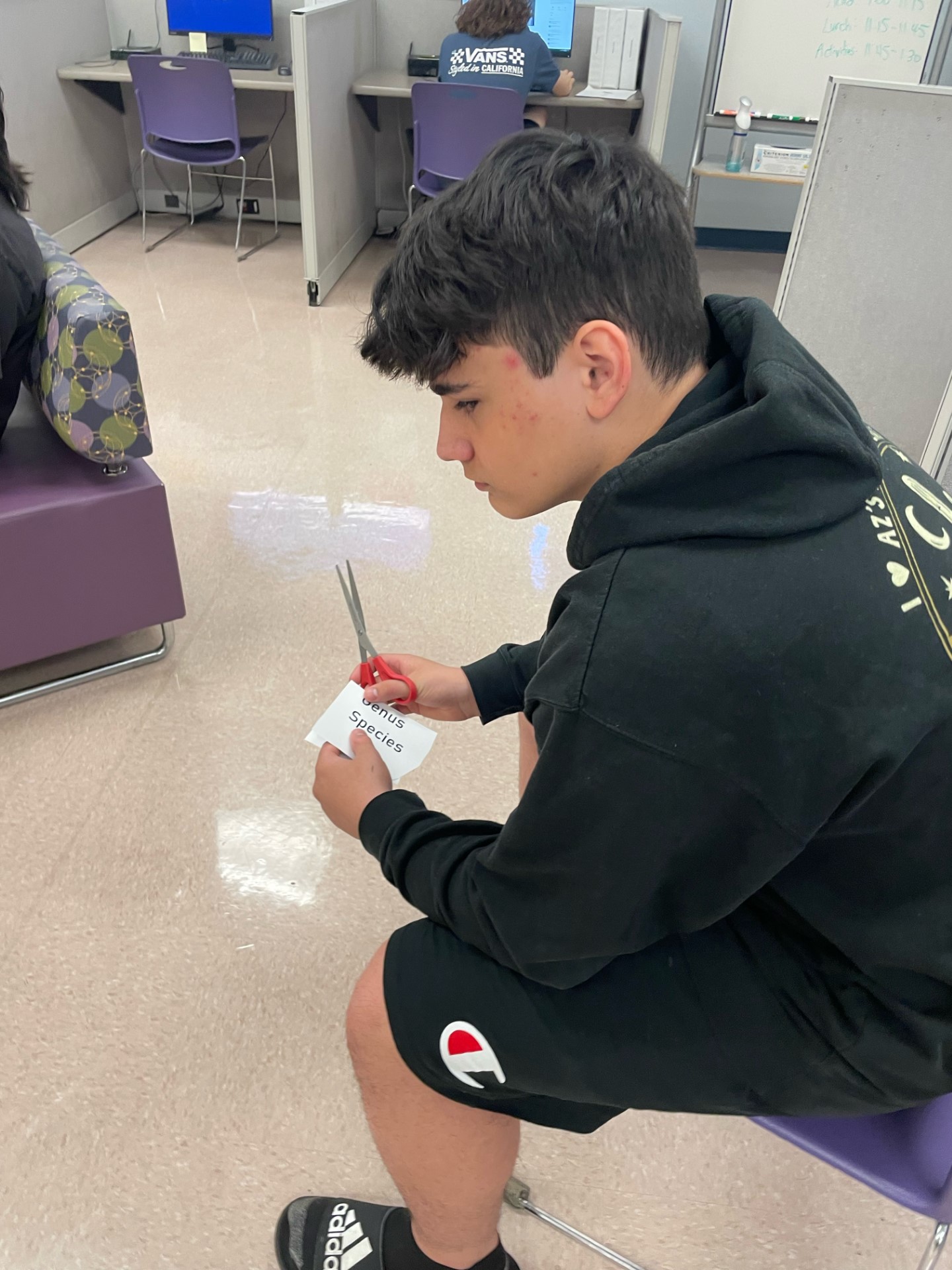

Above: Students work collaboratively to build the taxonomy wall displays for both films.
WEEK 3
At the start of week 3, students followed along as the teacher reviewed the seven (7) elements of the plot diagram. Then, in a collaborative discussion with their movie peer groups, they identified a scene from their respective films that matched each plot element. To display their plot details in an engaging and colorful way, they used Padlet.

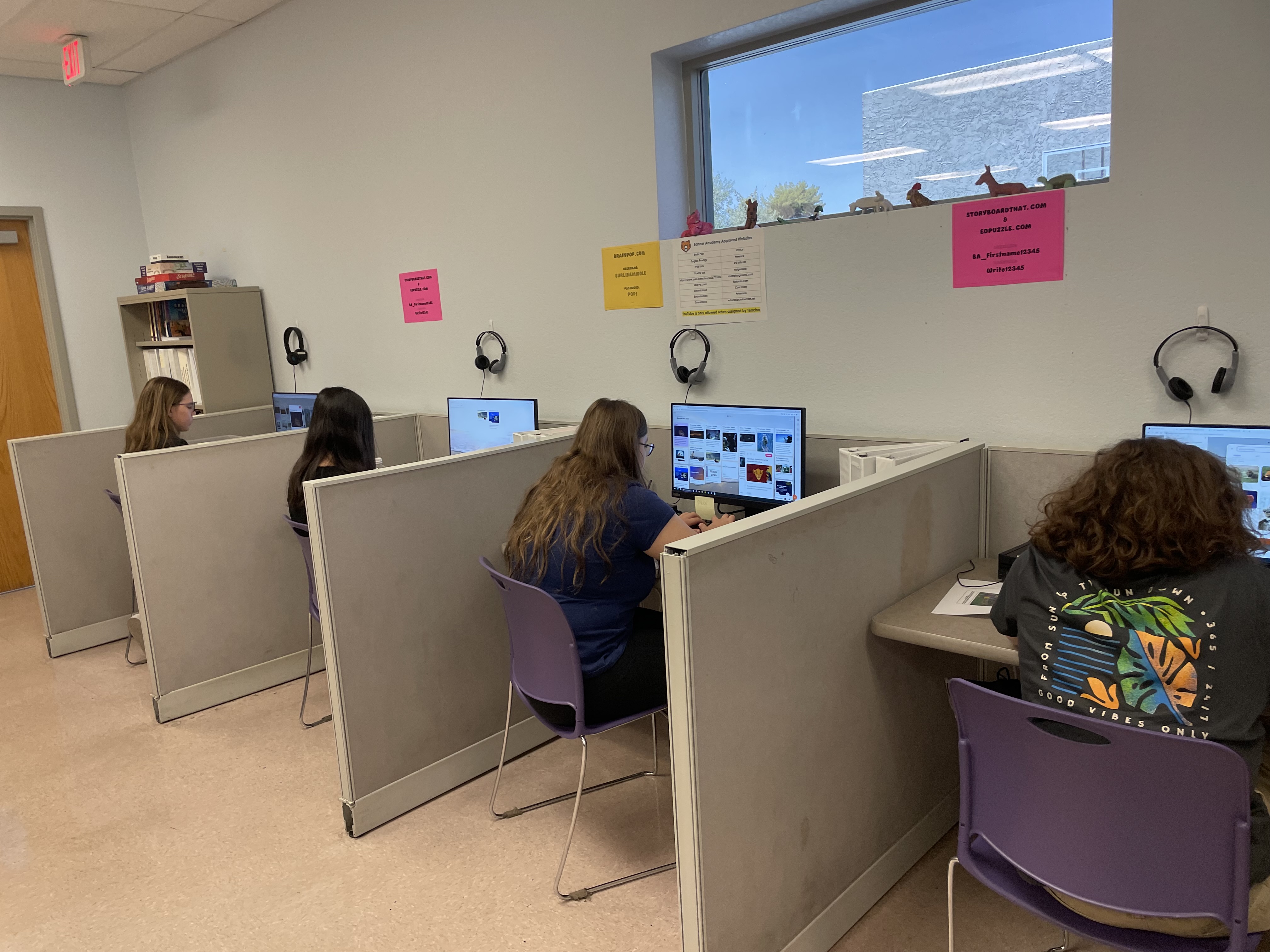
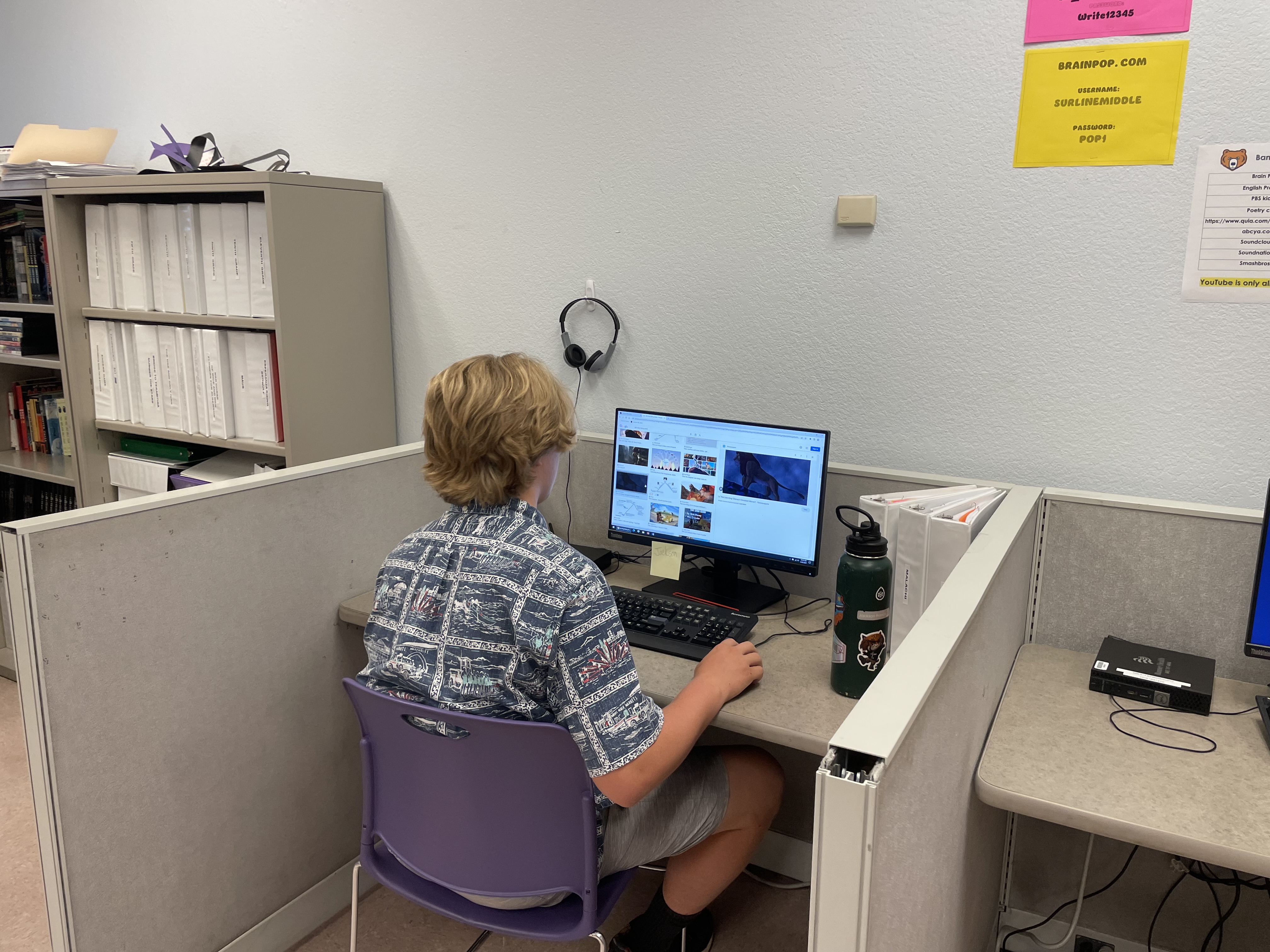
Above: Students type their plot diagram components on Padlet.
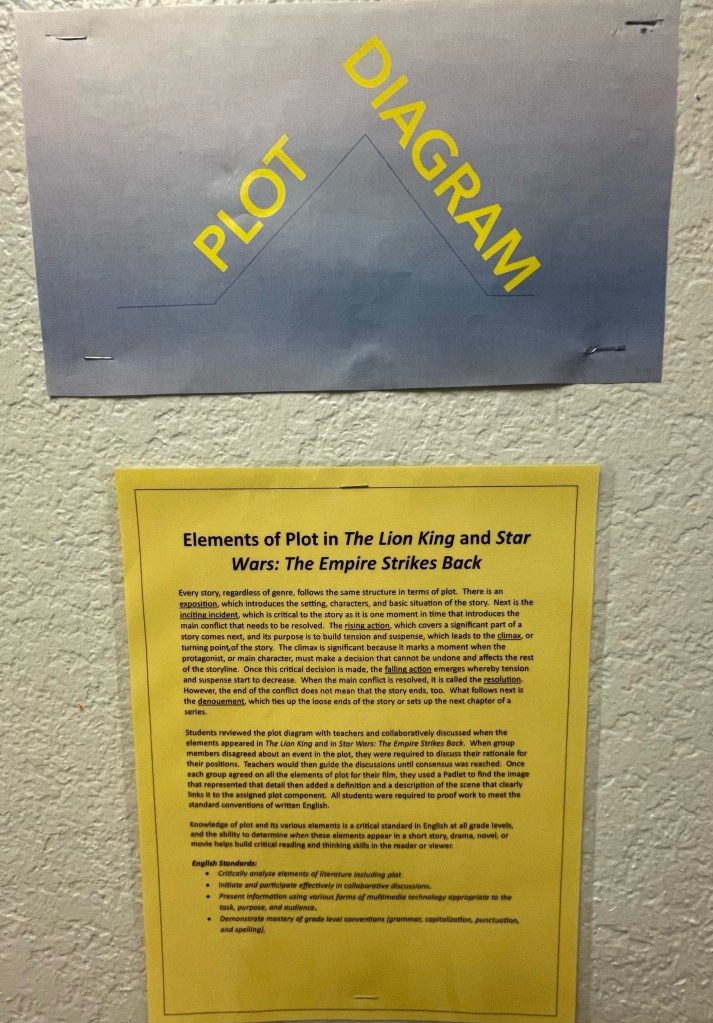


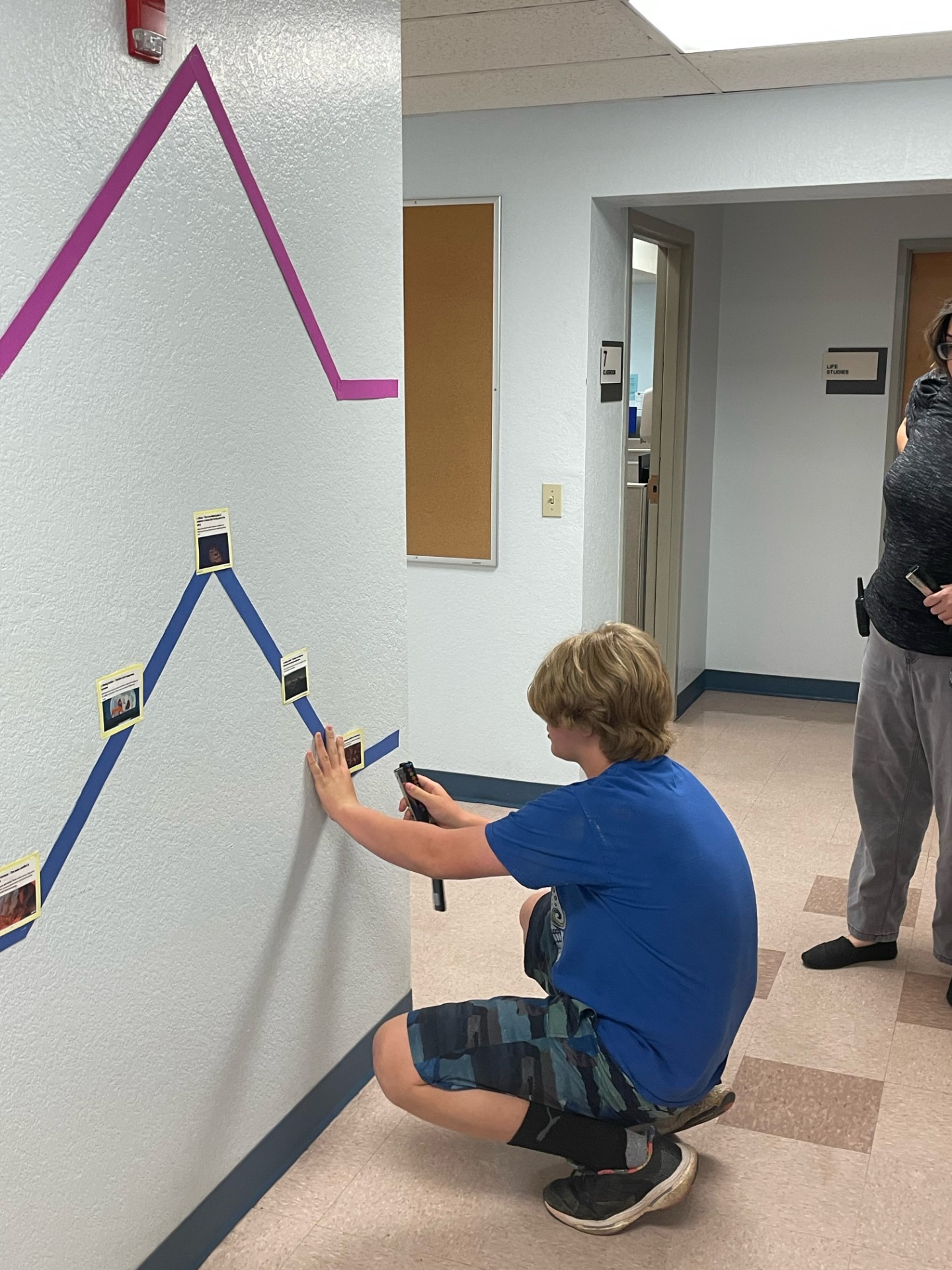
Above: Students staple their displays for the plot diagram to the wall.
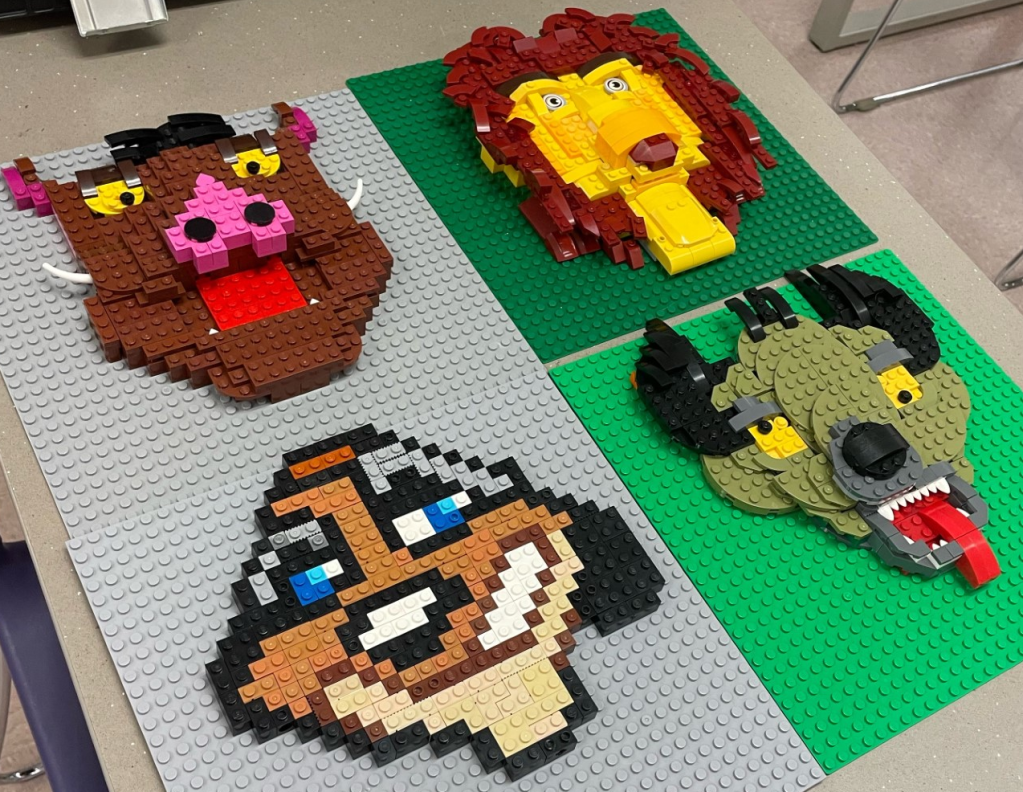
Additionally, for a fun break in The Lion King group, kids used Legos to build models of animals, as well as a rendering of Pride Rock.




Next, students studied the Fibonacci sequence and its resulting spiral shape, which is also called the Golden Spiral. Students then looked for images from Star Wars or The Lion King which reflect the Golden Spiral. Then, they drew the image by hand onto a Fibonacci template.

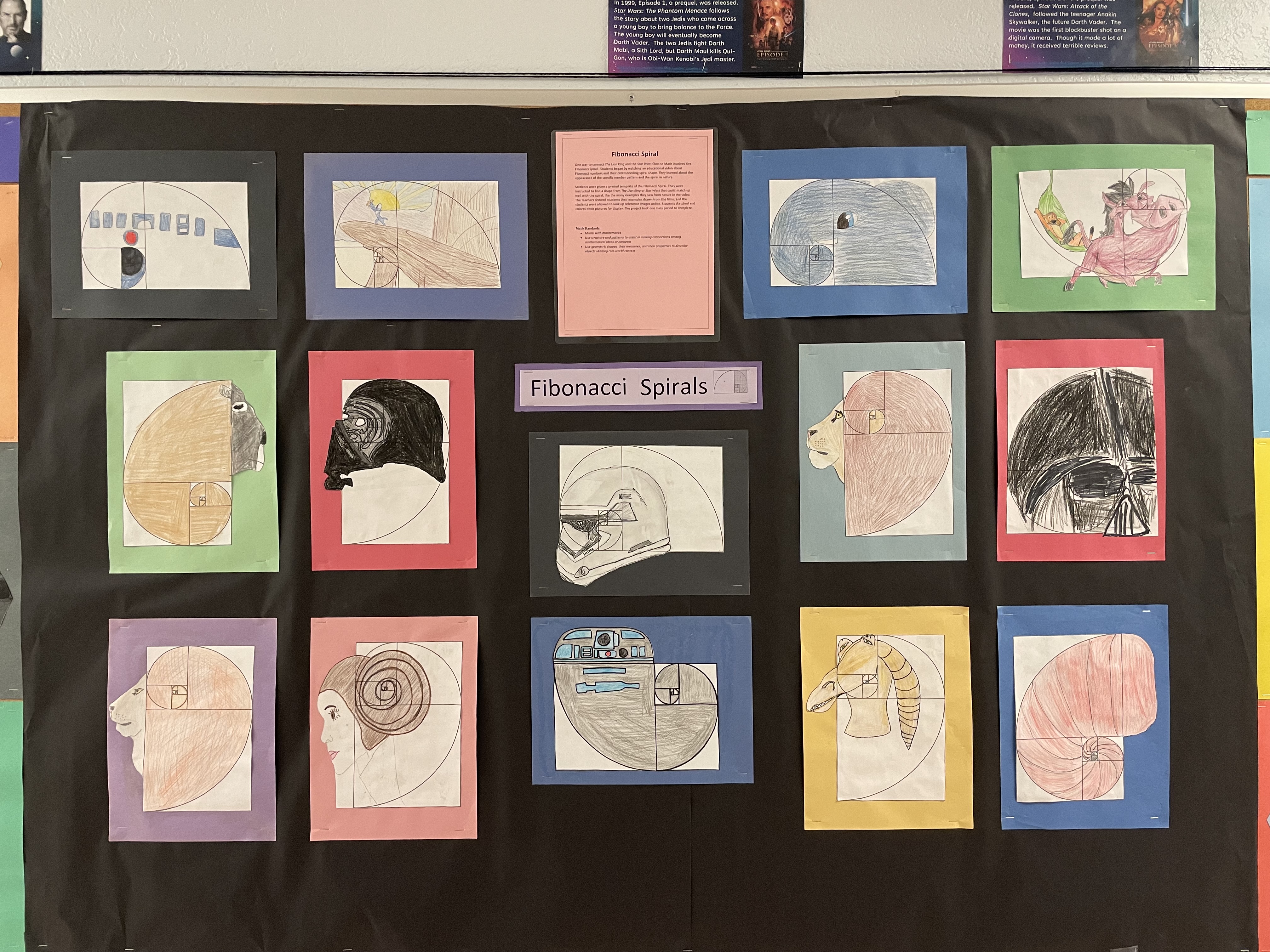


Learning about Fibonacci (above) and sample hand-drawn images of images that follow the Golden Spiral (below)..
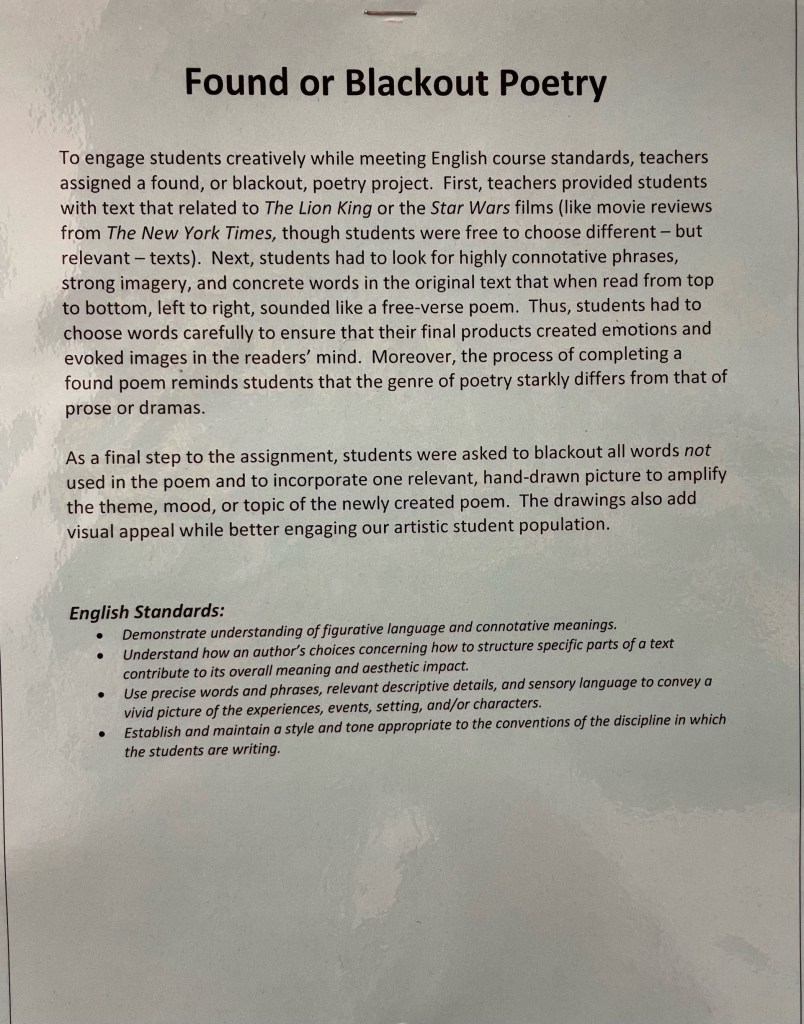
A creative English project that the students undertook in Week 3 was found or blackout poetry. The objective was to “find” within an existing text, like a film review, highly connotative words, concrete terms, and strong imagery to create a poem related to the Star Wars or The Lion King universes. As a final step, we also asked students to incorporate a hand-drawn picture related to the topics of their poems.
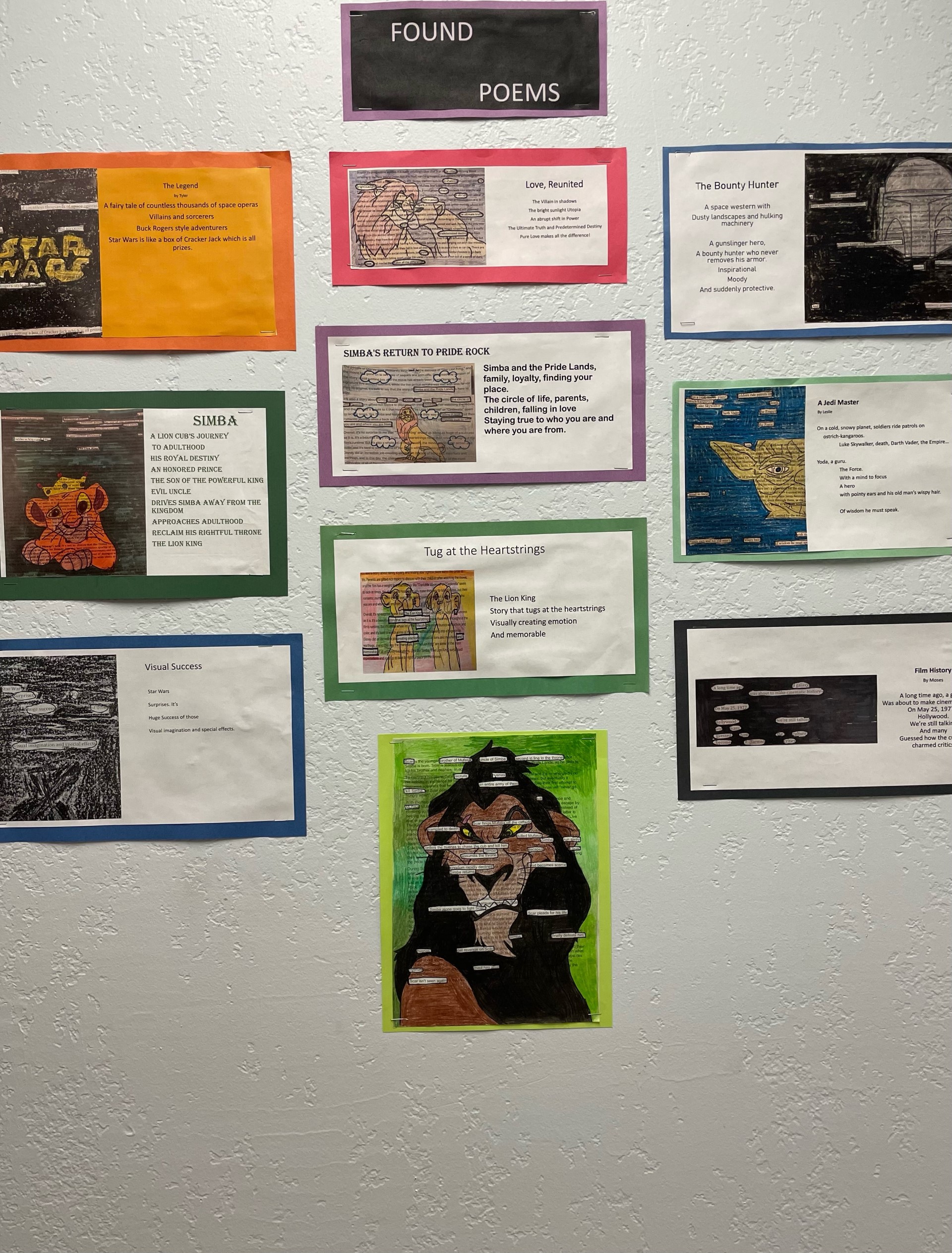
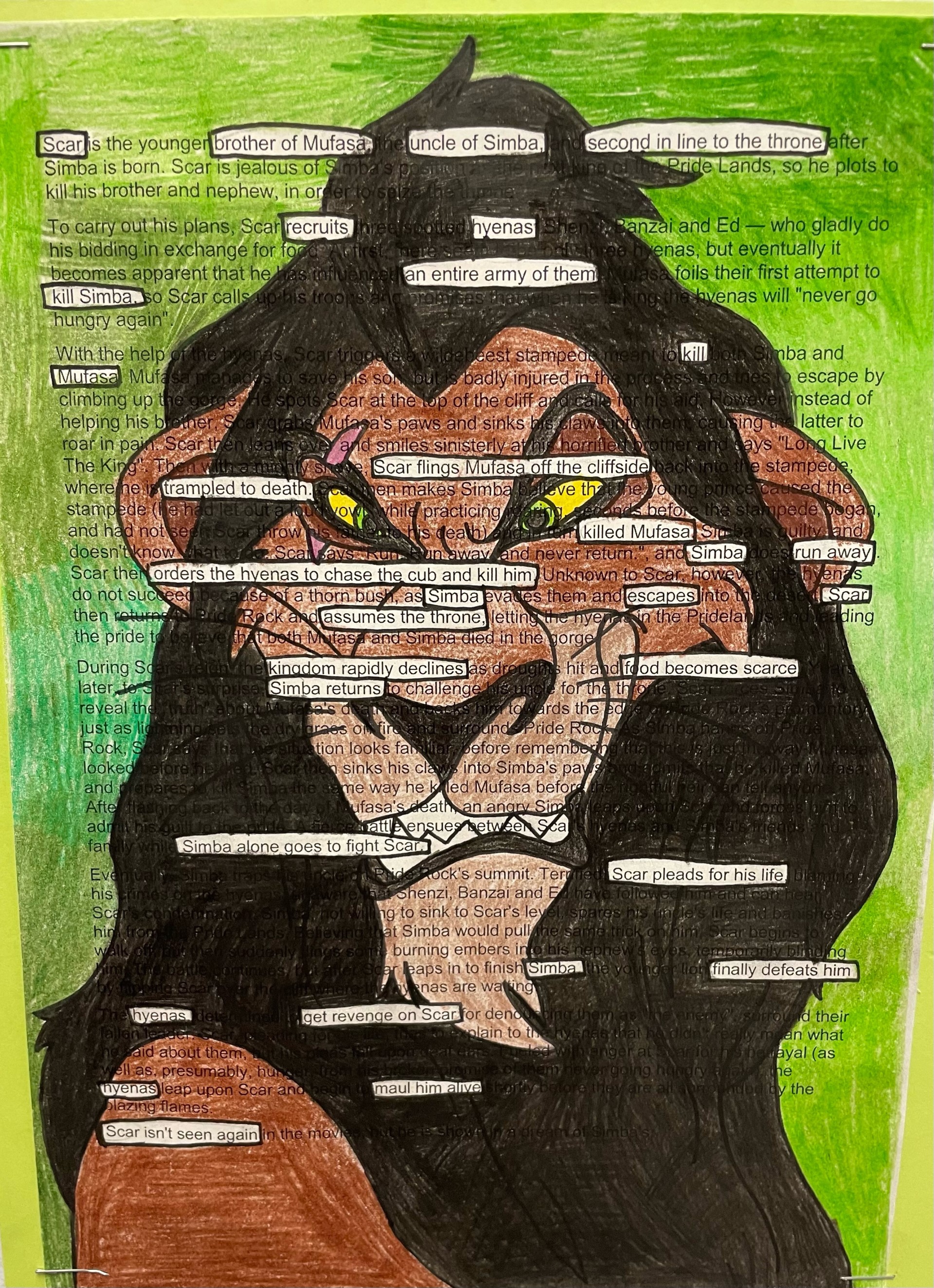

Above: Found poems on Star Wars or The Lion King
WEEK 4
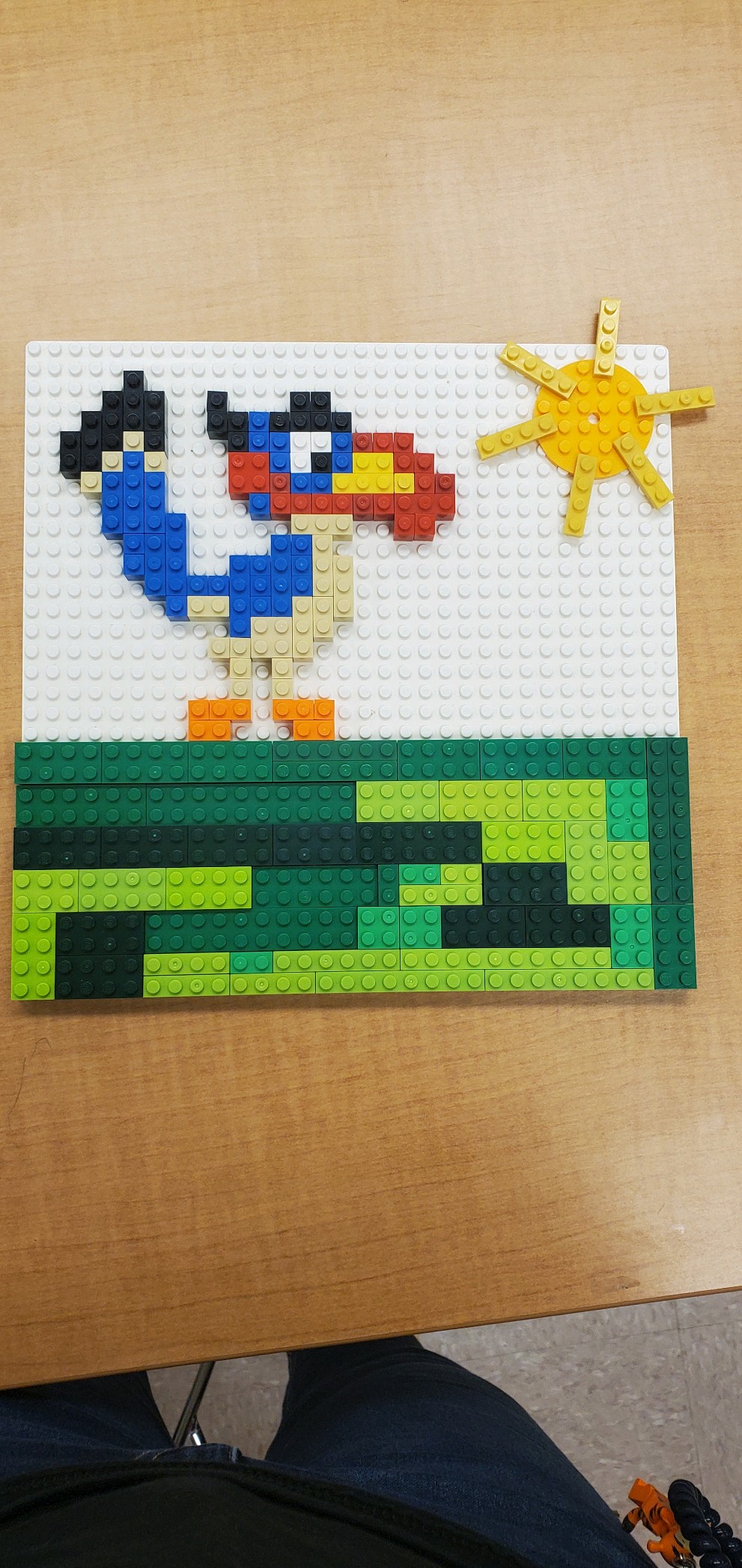
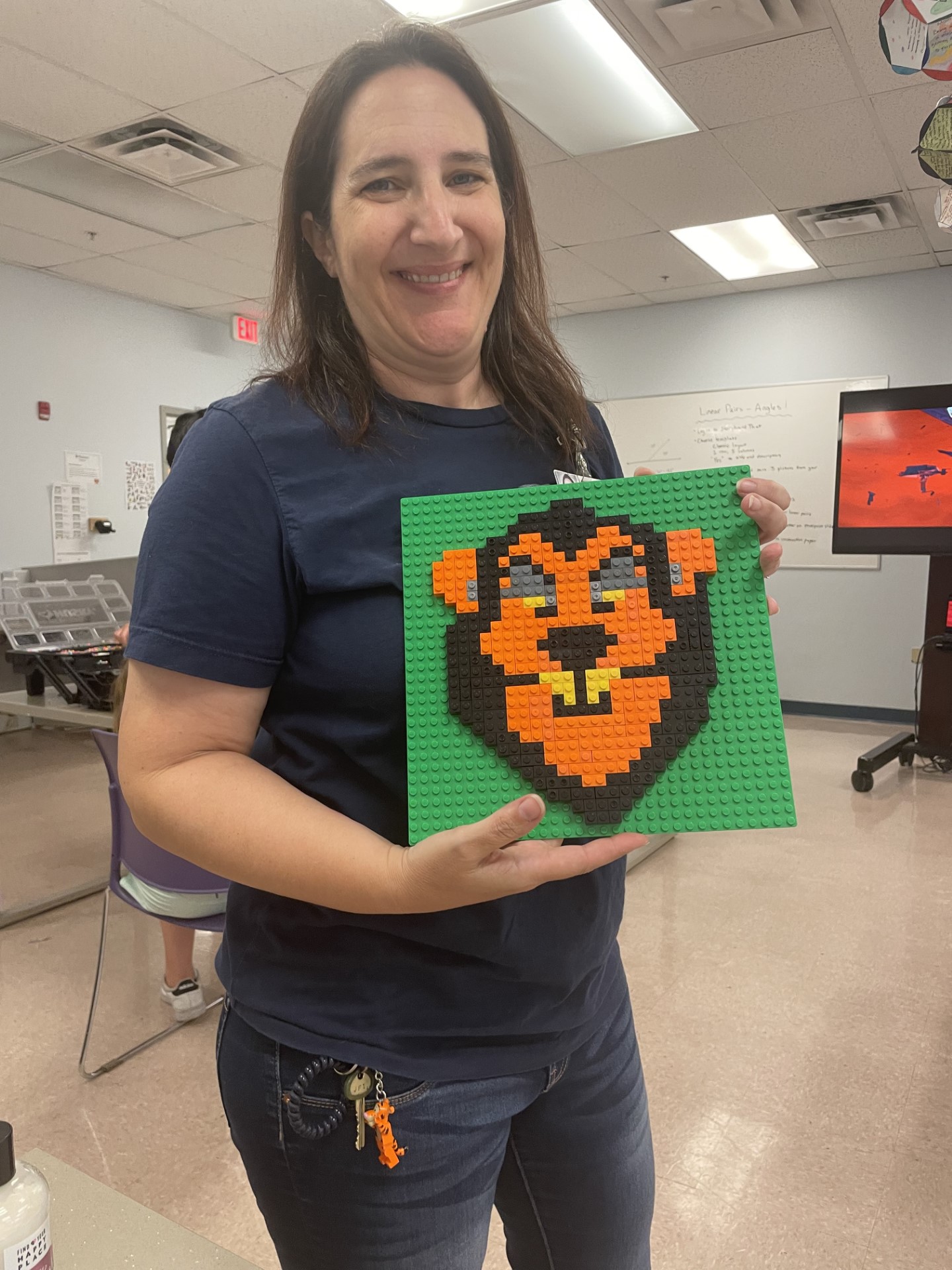
With the July 4 holiday falling in this week, we focused on assigning creative and fun activities that link to standards across the curriculum. For example, in addition to finishing various Star Wars Legos and working with Perler beads to create images related to their films, summer school students constructed a paper “robotic hand” using cardstock, tape, straws, and string.
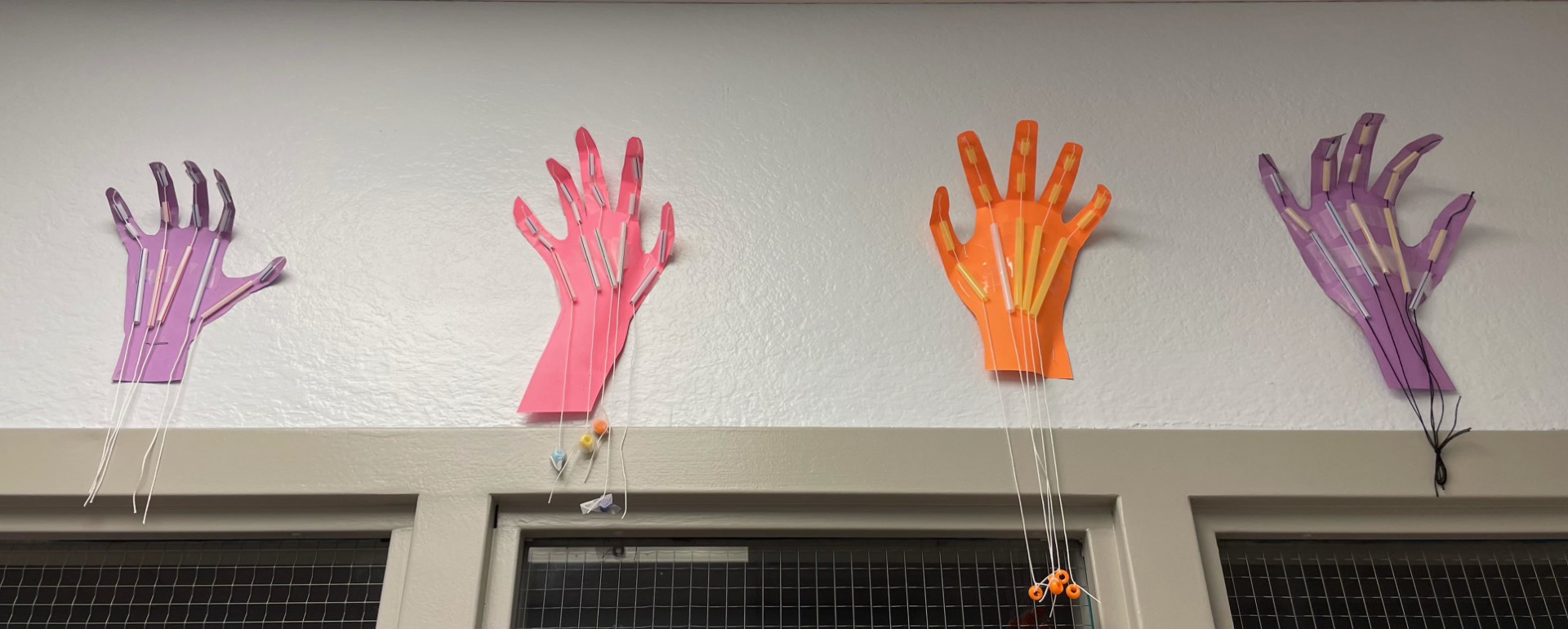
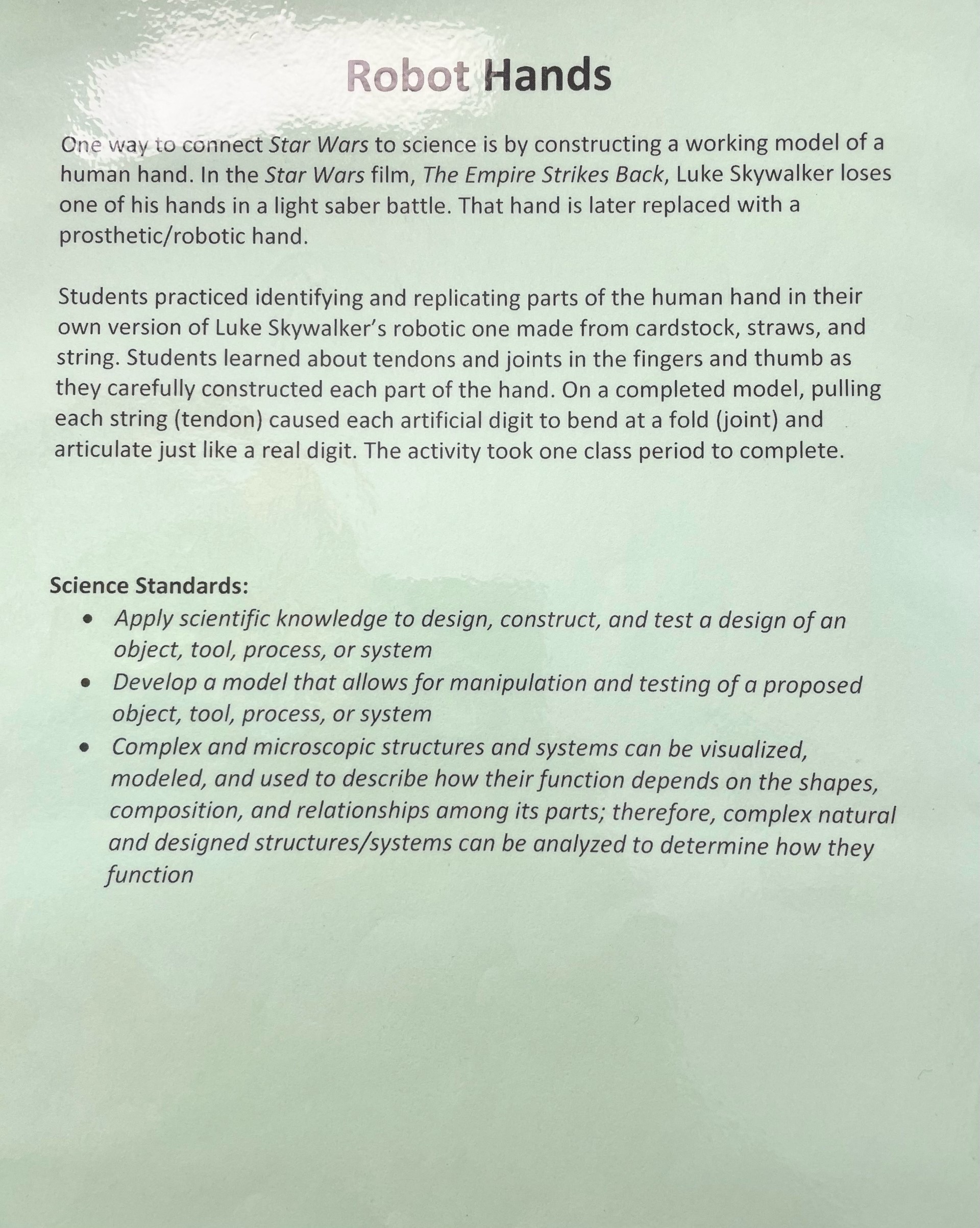
Above: Robot Hands and Relevant Standards
Next, students studied biomes, a clear link to the Science curriculum. For this project, students watched a review video about biomes, looked at creative (and humorous) NASA travel posters to various planets (https://solarsystem.nasa.gov/resources/682/space-tourism-posters/), then developed their own travel brochures using MS Word’s brochure template or Canva. Each brochure focused on a biome related to the films: Pride Lands and Jungle Oasis for The Lion King and Hoth (ice planet), Dagobah (swamp/rainforest), and Tatooine (desert) for Star Wars: The Empire Strikes Back. Each brochure included text about the plant and animal life that exists in their chosen biome, as well as relevant images. Finally, students used their creativity to entice visitors to these biomes.
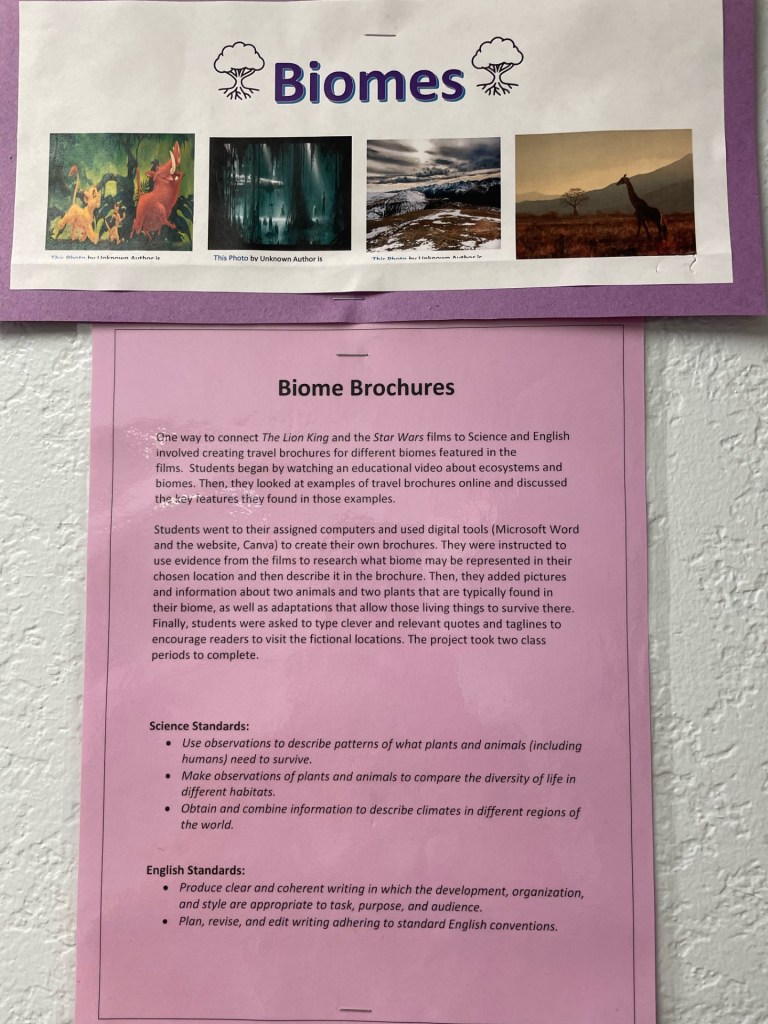
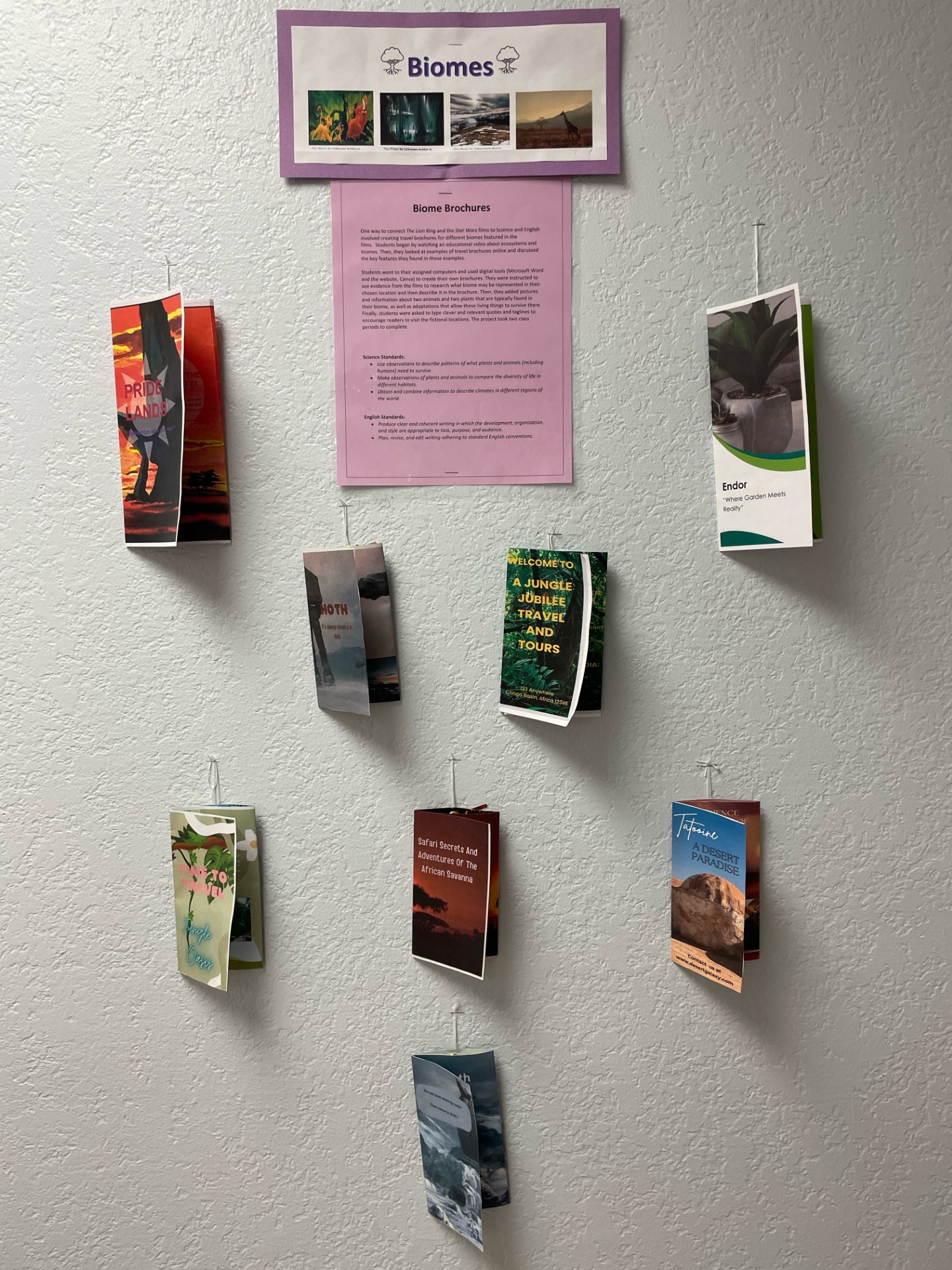


WEEK 5
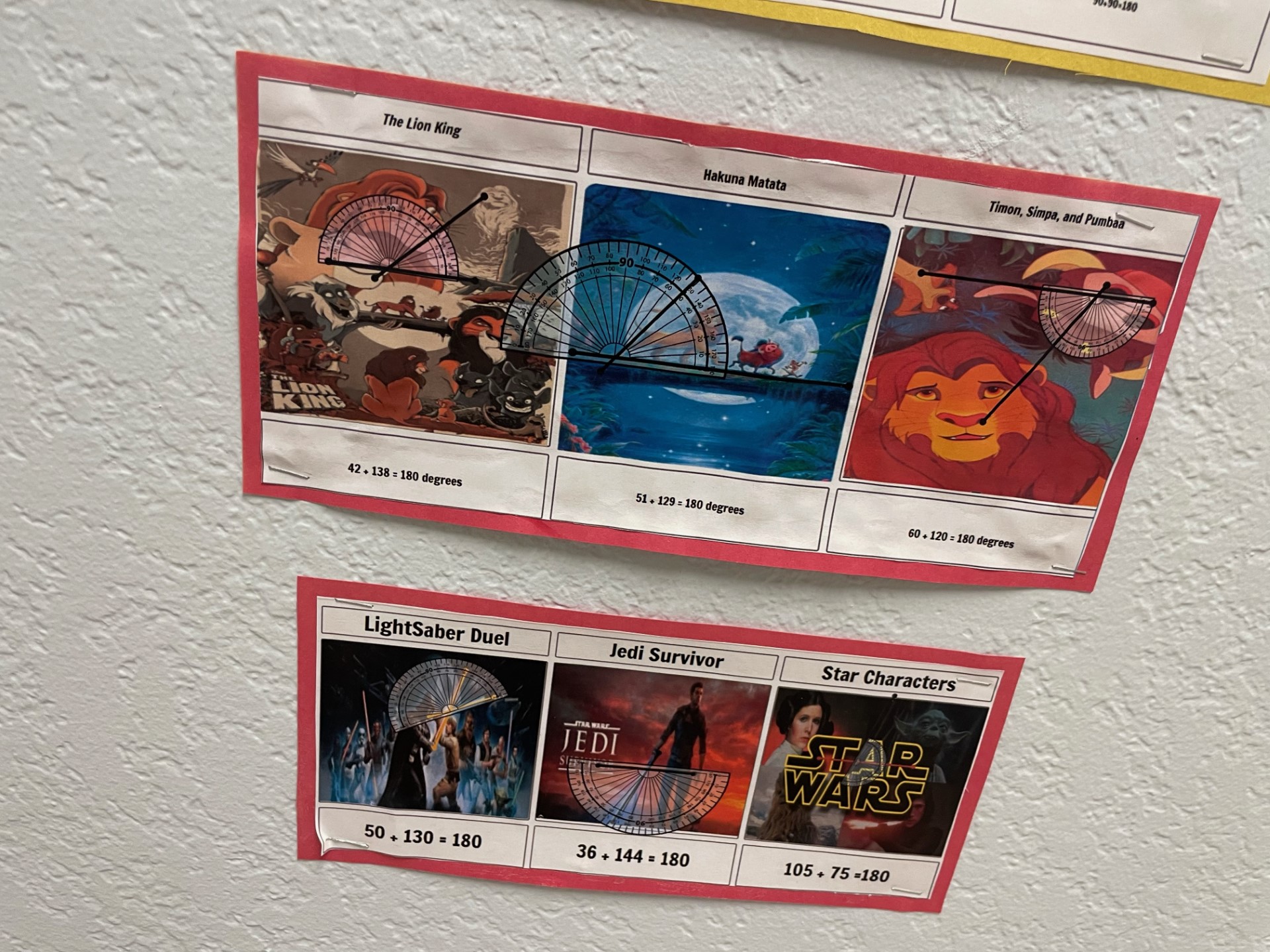
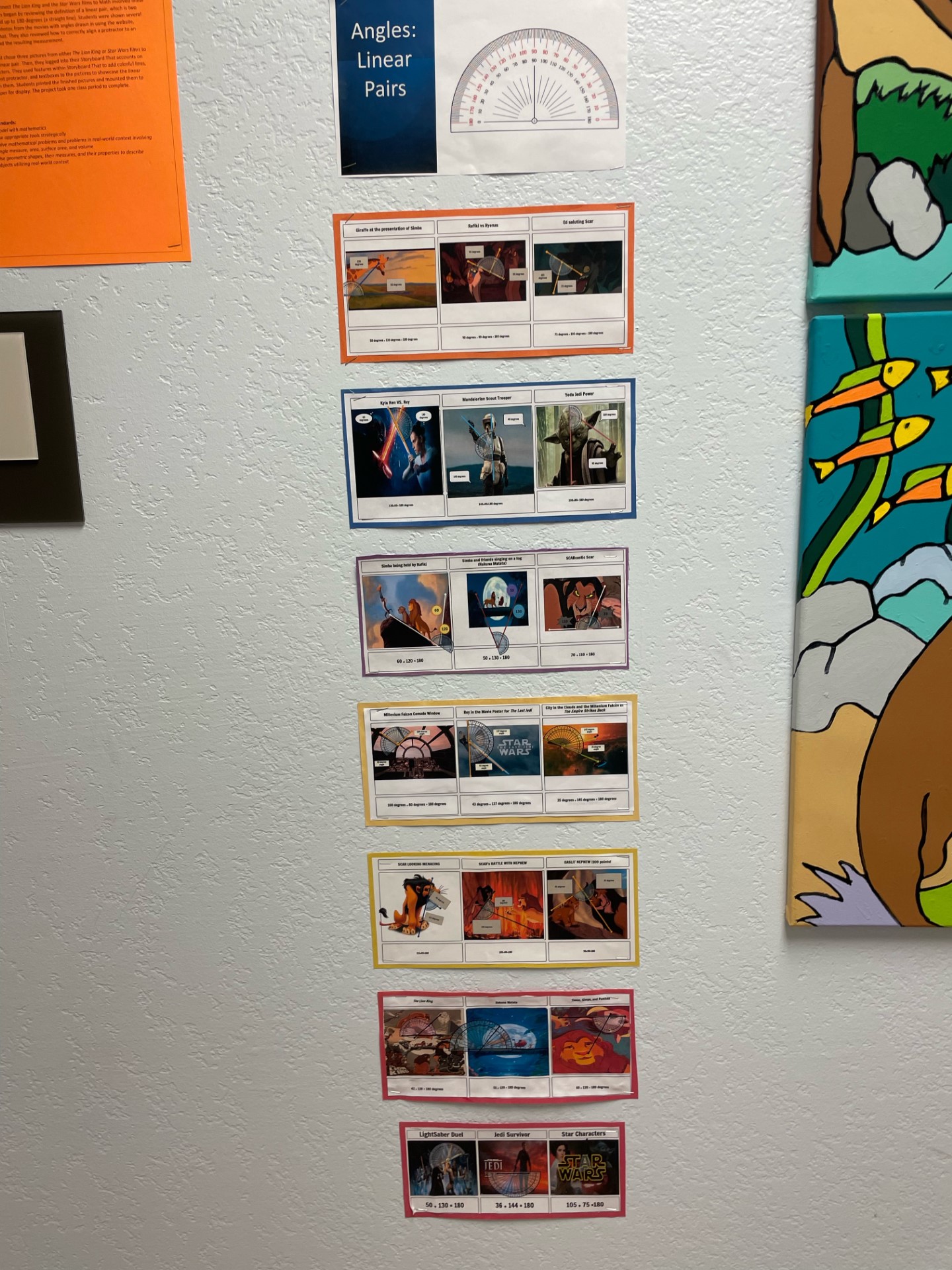
To start off the week, we worked on building math skills. Students used movie stills from The Lion King and the Star Wars films then placed and adjusted an online protractor over the images to measure angles that they created by adding two intersecting lines. Teachers asked students to use StoryBoardThat.com to upload their images, measure their angles, and show how the numbers equal 180 degrees, a straight line.

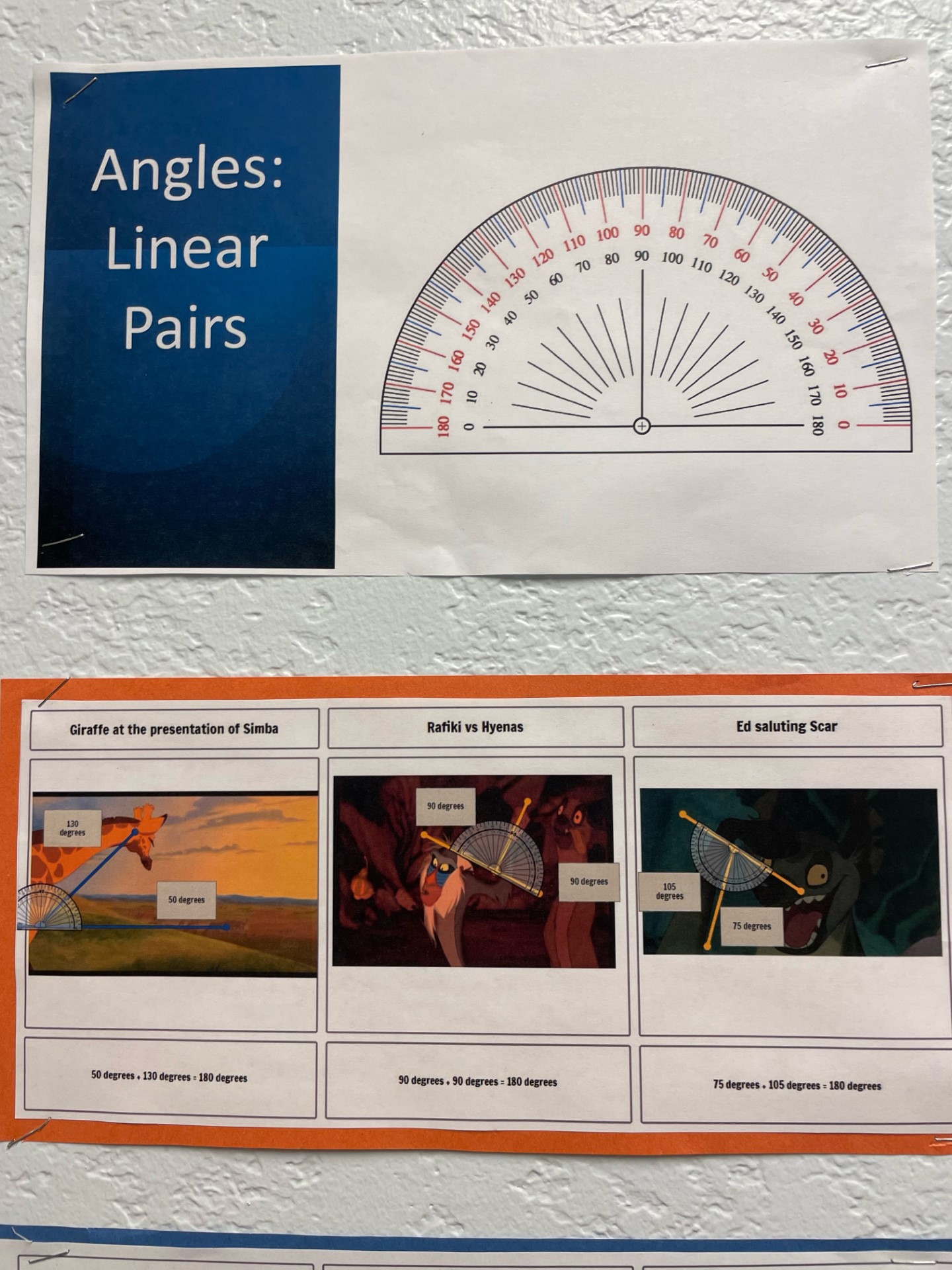


The rest of the week was devoted to students workng on their original and creative pieces of music or artwork or story boards that reflected some aspect of their chosen film. Giving students choices to showcase their talents is critical in the classroom, and this is exactly what this part of the summer project encouraged. We also gave them time to finish the complex Lego sets that we had.

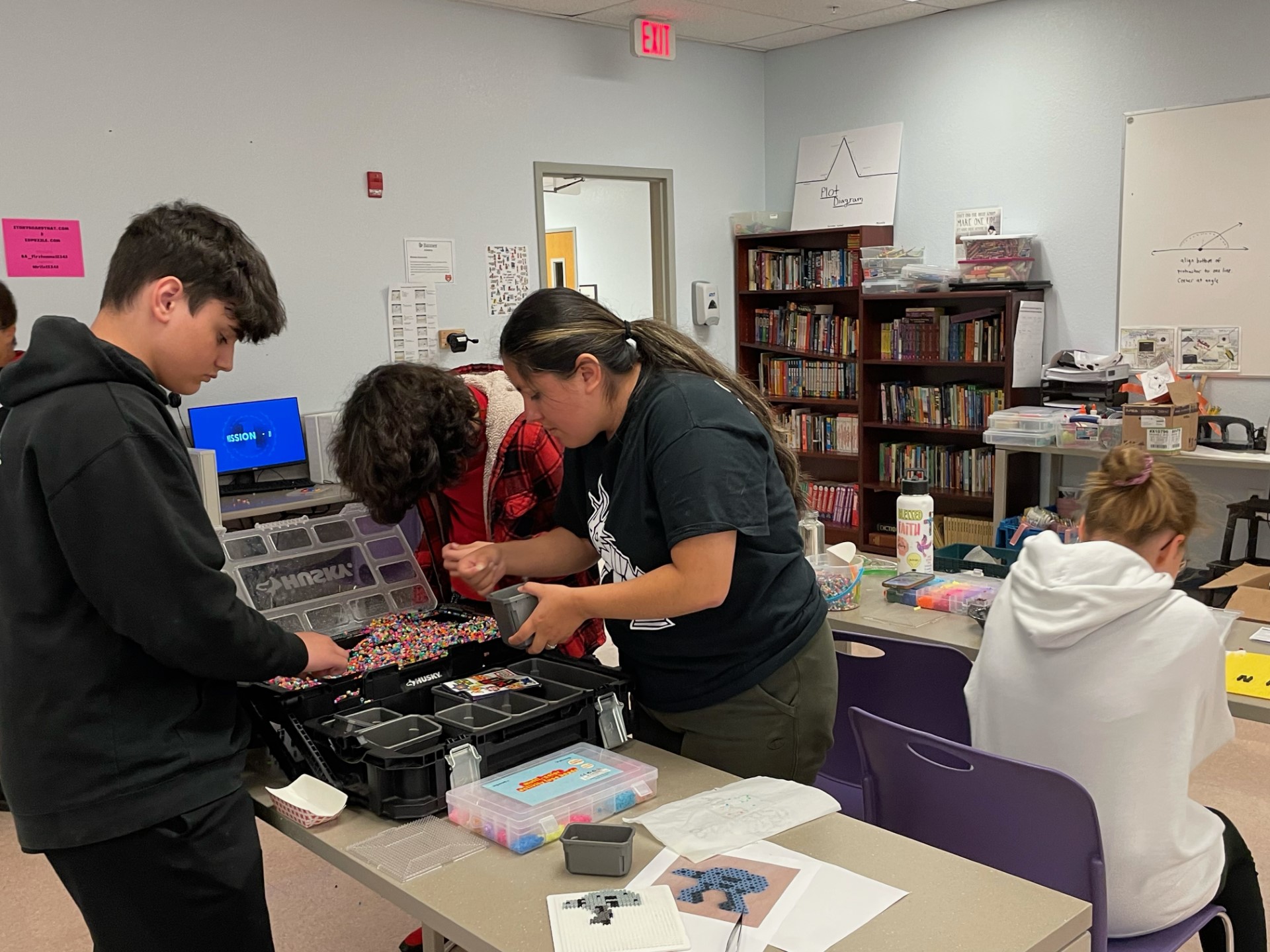


Above: Legos, iron beads, and music writing in the classroom
WEEK 6
Tyler’s Creative Project: A Rap Linking to Star Wars: Tyler wrote a rap about Han Solo. Click on the <play> button below to listen to his song and follow along with the lyrics to “Outlaw.” Clicking on the document will enlarge the text. (NOTE: The song will only play on a computer and not from a mobile device).

Aidan’s Creative Project: A Lion King Rap: Aidan tells the entire plot line of The Lion King in his original rap, which he also performed. Click on the <play> button to listen to his performance, and select <download> to read the lyrics. Please note that the audio will not work on a mobile device.
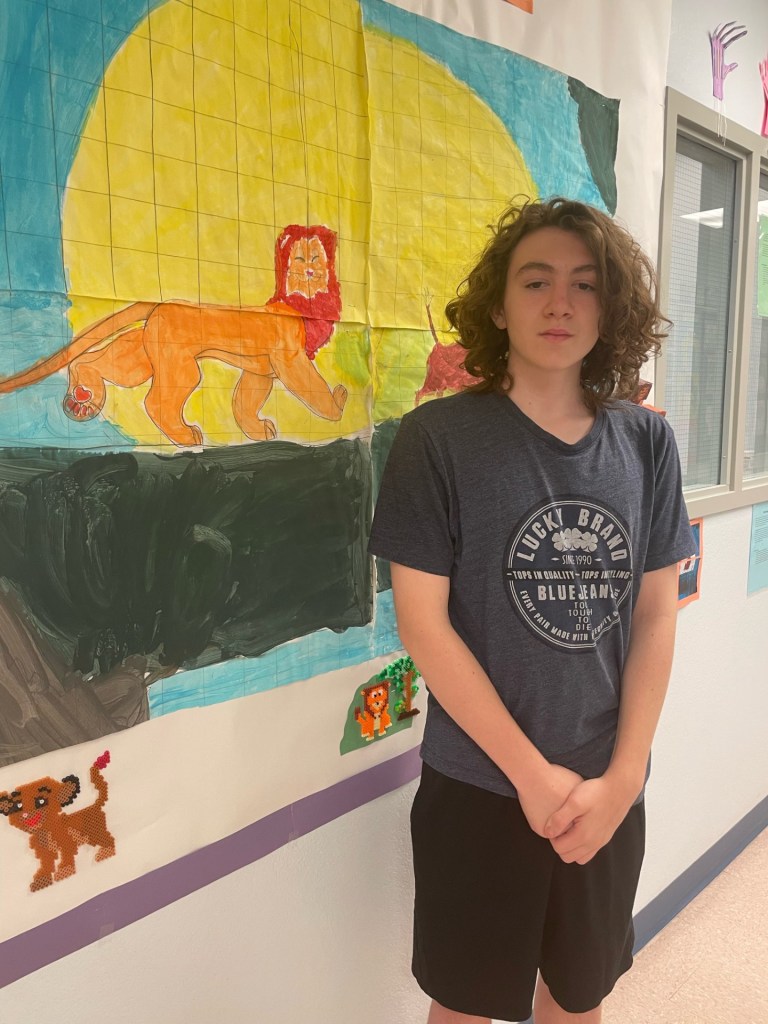
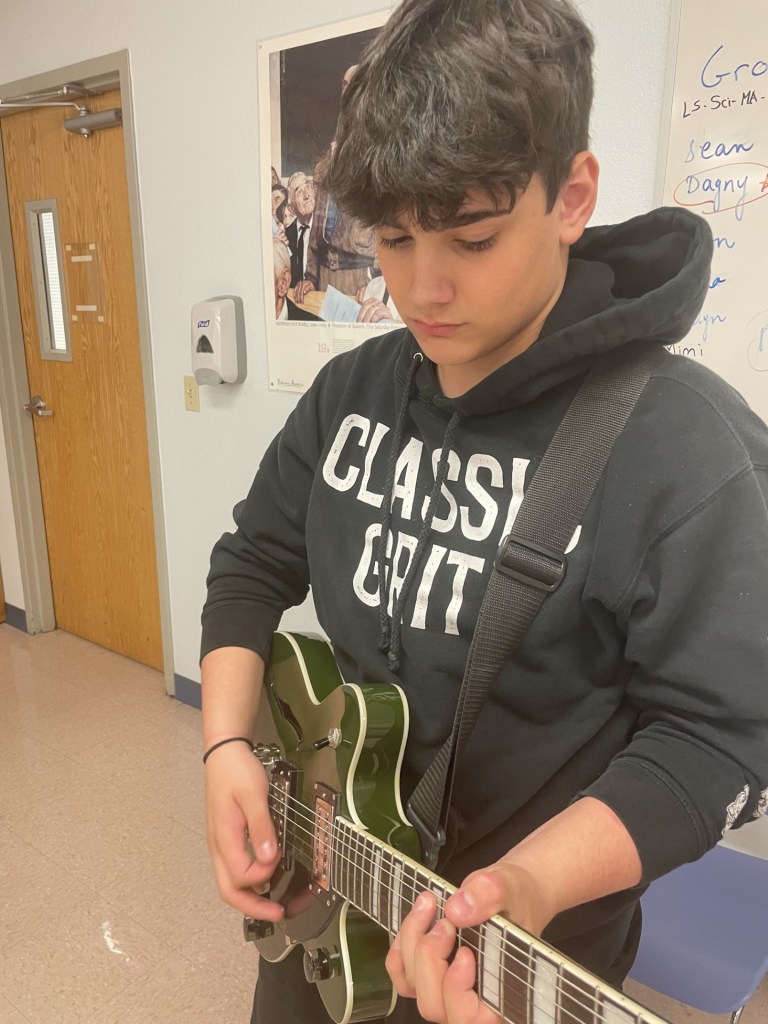
John’s Creative Project: The Star Wars Theme on Guitar: Johnny, BA’s go-to guitar player extraordinaire, practiced and memorized how to play the main refrain of John Williams’s instantly recognizable Star Wars title music on guitar. Listen to his performance recorded below.
Emerson’s Two Creative Pieces for The Lion King: Emerson wrote and recorded a song called “Lions Rule,” then she created an original drawing of a new Disney animal character called a “Pandagon,” which is part panda and part dragon. You can watch her present the new animal in the video below and hear her sing the acapella version of her original song by clicking <play> below.

Angel’s Creative Project: Beats on Soundation: Angel, our resident music producer who goes by the name Tafoya, used Soundation to create beats that incorporate John Williams’ s Star Wars theme music. Click on the <play> button to hear his original music. The music only plays from a computer, not a mobile device.
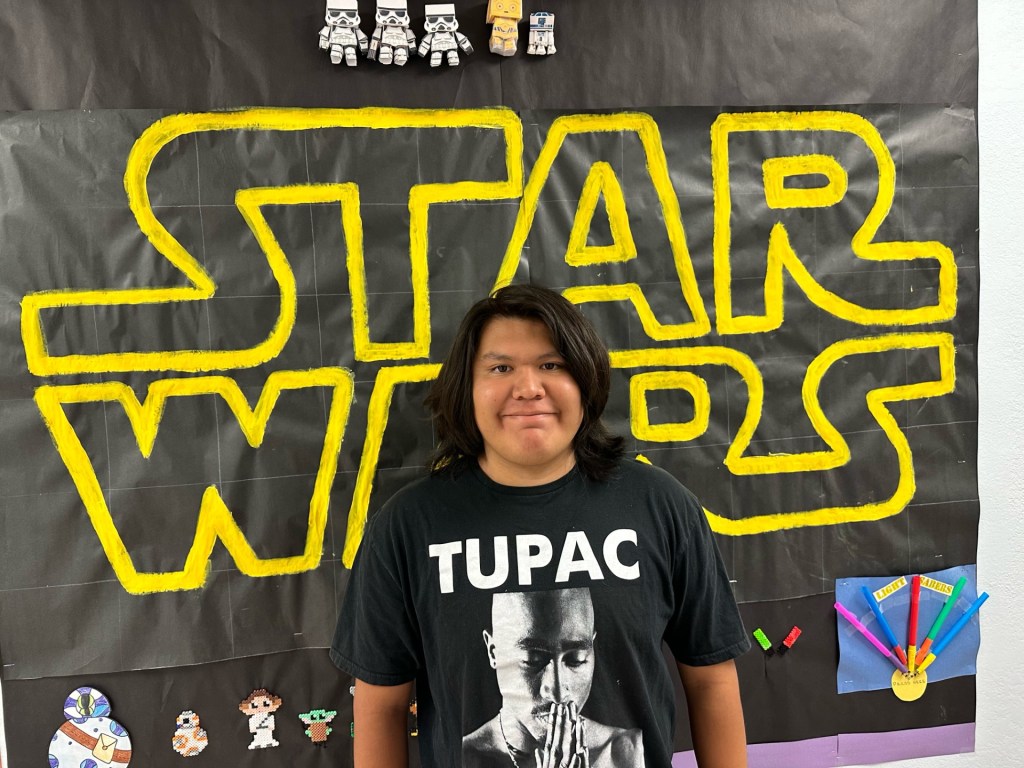
Jackson’s Reimagined Lion King Story: Jackson created an entirely original Lion King story set during World War 1 that results in a war between German forces and the pride of lions. His creative and unique storytelling is enhanced by the colorful and expressive visuals from the StoryboardThat digital tool.

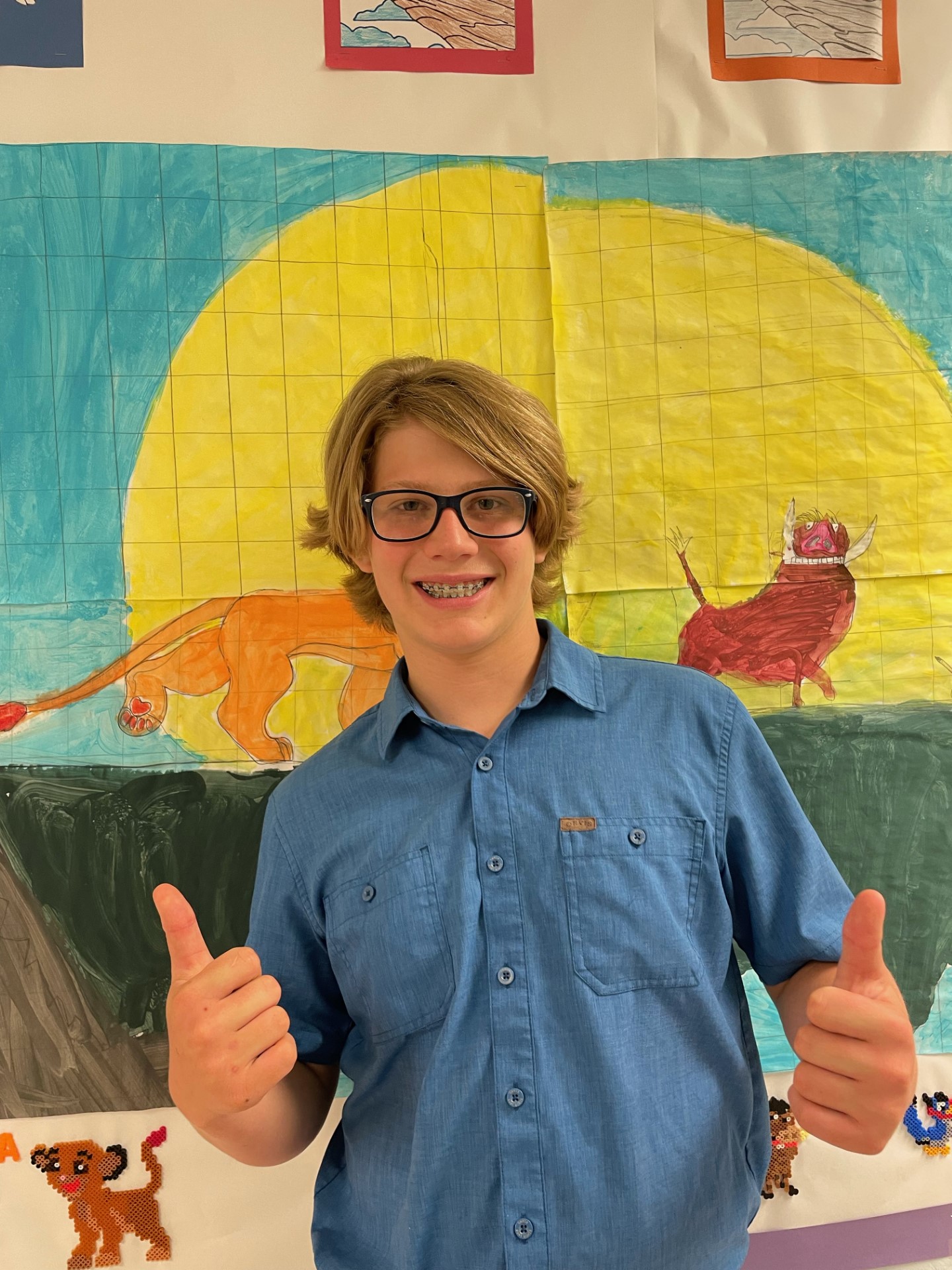
As a final activity, we held the Amazing Academic Race whereby students had to access information from the student-created wall displays and this website to complete a summer school quest. Bill stopped by and watched the kids get a workout as they sped around the hallways and into the Math and English classrooms to find the required information prepared by Leslie and Tawna. The 1st place winner was Johnny, followed by our runner-up, Emerson.
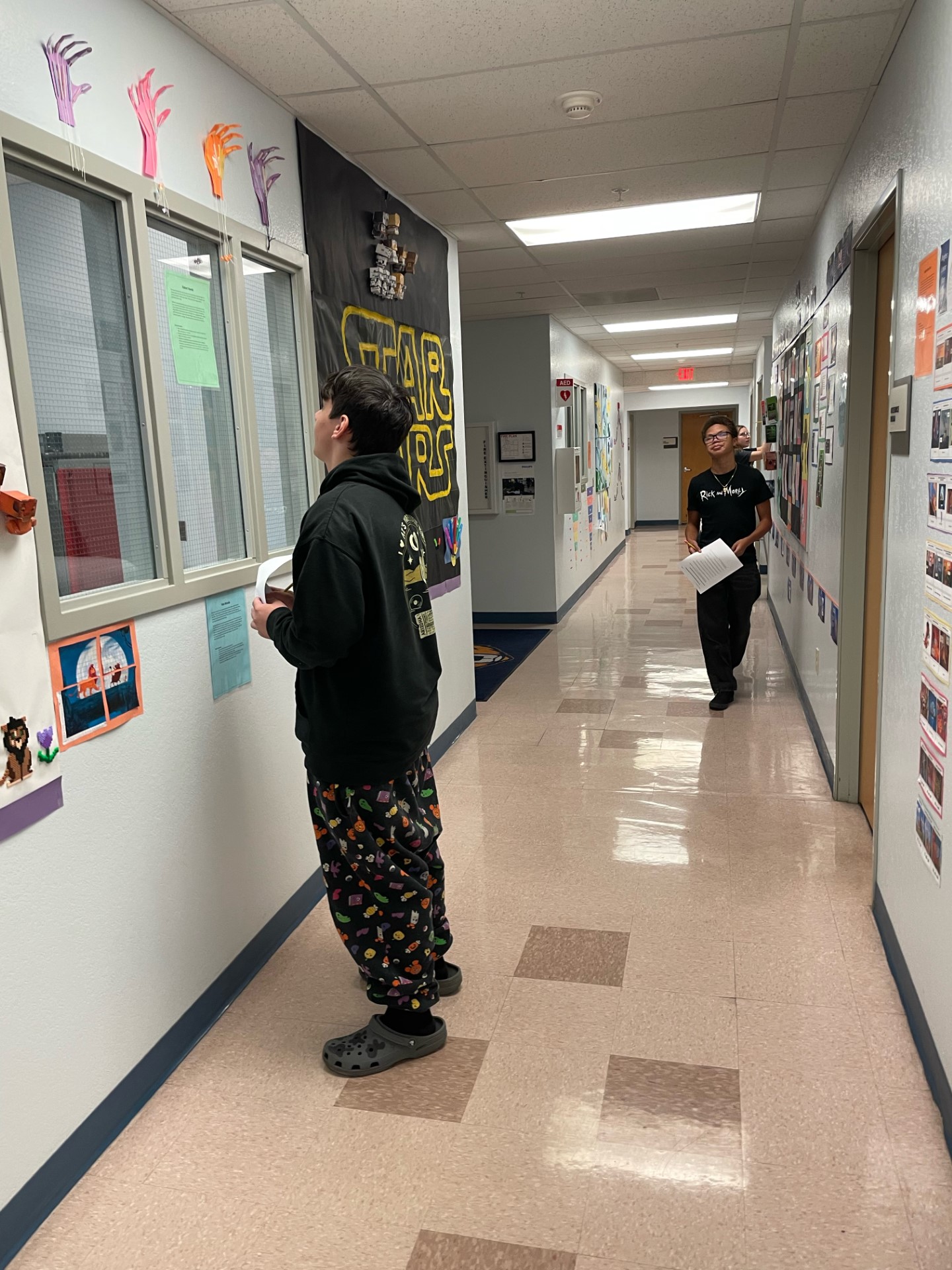

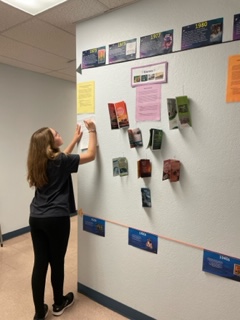
Above: The Amazing Academic Race, July 18 / Bill watches on as kids compete an educational quest based on our summer school activities.
 Banner Academy
One reply on “Summer School – 2025”
love the pictures – Emerson
LikeLiked by 1 person