
Arts and Crafts
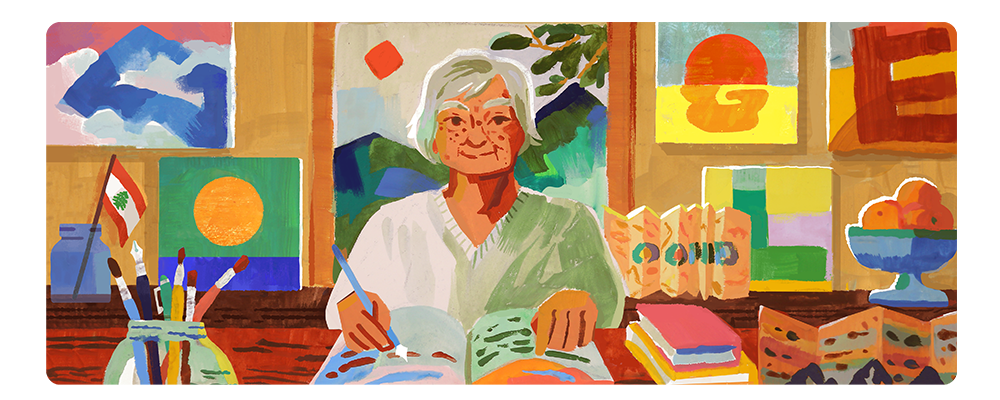
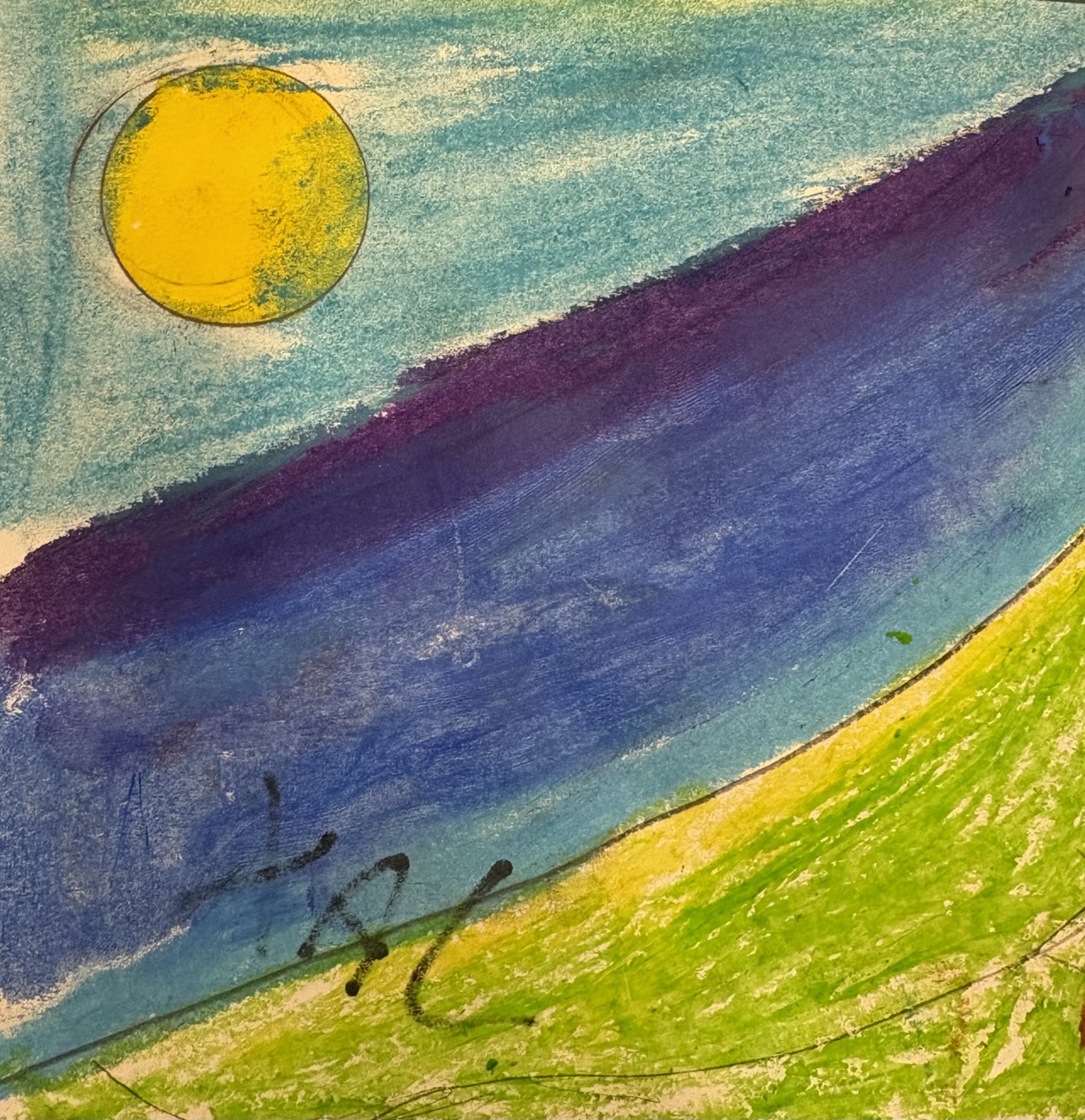
Students explored the vibrant and abstract art style of Etel Adnan, an artist and writer known for her unique approach to color and form. Born in Lebanon in 1925, Etel grew up in a multilingual environment, with her mother speaking Greek and her father Arabic, while also learning French in school. Her childhood curiosity led her to find beauty in everyday objects, from the shape of an egg to Persian rug patterns. After learning about her journey, students created their own artwork inspired by Etel’s style, incorporating vibrant colors and abstract forms.


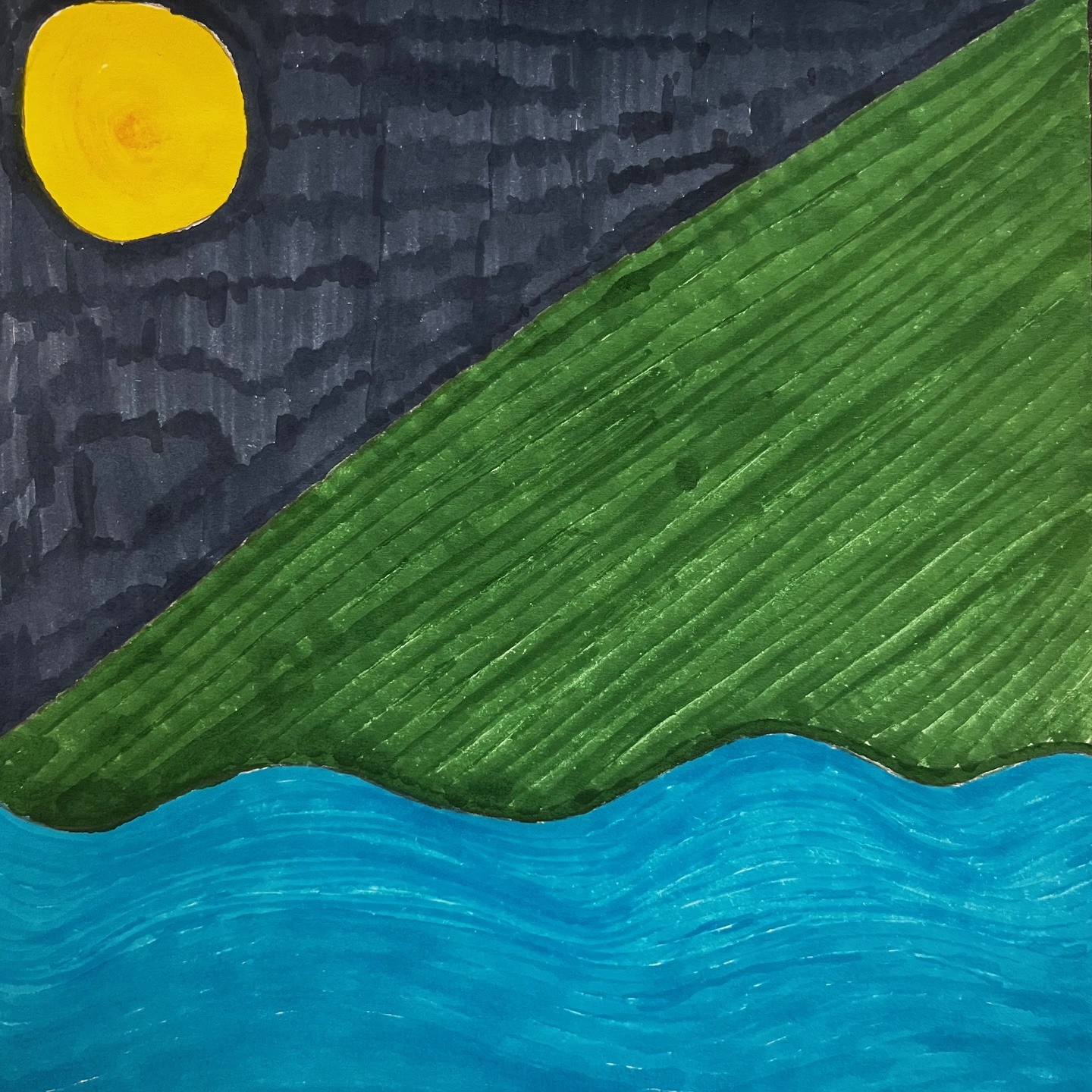
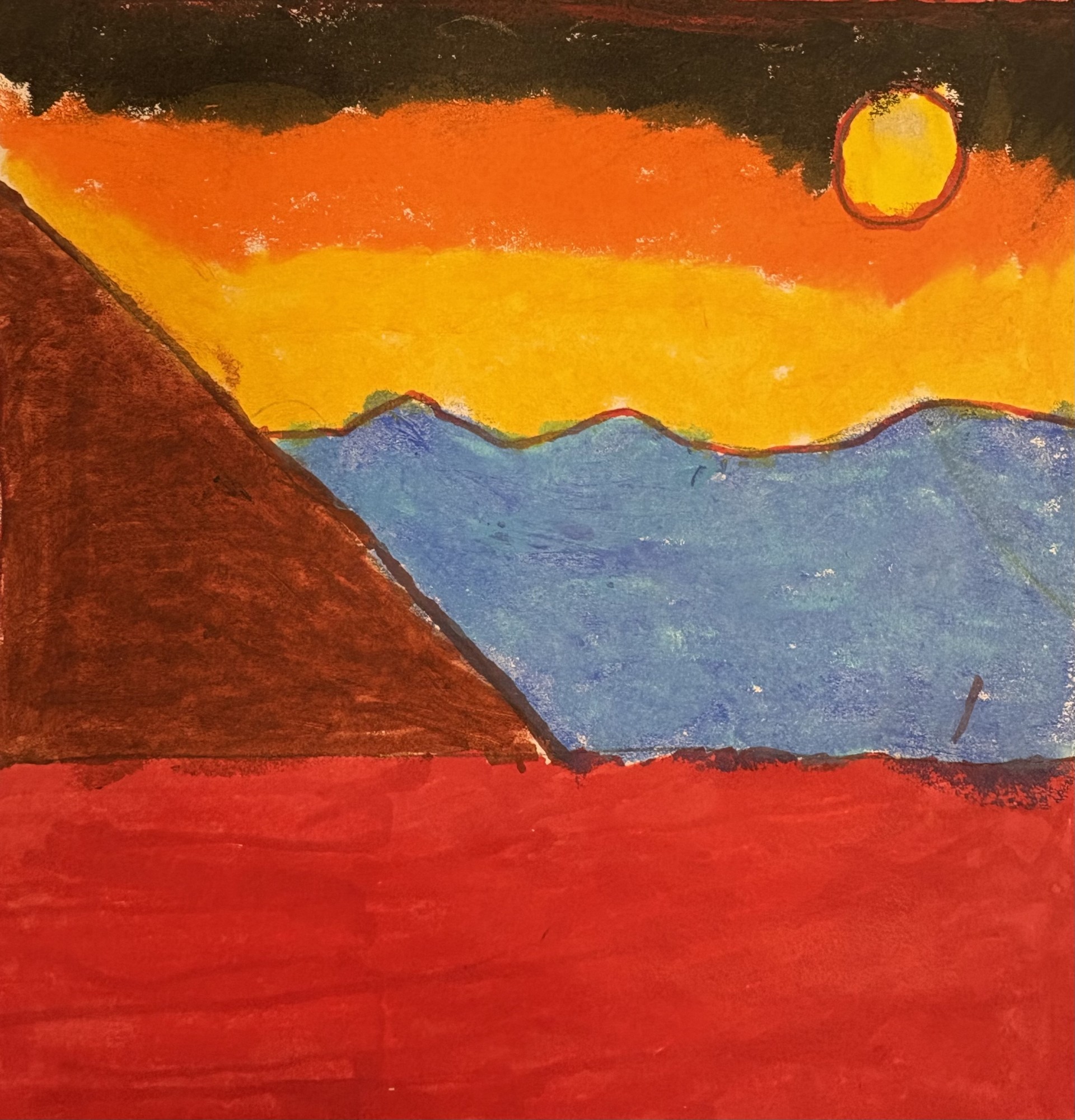
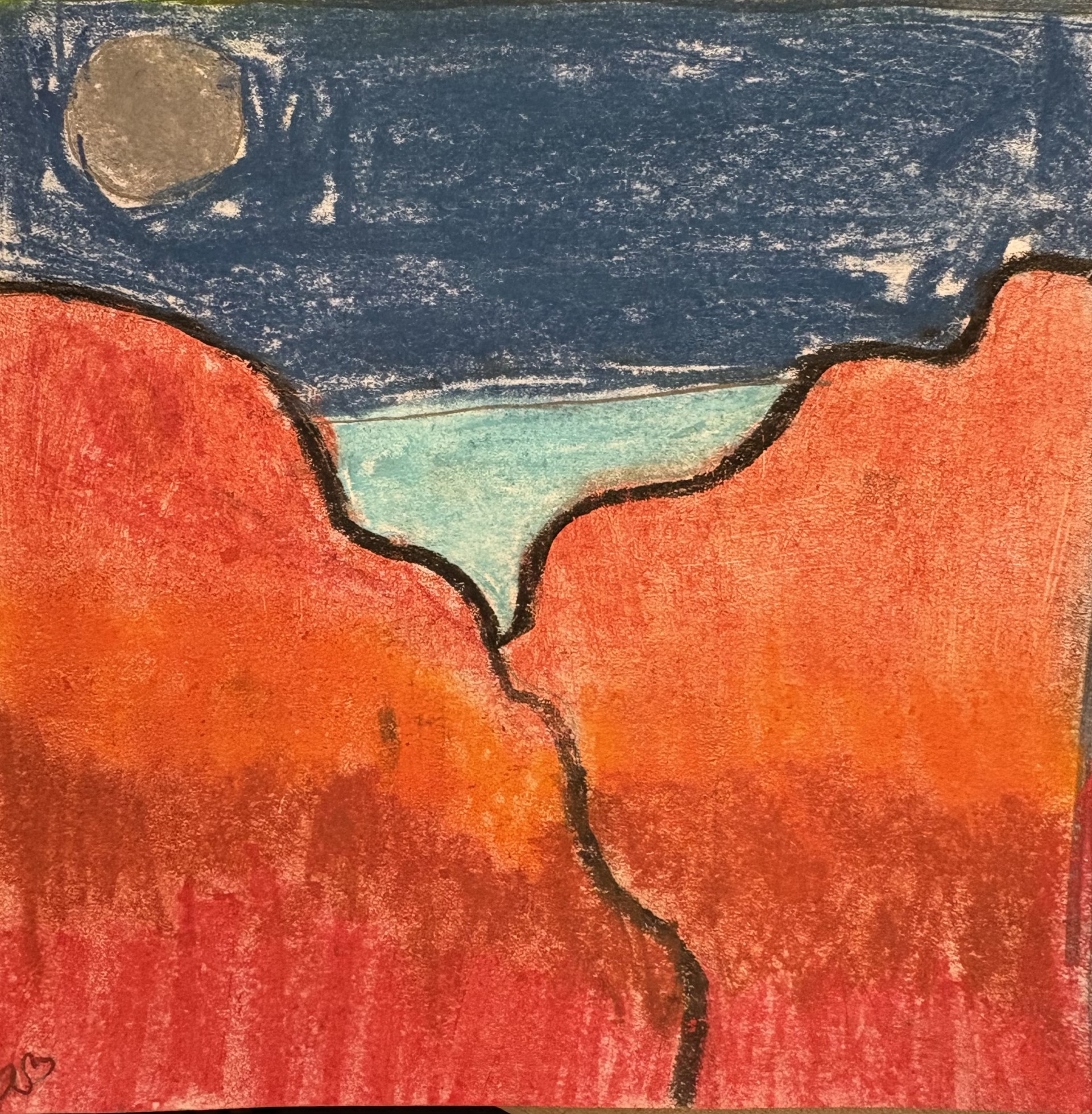



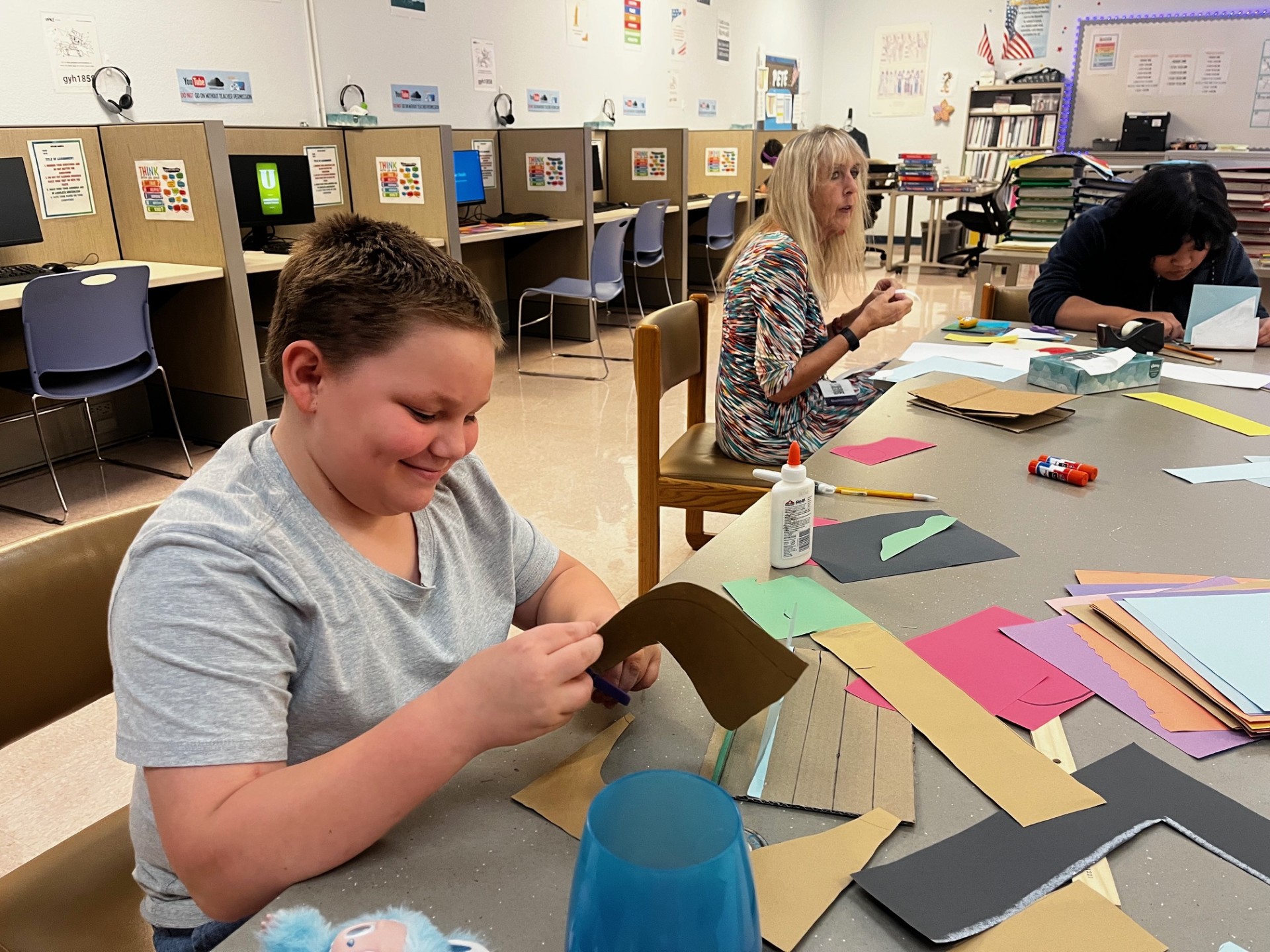
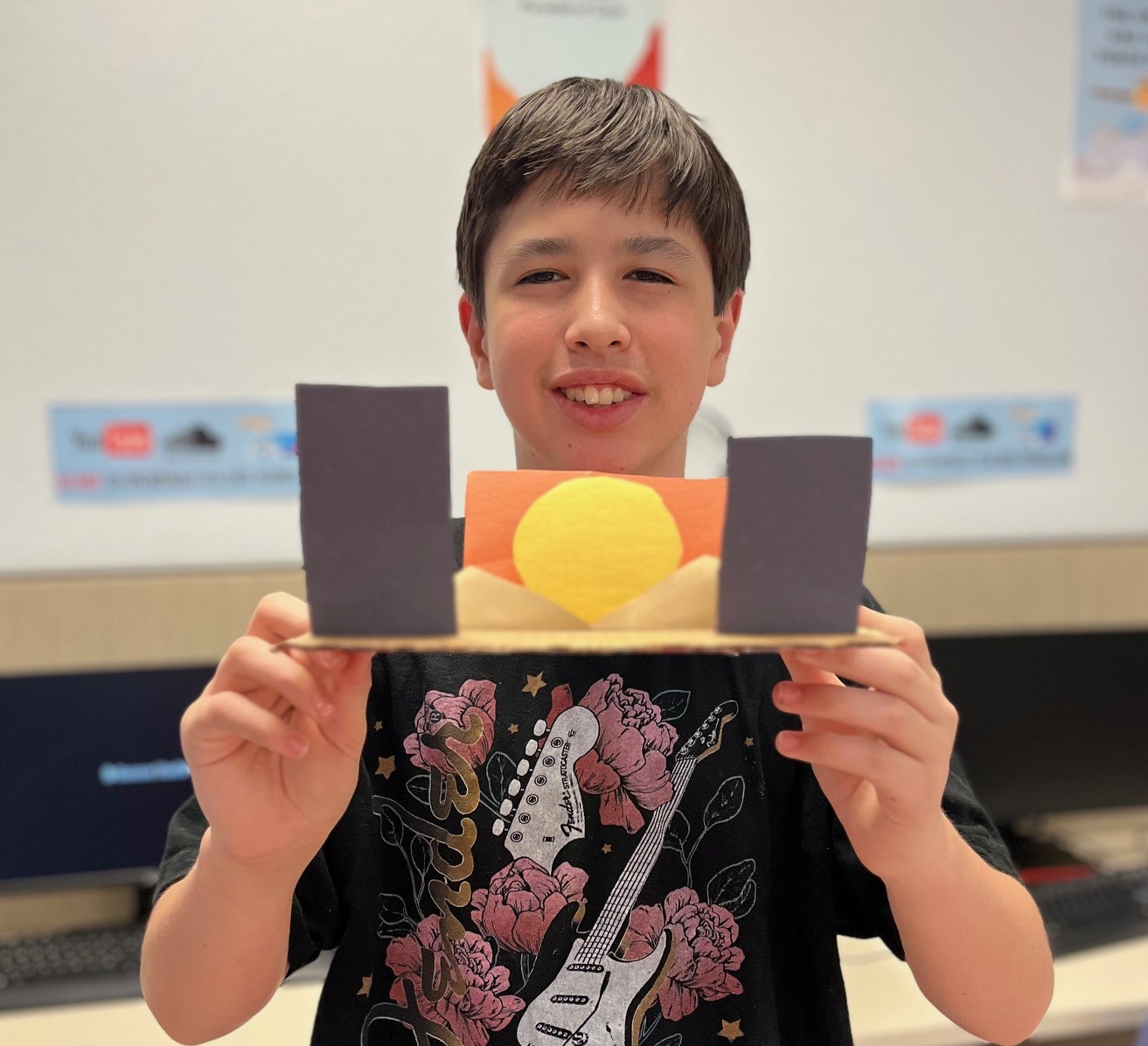
As a follow-up activity, students transformed their flat, two-dimensional landscapes—such as drawings or photographs—into three-dimensional sculptures, building on their earlier work in the Etel Adnan art project. They explored the basic components of a landscape: the foreground, midground, and background. Using colorful cardstock and old cardboard, students cut out layers based on their designs, created layer guides, and arranged the elements to ensure proper perspective. They then attached each layer with tape or glue. This hands-on process fostered creativity and allowed students to experiment with various landscapes.

Life and Leisure
SAVE THE GUMMY WORM!
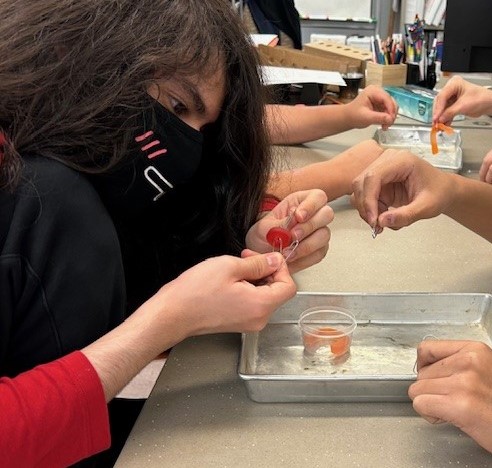
In the Life and Leisure elective, students follow a schedule of class themes based on the day of the week. On Mondays, students do team-building activities. From Ocean Survival Scenarios to Saving Fred the Gummy Worm (see below), students work in teams to achieve a common goal. Tuesdays are centered on art activities, like drawing tutorials and crafts. Students have the chance to get out of the classroom with more physical activities like Hula Hoop Bowling and Chair Volleyball on Thursdays. Finally, on Fridays, students have the choice of our many board games and card games to play with their peers.

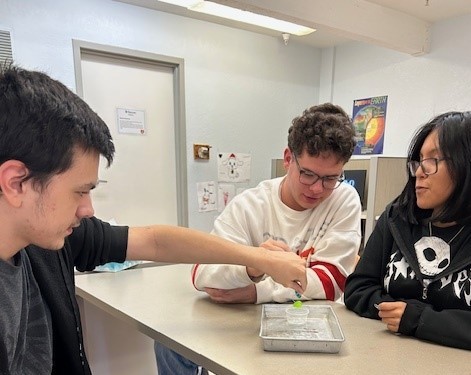
On a recent Monday, the class had a special problem to solve as a team: Fred the Gummy Worm (a gummy worm) was stuck in the ocean on his overturned boat (a paper cup). His life preserver (a gummy ring) was stuck under the boat. Using only four paper clips — and being sure not to injure or drop Fred — students had to find a way to get Fred safely into the life preserver. In their groups, students brainstormed how they could save Fred with the paperclips, and once they agreed on a method, they put their plan into action!
Activity credit: © 2006 The Regents of The University of California.

Trades Exploration
The Trades Exploration elective allows students to build skills in the trades, ranging from construction to automotive repair. While learning how to use tools correctly and safely, students will build, repair, and work on projects that they might encounter in the real world, like changing their car’s oil to fixing a hole in drywall.
THE ESSENTIALS OF A WORKTABLE
In the photos below, students first practiced how to set up a worktable where they could use tools and remove nails. Students used claw hammers, pliers, and other tools to straighten the nails before pulling them out. Additionally, students practiced using a drill machine to insert a screw in wood while others learned how to safely handle a coping saw to cut 2×4 wood pieces.


TOOL TIME
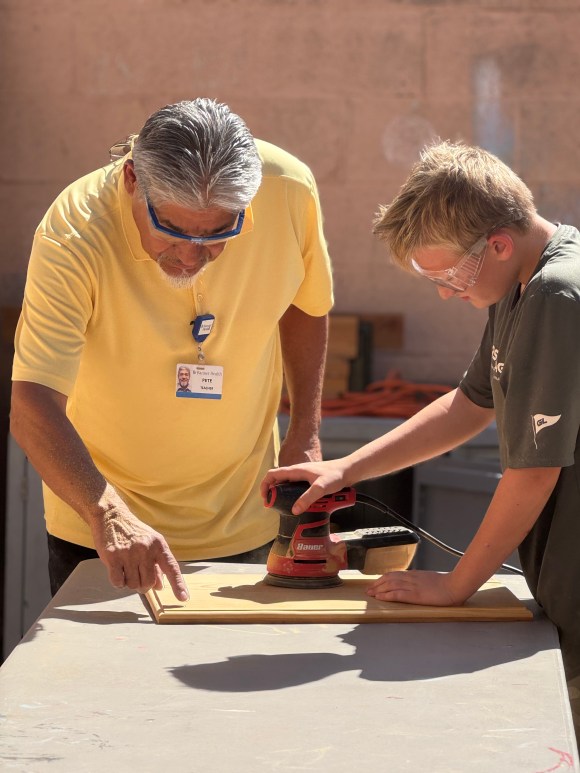
Students are having a “blast” in Trades Exploration learning how to sand wood and use routers. They’ve been practicing sanding techniques to ensure a smooth finish, and they are getting hands-on experience with tools to shape and detail their projects.

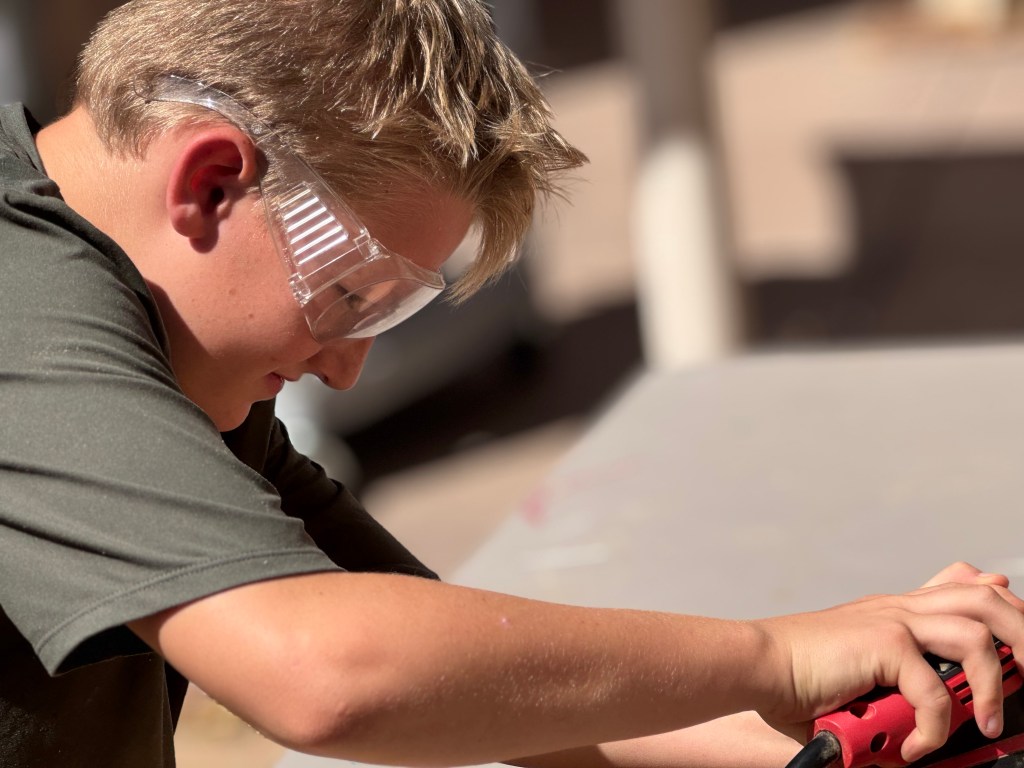
Students are building essential woodworking skills while having fun!
ELECTRICAL ENGINEERING 101
Students in the Trades Exploration elective class engaged in an innovative learning experience focused on reverse engineering and electrical design.
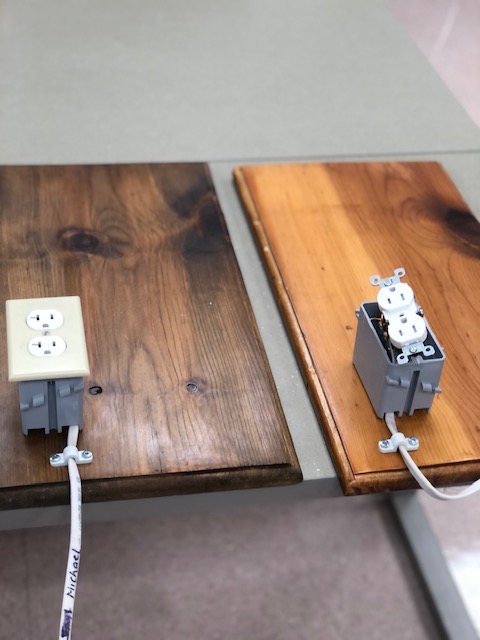

Through hands-on activities, they first dissected various electrical devices to uncover their inner workings, fostering critical analytical skills. Building on this knowledge, the students then collaborated to design and create their own custom electrical boxes.


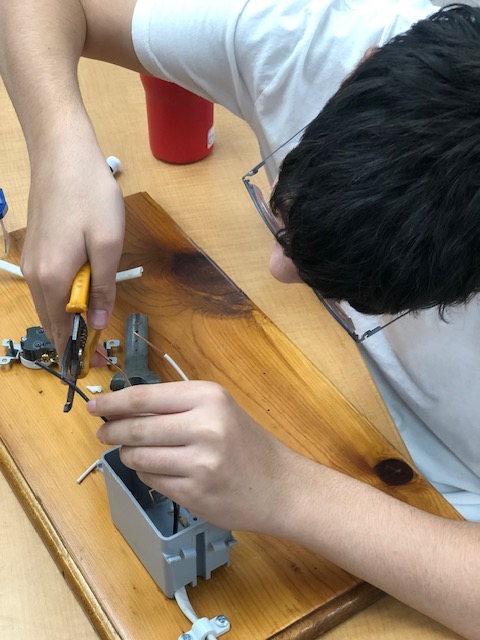
This hands-on experience not only sparked their enthusiasm for the trades but also prepared them for future challenges in electrical engineering and related fields.
2024-2025 ELECTIVES
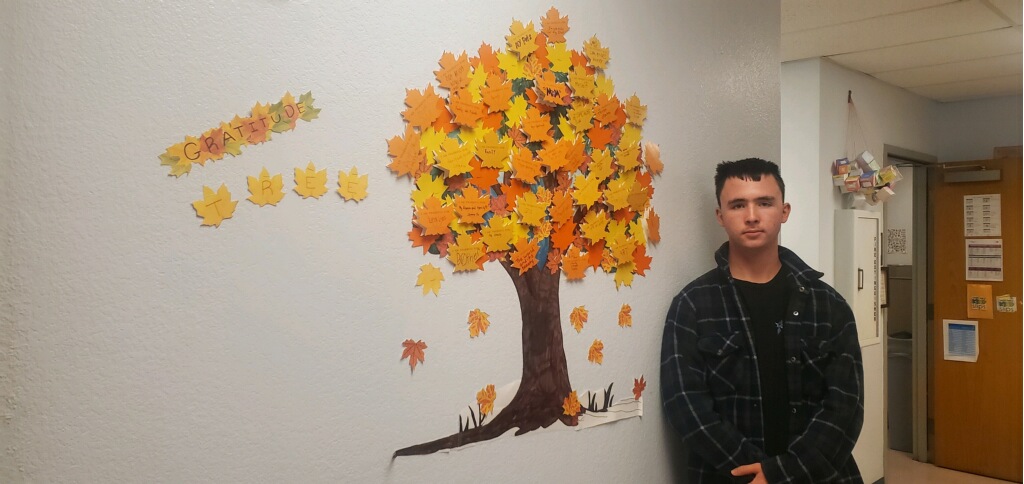
Trish, our school counselor, led students though a lesson on gratitude in LIFE SKILLS that culminated in a beautiful tree display where everyone — staff and students — listed those things for which they are most grateful on leaf-shaped cards. Pictured below are kids after adding their gratitude leaf on the wall. Thank you, Trish, for the meaningful lesson and beautiful display.


In the ART elective, students learned about Amate art, a traditional Mexican folk-art originating from the Otomi and Nahua communities. This style of artistic expression relies on intricate designs painted on bark paper. In conjunction to this project, students created Dia de Los Muertos masks to celebrate the Day of the Dead, a holiday honoring loved ones who have passed.

In STEM, students participated in a building challenge to create the tallest structure that could support a can of food. They were given 30 pieces of paper and unlimited tape for this challenge. Congratulations to all of our students and to our 1st place winner, Aiden!

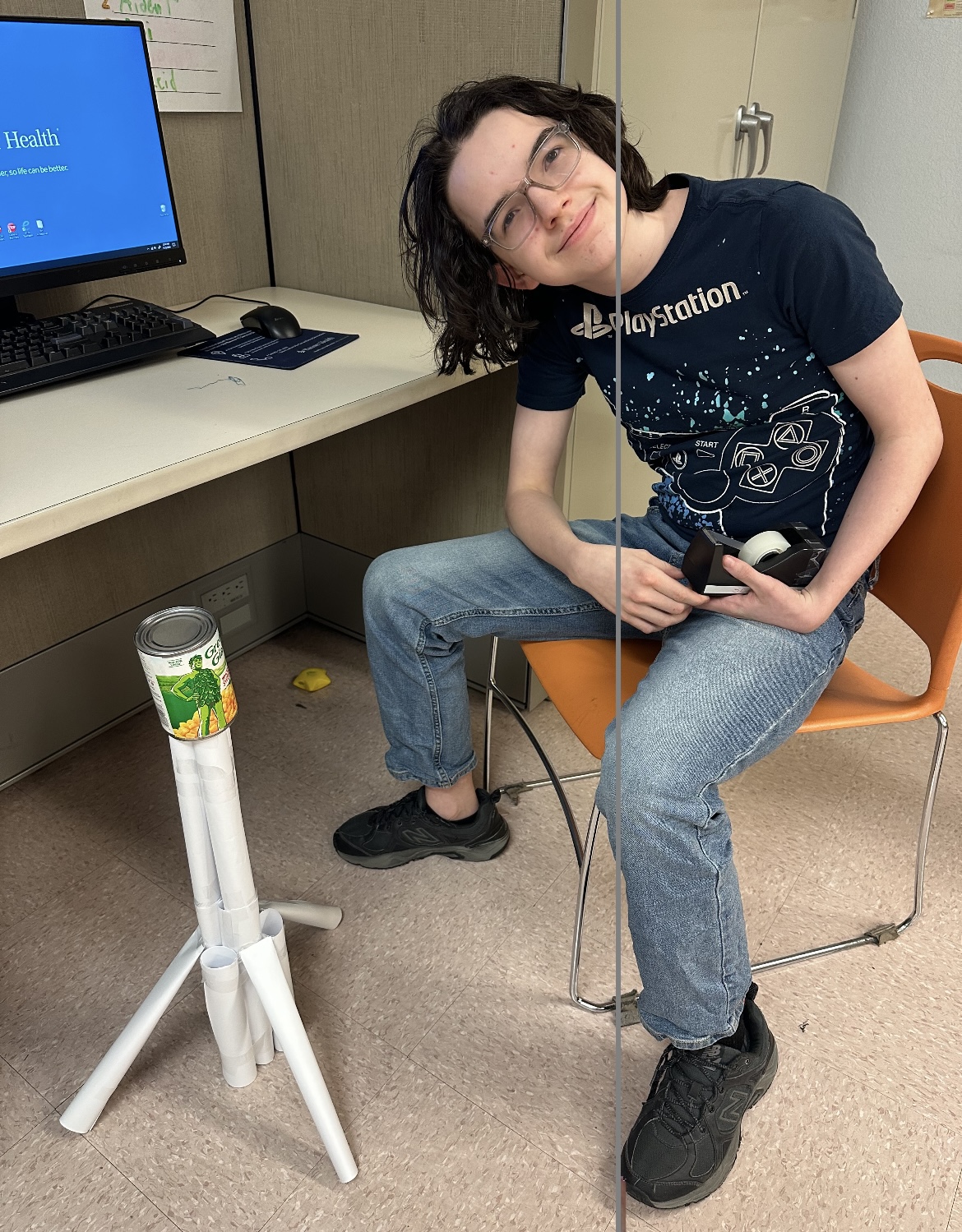
Pictured above: Jack and Aiden show off their creations.
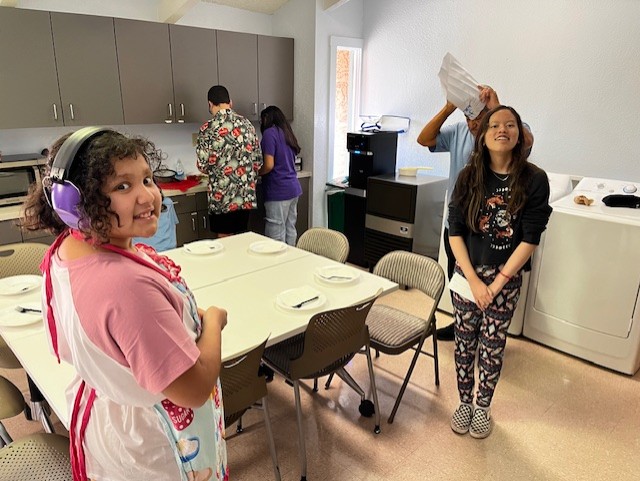
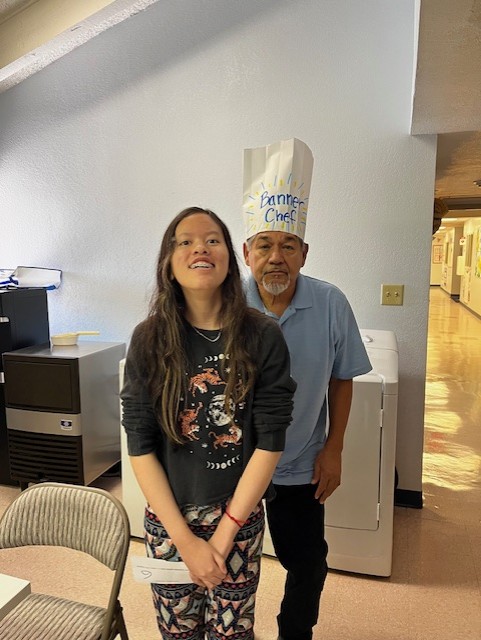
In the WORLD CULTURES AND LANGUAGES electives, students learn about cultures from around the world, but they also have the opportunity to enjoy various international culinary delights. Under the guidance of the two teachers, Elisa and Pete, students research, prepare, then eat international meals, all while learning about unique ingredients and traditional preparation methods of each cuisine. This hands-on experience not only enhances their understanding of global food cultures, but also fosters a sense of responsibility as they collaborate to bring these flavorful dishes to life.


Additionally, the WORLD CULTURES AND LANGUAGES class lets kids explore various cultural traditions through art. Hands-on activities allow for students to better engage with their instruction because they can create their own interpretations of significant cultural symbols and motifs using a variety of media, such as watercolors, markers, and oil pastels.

The photo above showcases the students’ work on the captivating Australian dot art style. By carefully applying dots of color on rocks, they were able to capture the essence of this unique form of artistic expression, which holds deep cultural significance for Indigenous Australian communities.
Similarly, the students studied Brazil and learned about life in the ever-diminishing rainforest. One of the important animals of this unique biome is the toucan, who is nearing extinction as the biome suffers from human intrusion. After direct instruction and group discussions to better understand what is happening to the Amazon Rainforest of Brazil, students used oil pastels to render toucans in their Brazilian habitat. See the picture below.

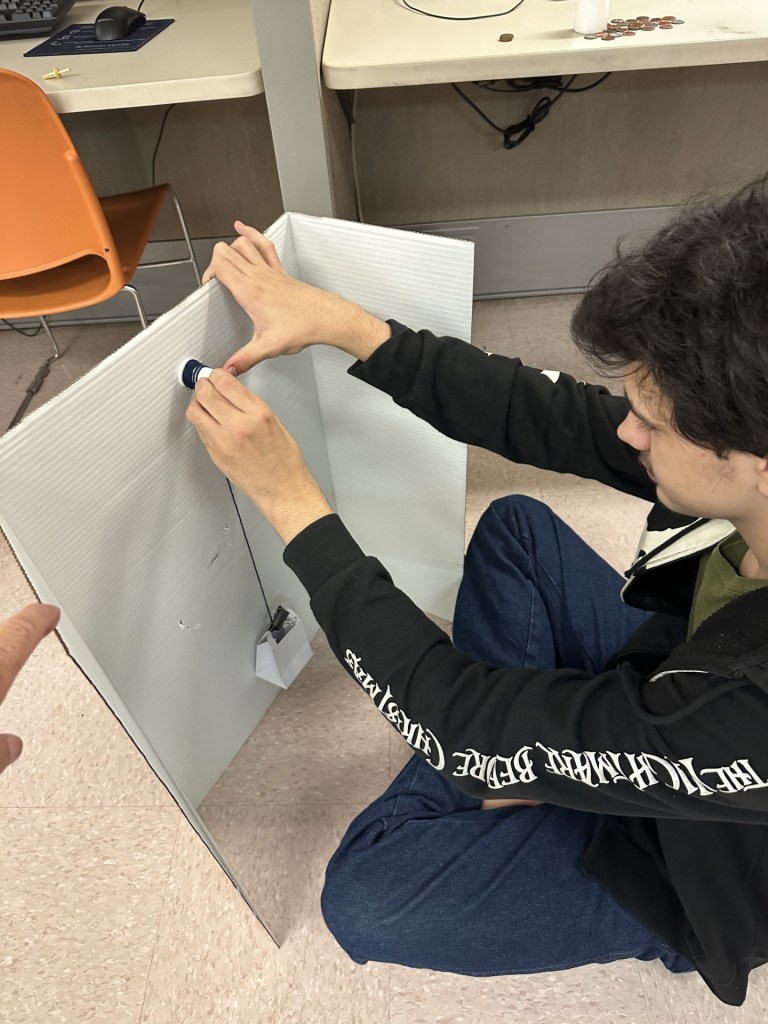
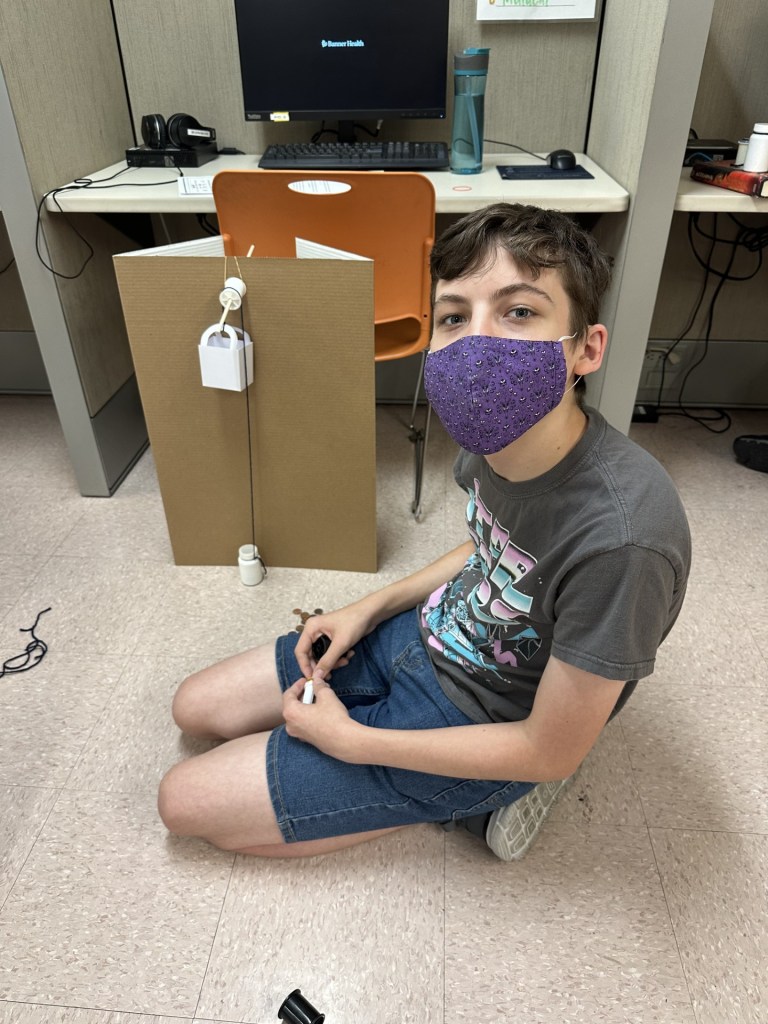
In the STEM elective, students are learning about the six simple machines. They have built a catapult (lever), incline plane, wheel and axle, wedge, Archimedes screw, and a pulley system. In addition to machine-building, they have been using engineering design processes to guide their work.
Below are pictures of students working on the pulley system.


The STEM elective provides an opportunity for the class to play logic-based games. One favorite is called “Space Team.” It is a cooperative game where students work together to solve spaceship-related problems. In this game, the team either all wins or all loses in their race to build a spaceship against a timer. The card game promotes collaboration, socializing, and critical thinking.
Pictured above: Jack, Michael, Cynthia, and Austin play Space Teams.
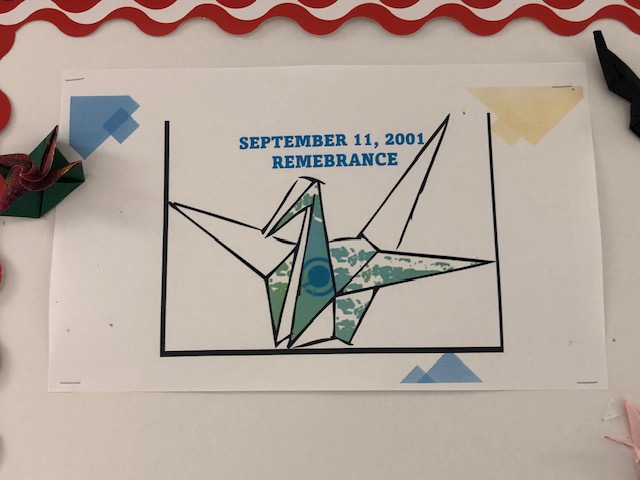
Recently, the ART elective completed a project as a complement to our Temple Healing Field visit to remember the victims and survivors of the September 11 tragedy.
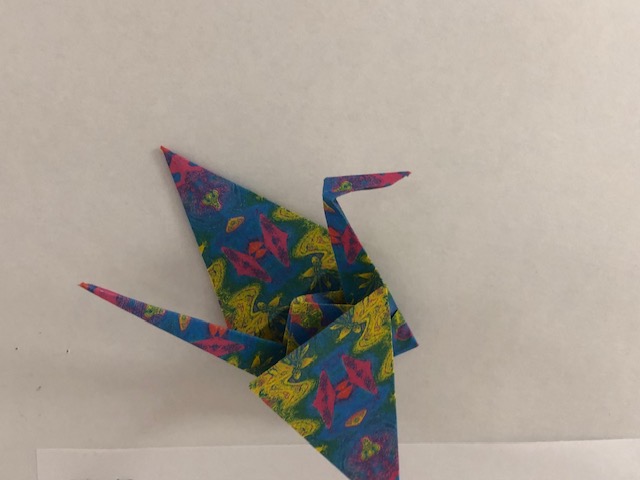
The September 11 Memorial in New York City incorporates crane origami out of a Japanese belief that the cranes symbolize “long life and healing.“
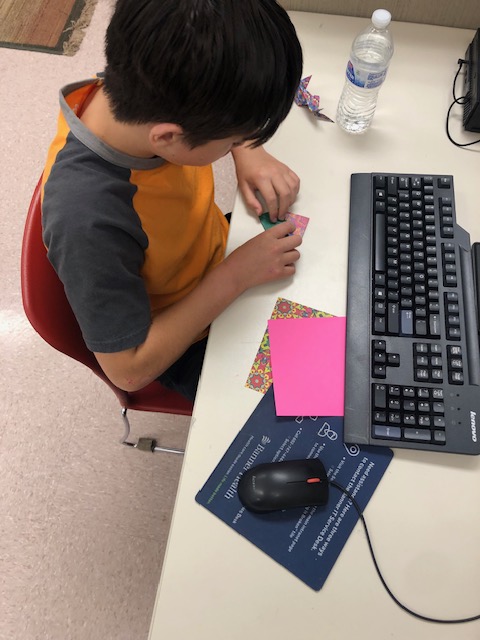
As a way for our students to participate in the 9-11 remembrance where we could honor the victims and foster a sense of peace, students participated in the paper crane project. Kids learned to fold paper origami cranes in various colors as a token of hope and renewal.

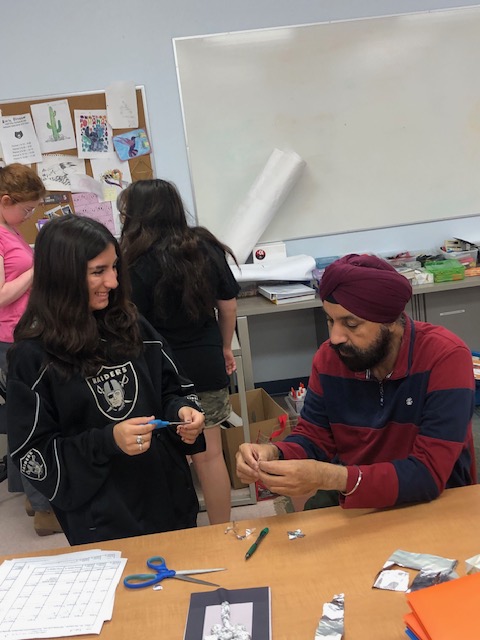


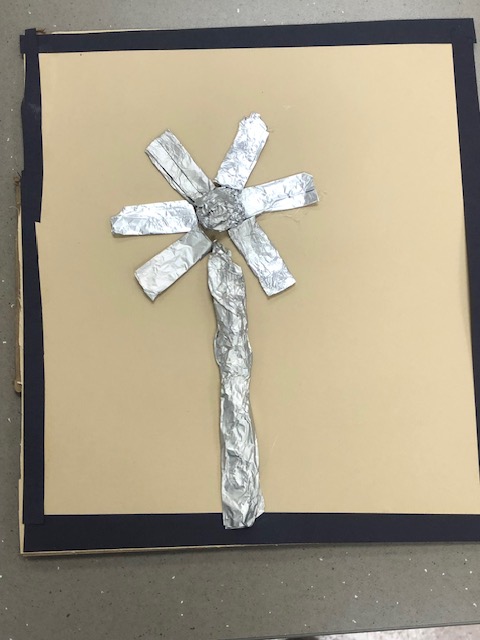
Additionally, students in ART creatively used cardboard and aluminum foil to craft eye-catching flowers. Students used unconventional materials to transform simple, everyday items into artistic pieces that showcase their innovation and resourcefulness.
They also learned about the importance of sustainability and the beauty that can be created through repurposing.
 Banner Academy